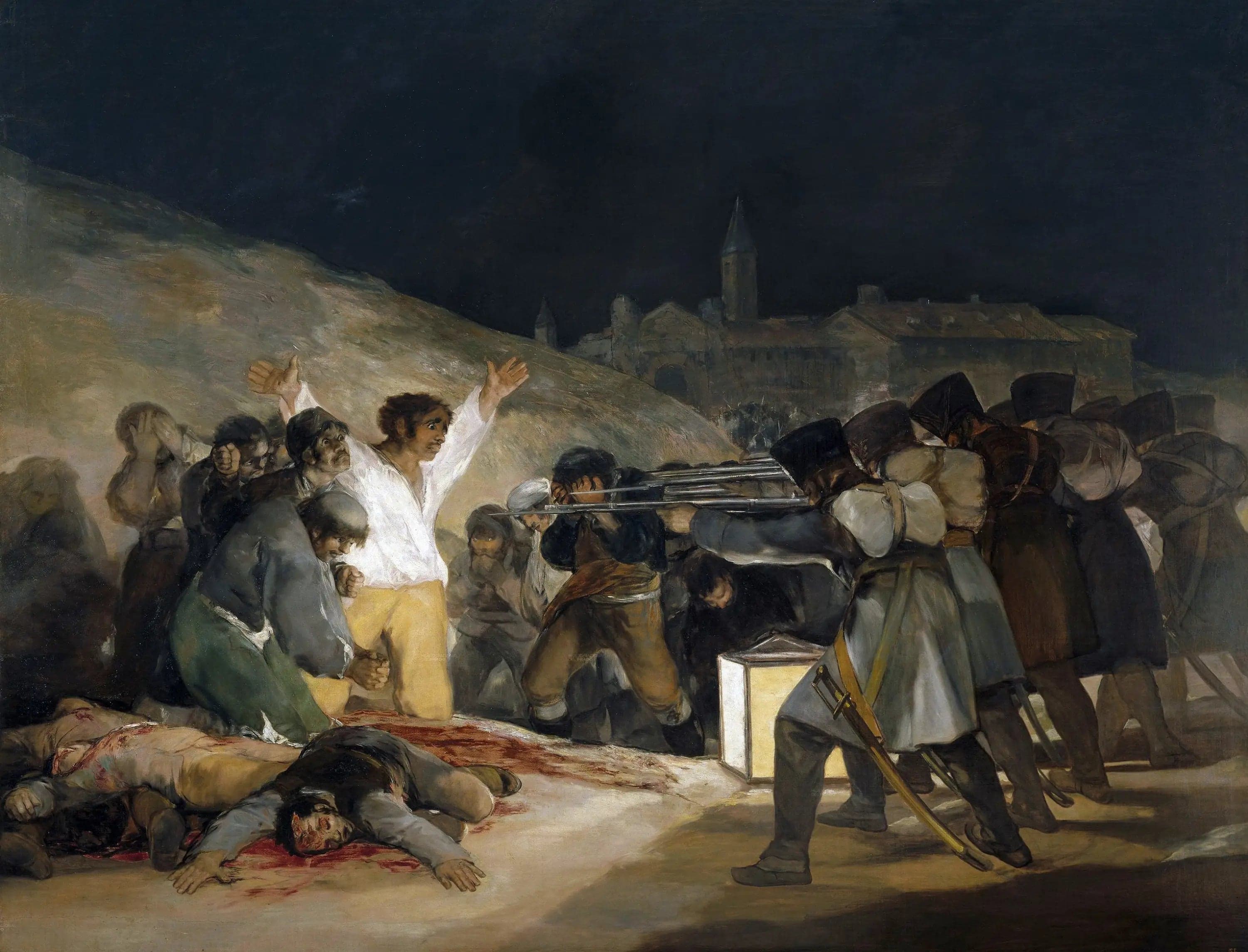
The Third of May
- Original dimensions
- 347 x 268 cm
- Movement
- Romanticism
- Museum
- Prado Museum
- Year
- 1814
Scene depicted
The painting “Tres de Mayo - Francisco de Goya ” illustrates a poignant scene: Madrid citizens, ruthlessly shot, testify to the brutality and injustice of war. The vivid contrast between the soldiers' shadows and the light bathing the victims highlights the human drama, making the emotion emanating from the painting palpable.
Historical context
Created in 1814, this painting unfolds in the tumultuous context of Spain occupied by Napoleonic troops. In Madrid, on this iconic canvas, Goya expresses pain and resistance in the face of oppression, all while being a member of this burgeoning artistic movement, Romanticism . Today, this painting is carefully preserved in the Prado Museum, where its grandeur is fully revealed.
Place in the artist's career
This painting , at the crossroads of his career, marks a decisive turning point for Goya. After the melancholic reflections of his early works, such as “La Maja Vêtue,” he asserts himself here in social denunciation with “The Disasters of War.” This canvas precedes his ultimate productions, where darkness settles in, as in “Saturn Devouring a Son,” leading to a spectacular evolution of his style.
Anecdote
“In the cry of the victim, I hear the echo of humanity,” said Goya. This masterpiece was inspired one misty May morning, when the artist, walking through the streets of Madrid, crossed paths with the desperate gaze of a man facing his tragic fate. These authentic moments are found in the Tres de Mayo , a work that transcends time and speaks directly to the heart.
Major exhibitions
Europeana 280