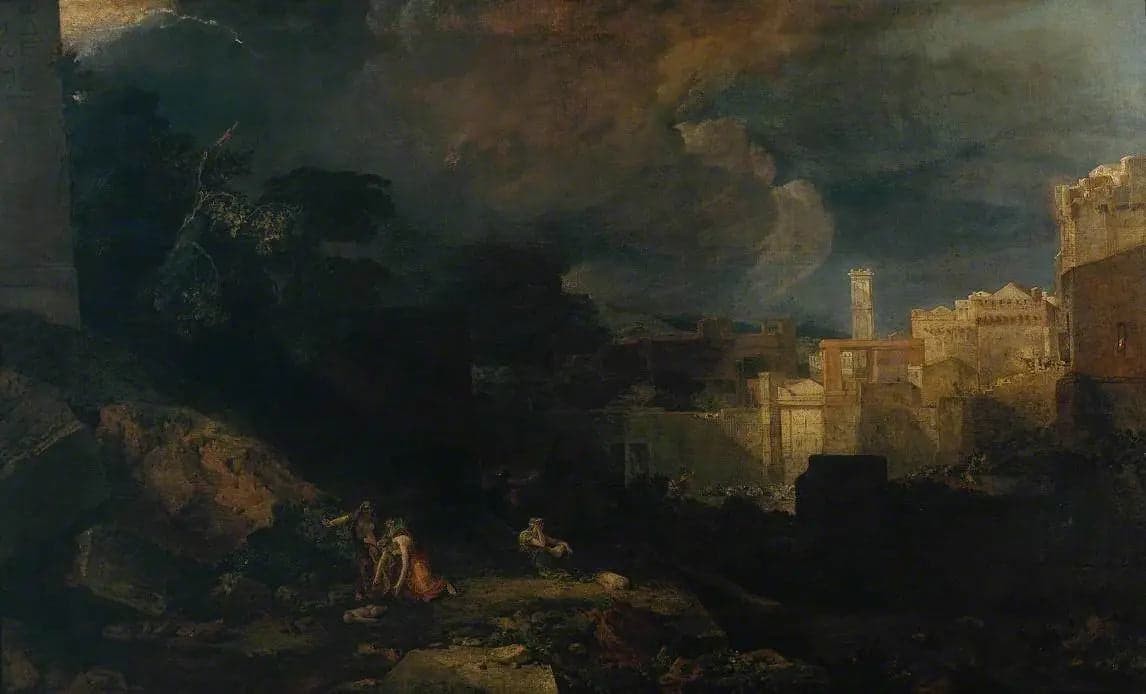
The Tenth Plague of Egypt
- Original dimensions
- 143.5 x 236.2 cm
- Museum
- Tate
- Year
- 1802
Scene depicted
This painting illustrates one of the plagues that God inflicts upon the Egyptians: the death of the firstborn. An apocalyptic atmosphere envelops the scene, where threatening shadows cloak the landscape. The light, a filter of despair, diffuses into the tumultuous sky, while cries mingle with the terror of nature. The human figures, almost ghostly, bear the weight of a devastating tragedy.
Historical context
Created in 1802 in the heart of London, this exceptional painting is part of the romantic movement, a current that celebrates emotions and dramatic landscapes. The painting, which is currently exhibited at the Tate museum, depicts a biblically charged episode, paying tribute to the power of nature and the struggle of man against the divine.
Place in the artist's career
Considered an emblematic work in Turner’s career, The Tenth Plague of Egypt represents a crucial step, where the artist refines his dramatic and emotional style. Comparable to Rain, Steam and Speed and The Fighting Temeraire , this painting illustrates his evolution towards greater abstraction while preserving the narrative power of his canvases.
Anecdote
Joseph Mallord William Turner once said: “Light is everything in my works; it is life itself.” It was on the banks of the Thames, at dawn, that the artist drew inspiration to bring his future canvas to life, capturing the majesty of a terrifying scene while playing with the interplay of shadow and light.