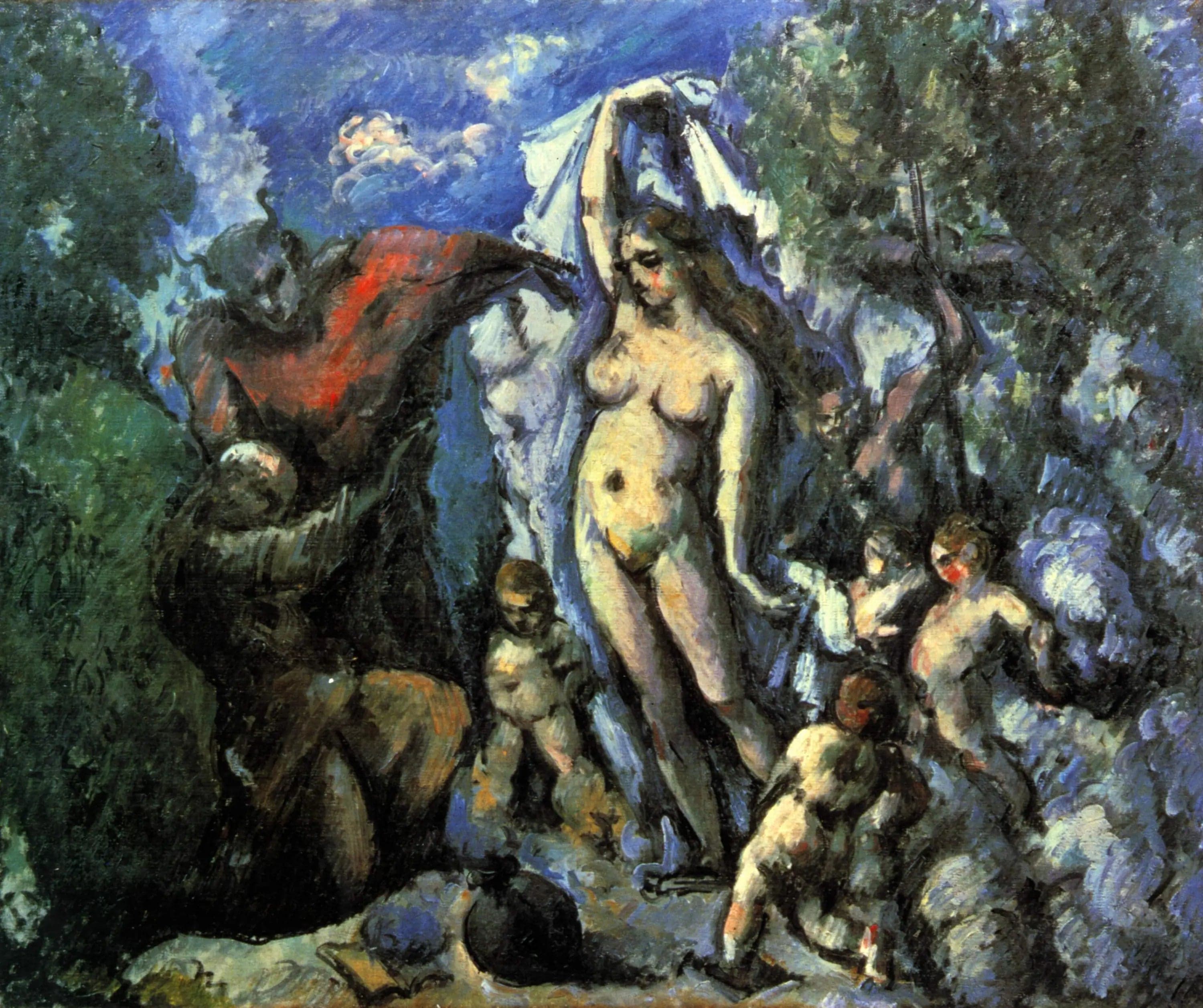
The Temptation of Saint Anthony
- Original dimensions
- 76 x 57 cm
- Museum
- Emil G. Bührle Foundation and Collection
- Year
- 1870
Scene depicted
This painting illustrates the spiritual struggle of the saint against temptations. A mystical landscape emerges, populated by creatures and unsettling shadows that surround Anthony, isolating him in his inner battle. The dramatic force of this painting reflects human fears and desires, capturing the very essence of the human condition.
Historical context
Created in 1870, this painting finds its roots in the vibrant city of Aix-en-Provence, in the heart of Provence. It is emblematic of the post-impressionist movement, an artistic movement characterized by a bold exploration of light, color, and forms. The Temptation of Saint Anthony is currently located at the Emil G. Bührle Foundation and Collection , where it is displayed alongside other pictorial treasures, revealing the lasting legacy of its creator.
Place in the artist's career
The Temptation of Saint Anthony is situated at a pivotal time in Cézanne's career, marking a point of maturity where his style begins to assert itself. In parallel, one can mention The Card Players and Mont Sainte-Victoire , two paintings that illustrate the progression towards a more pronounced abstraction, while maintaining a strong emotional connection.
Anecdote
“I want to capture the light until it dances on the canvas.” Thus spoke Paul Cézanne , inspired as he wandered through the streets of Aix-en-Provence. That morning, as he observed the play of light on the olive trees, the idea for this pictorial work appeared to him as a revelation, merging nature and spirituality in a painting that would transcend time.