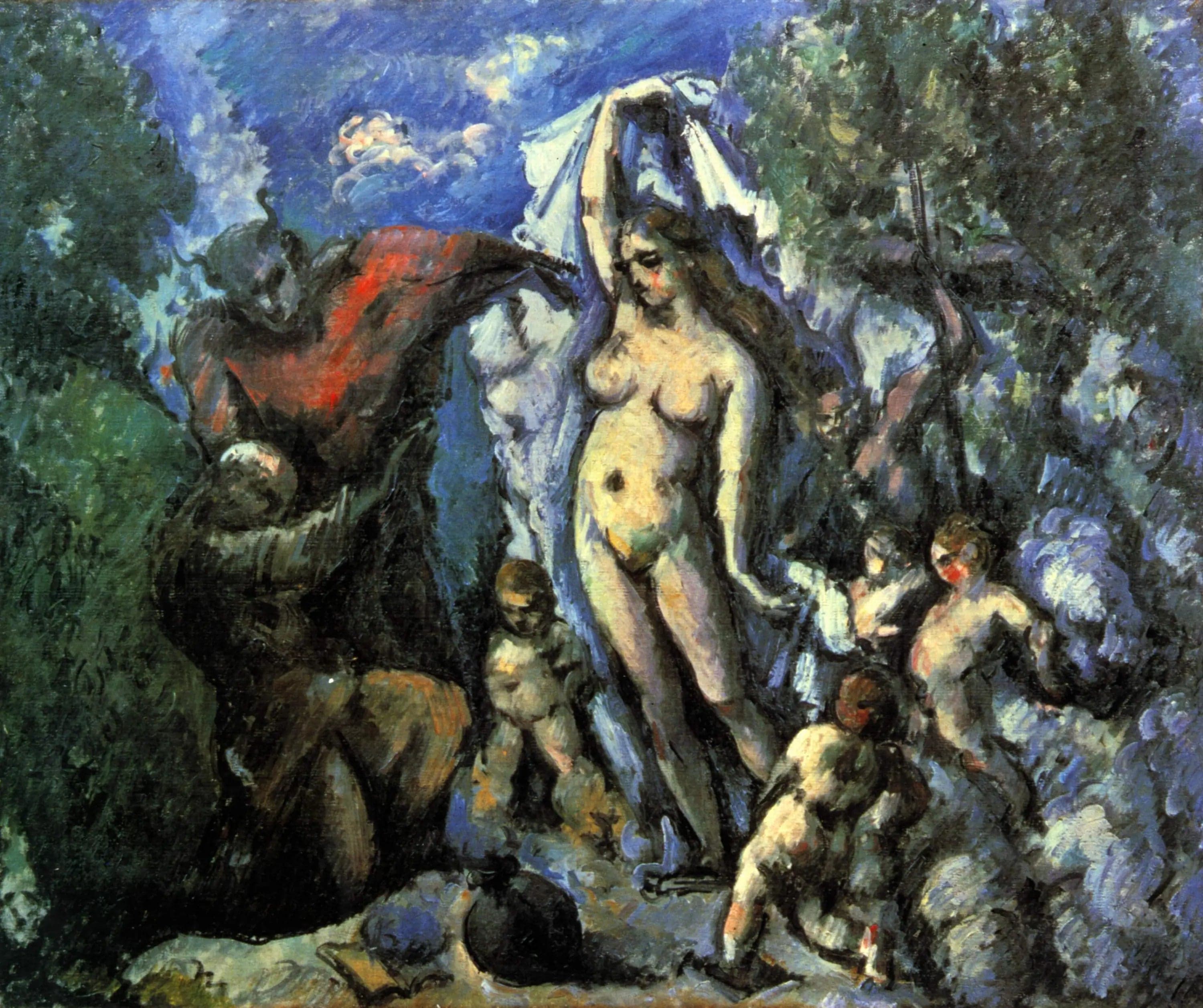
The Temptation of Saint Anthony
- Original dimensions
- 76 x 57 cm
- Museum
- Emil G. Bührle Foundation and Collection
- Year
- 1870
Scene depicted
In this timeless painting , Cézanne explores the spiritual struggle of a man facing his inner demons. The composition depicts a scene imbued with tension, where light and darkness vie for predominance, symbolizing the dangers of temptation and the awakening of consciousness.
Historical context
Created in 1870, this canvas emblematic flourishes in Aix-en-Provence, the birthplace of the artist. Shaped during a time marked by the emergence of the Impressionist movement, The Temptation of Saint Anthony summons unparalleled expertise, a testament to an incessant concern for beauty. Today, this major painting resides at the Emil G. Bührle Foundation and Collection , a sanctuary for artistic treasures.
Place in the artist's career
The Temptation of Saint Anthony represents a turning point in the career of Paul Cézanne , a bold step towards abstraction. Alongside it, works such as The Mont Sainte-Victoire and The Card Players testify to an essential stylistic evolution. This painting embodies the maturity of the artist, merging technique and emotion.
Anecdote
“Painting is a perpetual quest for emotions.” This quote resonates like an echo in the heart of the artist, immersed one spring morning in a sunlit alley. It was by observing the dancing shadows and vibrant colors that he conceived his masterpiece, The Temptation of Saint Anthony , where each brushstroke captures a silent melody.