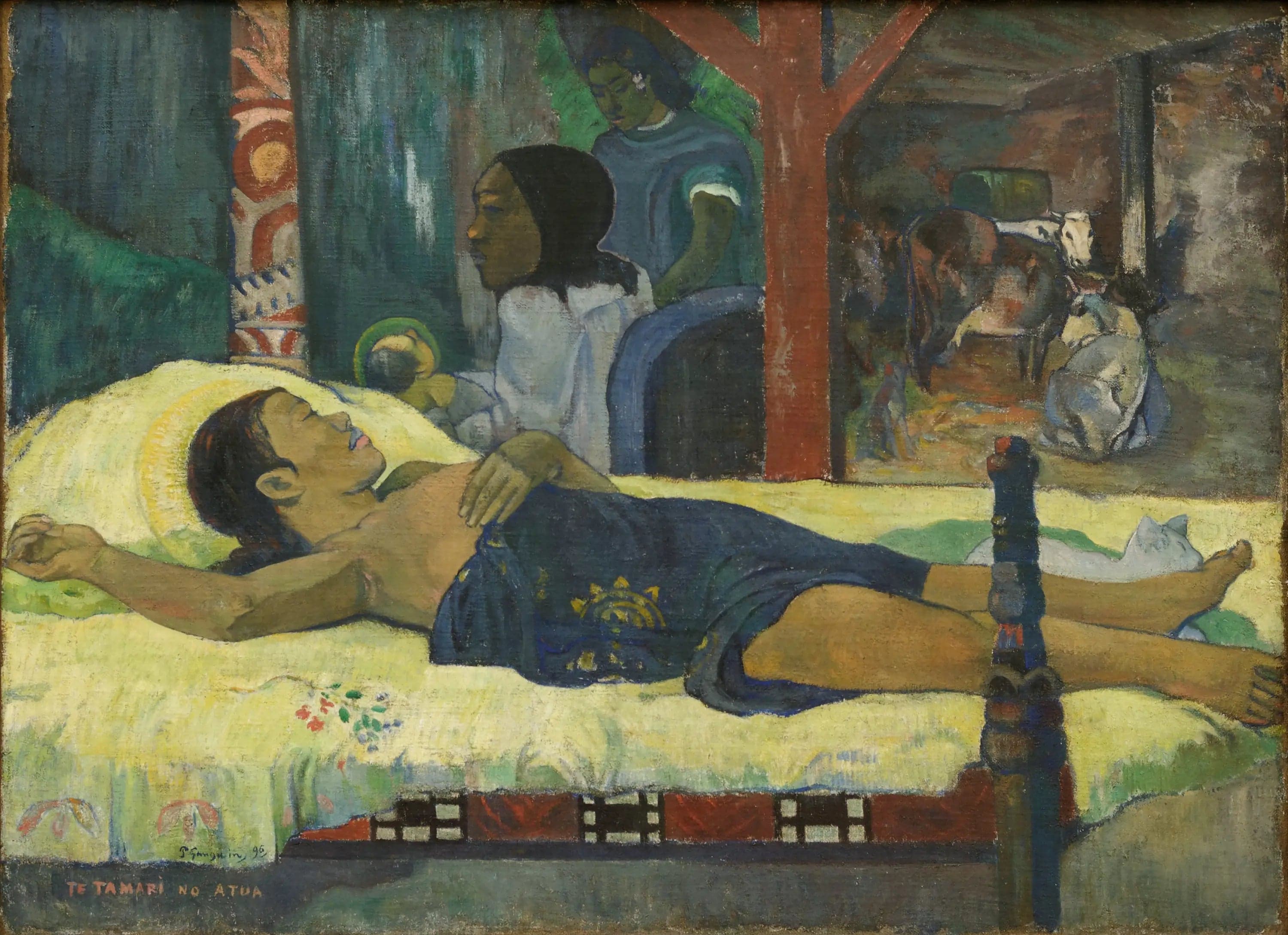
The tamari of the gods
- Original dimensions
- 131.1 x 96 cm
- Museum
- Neue Pinakothek
- Year
- 1896
Scene depicted
This canvas emblematic transports us to the heart of a symbolic scene where human figures blend with lush nature, evoking the spirituality and ancestral traditions of Polynesian culture. The characters, bathed in vibrant light, seem to dance with the environment, representing the harmony between man and his surroundings. Each brushstroke recreates a dialogue between the sacred and the everyday, a promise of escape and contemplation.
Historical context
This painting , created in 1896 by the master post-impressionist Paul Gauguin , amazes with its display at the Neue Pinakothek in Munich. At that time, Gauguin was in search of new creative horizons, detaching himself from European conventions to immerse himself in the landscapes and cultures of Polynesia. The work, chronologically rooted in the symbolist movement, offers us a poignant glimpse of the artist in full evolution.
Place in the artist's career
Te tamari no atua represents a pivotal moment in Gauguin's career, fitting into his quest for artistic and personal freedom. The contrast with his previous work, the painting “Vision after the Sermon,” illustrates his evolution, as his search turns towards more explicit forms of spirituality and color, anticipating future innovations in paintings such as “The Nap.”
Anecdote
“Art is a means of escaping the chains of everyday life,” seemed to whisper Gauguin, inspired by the serene shores of Tahiti. One morning, as the song of birds filled the air and the light caressed the vibrant landscapes, he captured the local magic, infusing emotional intensity into his pictorial universe through Te tamari no atua .