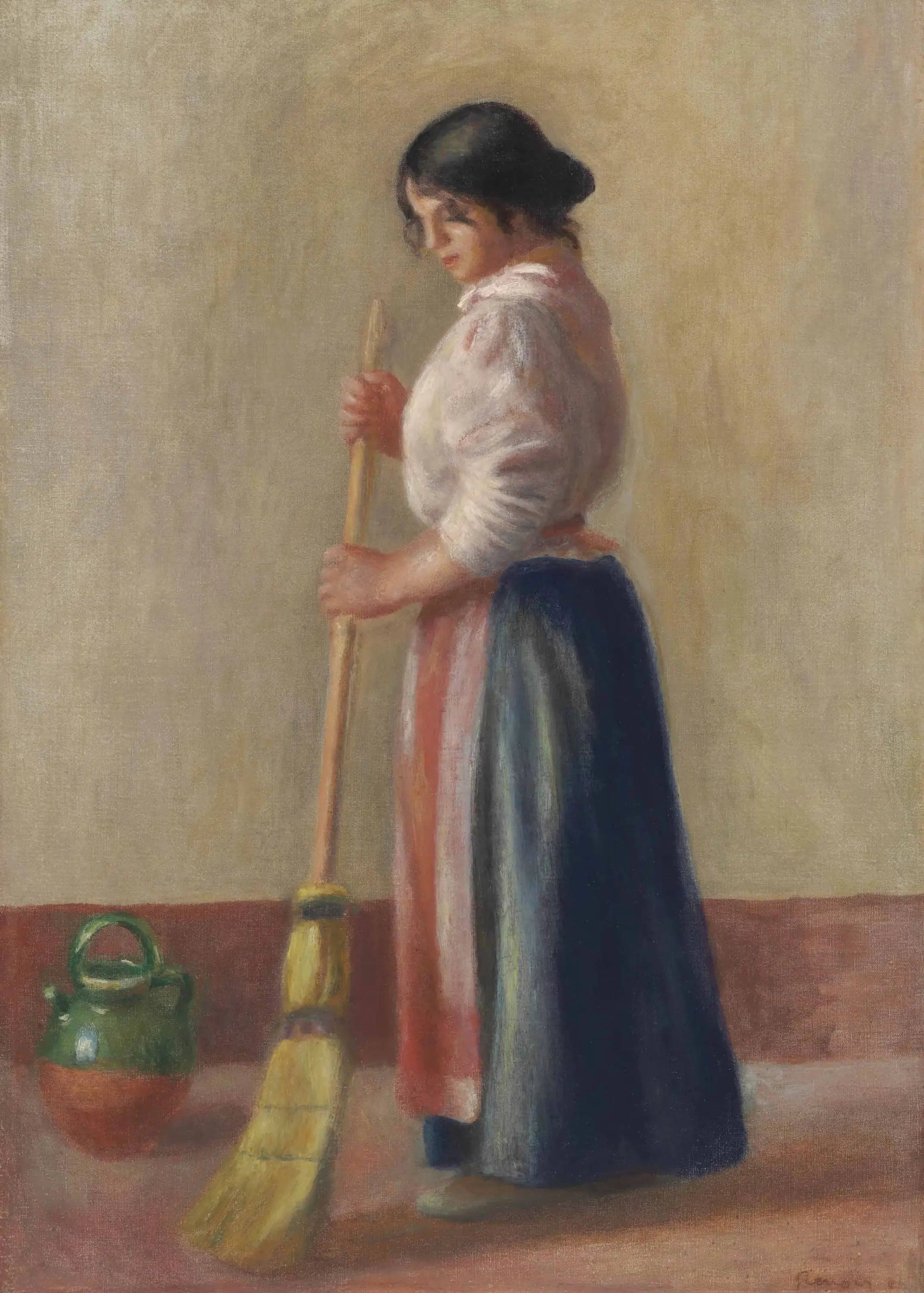
The Sweeper - Pierre
- Original dimensions
- 46 x 65 cm
- Museum
- Not specified
- Year
- 1889
Scene depicted
In The Sweeper , Renoir depicts a woman sweeping, a symbol of humble labor, yet imbued with natural grace. The scene exudes a sense of tranquility while paying homage to the beauty of the everyday. The woman's gestures, almost weightless, echo the simplicity of Parisian life, immortalized by Renoir's painting .
Historical context
Created in 1889, The Sweeper is set in the enchanting backdrop of the city of Paris, a vibrant hub of the Impressionist movement. At that time, art was breaking free from academic conventions, and Renoir excelled in this new approach that captured light and life in an unprecedented way. This canvas embodies the spirit of the 19th century, where the everyday, so often overlooked, becomes the subject of an exceptional pictorial work .
Place in the artist's career
Positioned at the juncture of a rich and evolving career, The Sweeper testifies to Renoir's promising beginnings in the Impressionist movement. This canvas stands alongside compositions such as Lunch of the Boating Party and Dancing in the City , illustrating the development of his style and mastery of light.
Anecdote
“I seek to capture the light of the world,” Renoir might have said, reflecting his constant quest to reveal beauty in the ordinary. Inspired by a sweet morning scented with lilacs, he imagines the sweeping strokes transforming dust into bursts of light, giving birth to this masterpiece vibrant with life.