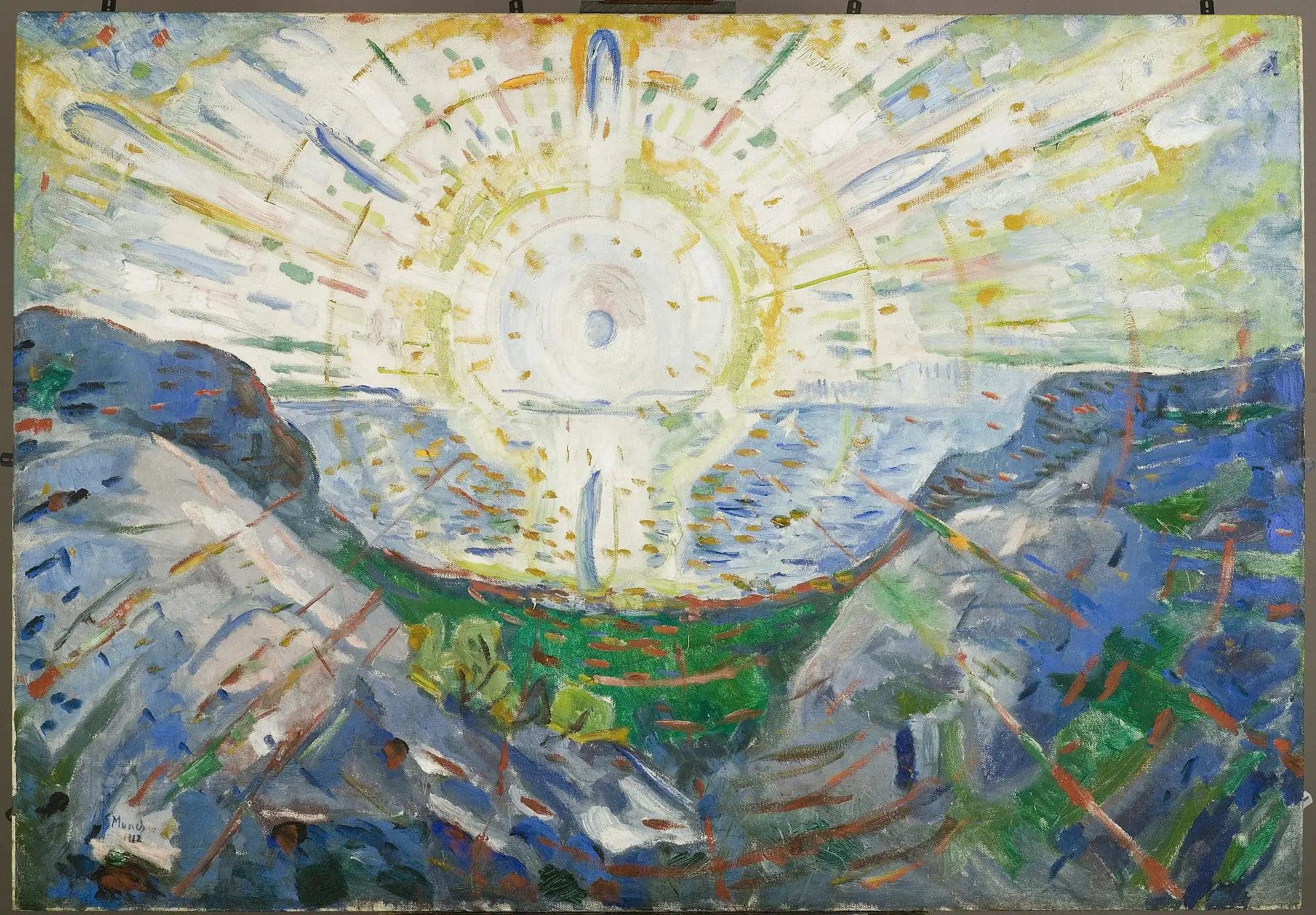
The Sun
- Original dimensions
- 176.5 x 123 cm
- Museum
- Munch Museum
- Year
- 1912
Scene depicted
In "The Sun," Munch offers a vivid vision of a luminous landscape, bathed in the warmth and light of an imposing sun. This canvas unfolds a composition where human forms blend with nature, reflecting silhouettes between joy and contemplation. The exchanges between shadow and light provoke a powerful dialogue about the origin of life and the ephemeral beauty of present moments.
Historical context
Created in 1912, this iconic painting by Edvard Munch is located in Oslo, Norway, in a context where the expressionist movement seeks to translate human anxiety and emotions through art. The painting "The Sun" is today preserved in the Munch Museum, a place that celebrates the life and work of this major artist. The generous dimensions of the painting give it a striking presence, encased between the veils of light and the darkness of human emotions.
Place in the artist's career
"The Sun" is situated at a pivotal moment in the career of Edvard Munch , as he navigates between a promising start as a pioneer of expressionism and a pronounced stylistic maturity. Alongside his famous paintings "The Scream" and "The Madonna," this painting bears witness to the evolution of his technique, between emotional surface and exploration of light, highlighting his interest in human psychology.
Anecdote
Edvard Munch once confessed: "Art is the truth that illuminates the depths of the soul." It was on a spring morning, facing the vastness of a clear sky and the warmth of the sun caressing faces, that he drew inspiration for this masterpiece . This pure brightness, captured in his painting , evokes a spiritual force that transcends mere representation, inviting each viewer to feel the warmth and brilliance of its memory.