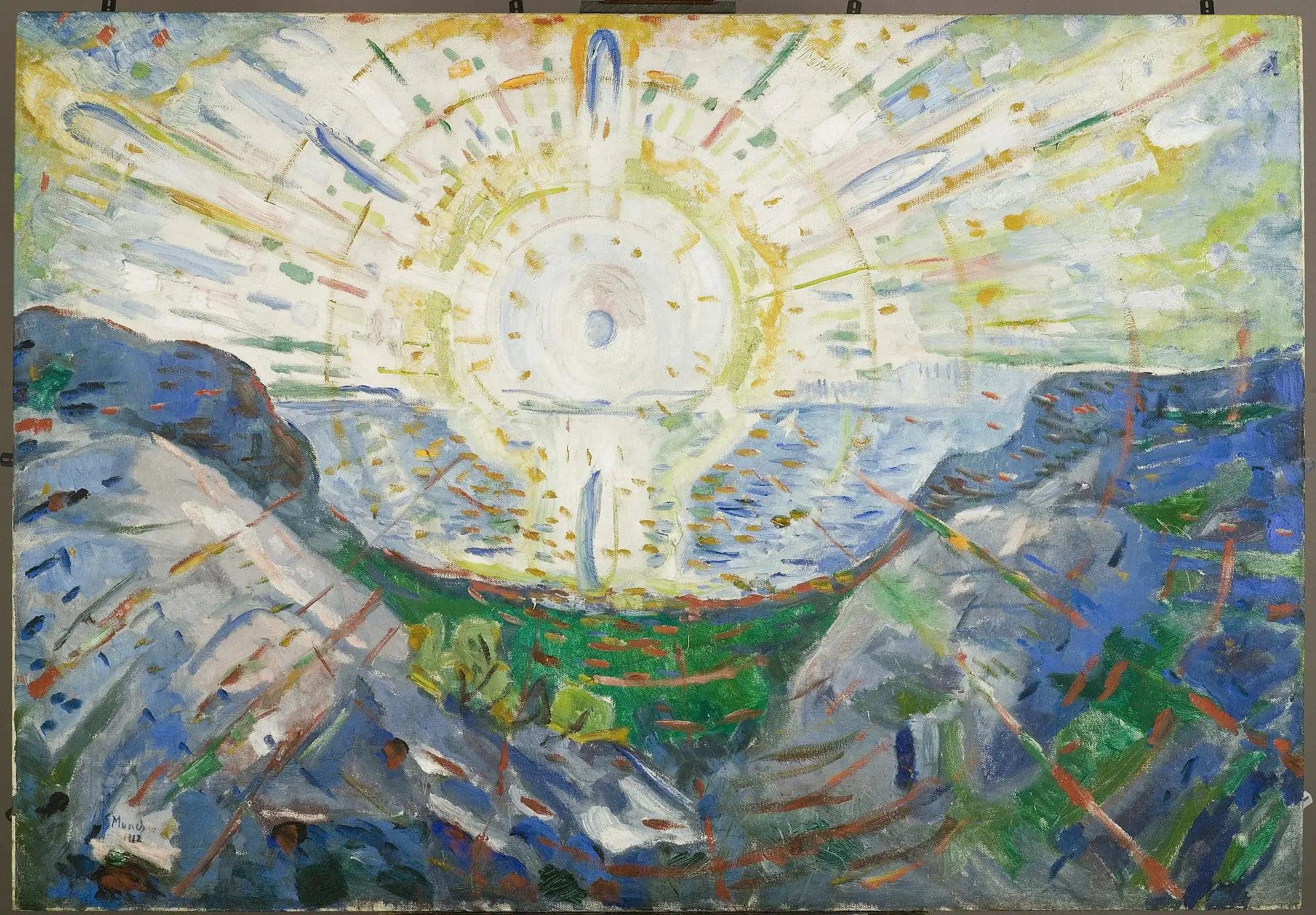
The Sun
- Original dimensions
- 786 x 449 cm
- Museum
- University of Oslo Aula
- Year
- 1911
Scene depicted
The Sun by Edvard Munch represents a scene of rare intensity. Here, the sun radiates beyond simple physical concepts, transcending the limits of painting to evoke an almost palpable warmth. The composition features human figures that seem to merge into the color, creating a dialogue between the viewer and this vibrant light that illuminates elements of the surrounding nature.
Historical context
Created in 1911 in Oslo, Munch's painting is rightfully part of the expressionist movement, reflecting an era marked by transition and social upheaval. This canvas , currently displayed at the University of Oslo museum, stands as a symbol of the search for identity and human emotion at the beginning of the 20th century.
Place in the artist's career
This canvas is situated at a turning point in Munch's career, a period when he reaches stylistic maturity. Compared to other works like The Call of Nature and The Dance of Life, The Sun reflects a technical evolution, moving from a darker approach to a poetic celebration of light. Munch thus develops a pictorial language that will make him essential in the world of modern art.
Anecdote
“The sunlight sneaks through the shadows and inspires me to paint,” Munch reportedly said after contemplating the rising star on a spring morning. This quote highlights the very essence of his canvas : a vibrant brightness, a celebration of life and nature. This fleeting moment illustrates the origin of this masterpiece while revealing the artist's soul.