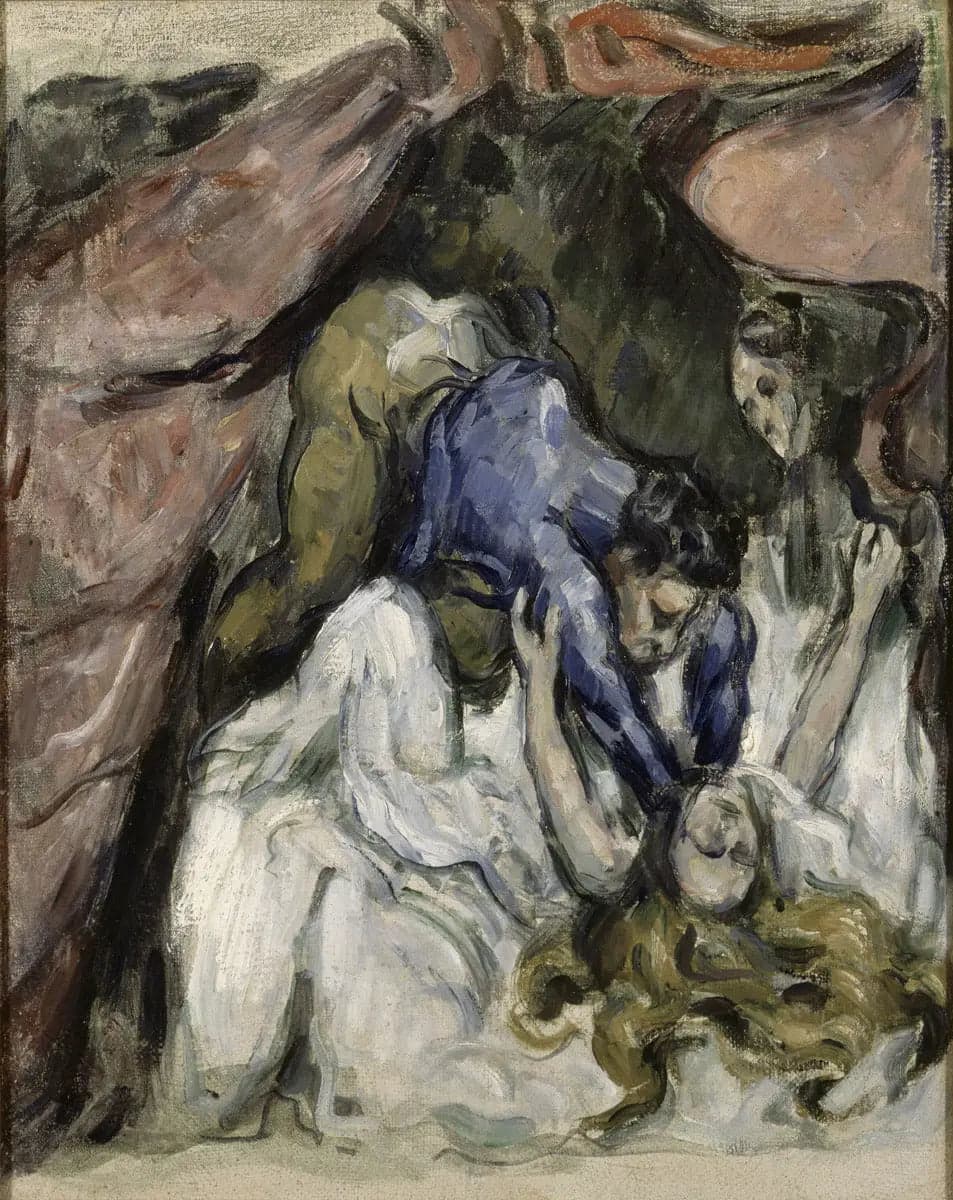
The Strangled Woman
- Original dimensions
- 24.7 x 31.2 cm
- Museum
- Orsay Museum
- Year
- 1876
Scene depicted
The composition of The Strangled Woman immerses us in an intimate world, where the expression of a woman is highlighted through striking lines and colors. The artist explores themes of passion, anguish, and a disturbing beauty, creating a palpable tension that resonates beyond mere representation. The forms blend delicately, forming a painting that captivates and challenges the viewer.
Historical context
Created in 1876, this iconic painting finds its roots in the vibrant heart of Paris, a city where artistic effervescence and contemporary movements intertwine. During this period, post-impressionism emerges, heralding the modernity of art. The canvas, now housed in the Orsay Museum , embodies this creative dynamic, offering a window into the soul of an era.
Place in the artist's career
The Strangled Woman represents a crucial step in Cézanne's career, a pivotal moment between his promising beginnings and his stylistic blossoming. In parallel with other paintings like The Card Players and The Montagne Sainte-Victoire, one observes an evolution in his technique and artistic vision, characterized by an incessant quest for pictorial truth.
Anecdote
Paul Cézanne , one of the pioneers of modern art, said: “Painting is a spirit. It is necessary to feel things before painting them.” The inspiration for The Strangled Woman came to him one spring morning while contemplating a face in a quiet alley, marking a fleeting encounter but devoid of temporality, immortalized in this pictorial work. This painting, full of nuances, tells a story of deep emotions and connection with human essence.