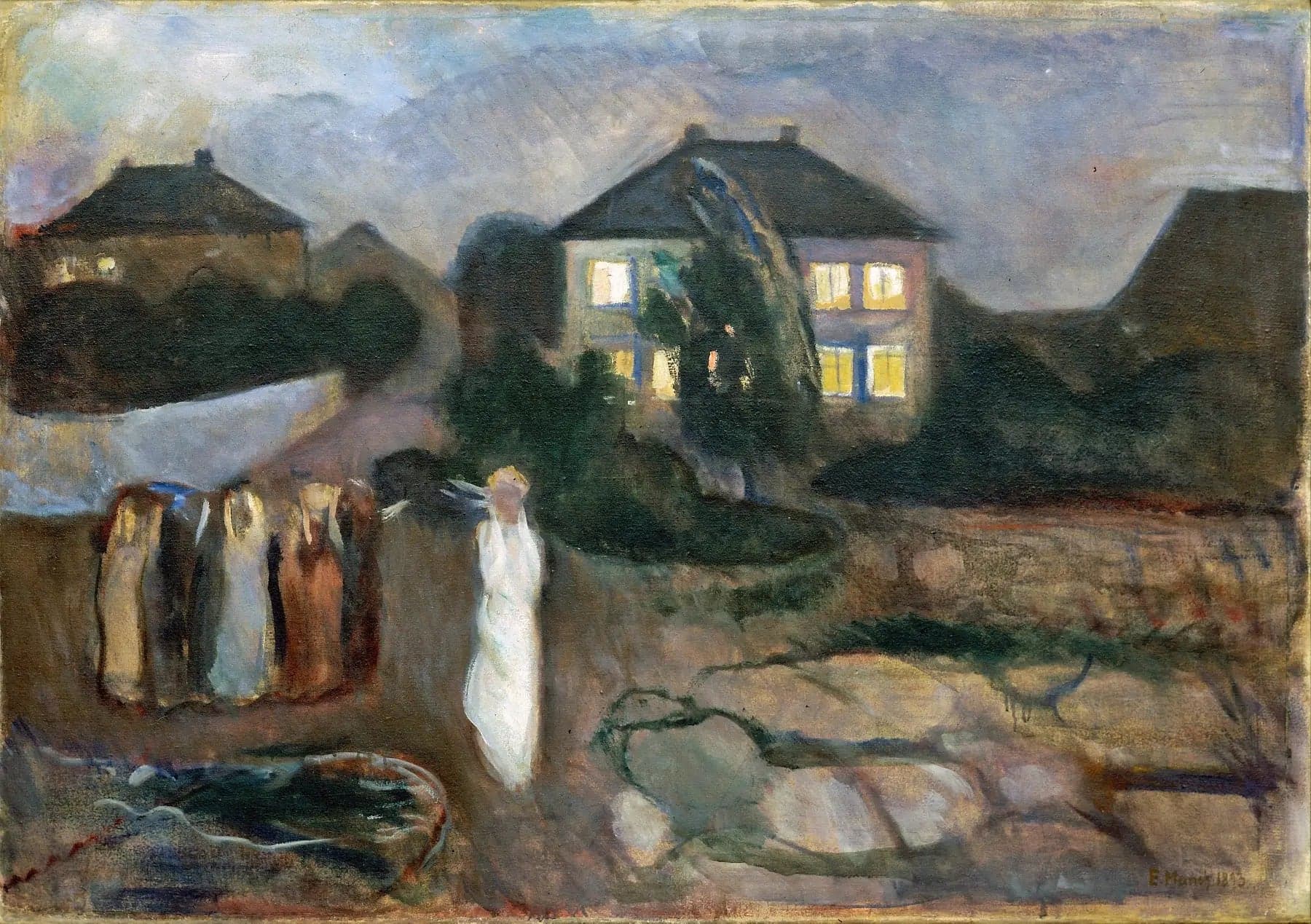
The Storm
- Original dimensions
- 131 x 92 cm
- Museum
- Museum of Modern Art
- Year
- 1893
Scene depicted
The painting represents a scene of dramatic intensity, where the swirling forms of the sky intertwine with human silhouettes evoking struggle and suffering. Munch uses these elements to capture the tumultuousness of the human soul, while transposing the violence of the external storm to an inner conflict. Each brushstroke seems to vibrate with palpable turbulence, rendering this masterpiece deeply emotional.
Historical context
Created in 1893, in the painful context of a Europe undergoing sociopolitical transformations, The Storm is part of the expressionist movement of which Munch is an emblematic figure. This painting, currently exhibited at the Museum of Modern Art in New York, reflects a troubled era, marked by emotional tensions. Its dimensions, 131 by 92 cm, make it both an imposing and intimate work.
Place in the artist's career
The Storm is situated at a major turning point in Munch's career, representing a phase of artistic maturation. While his earlier painting “The Scream” explores similar themes of anguish, his later works, such as “The Madonna,” reveal a more intimate exploration of sensuality. Thus, The Storm emerges as a bridge between the exploration of pain and that of beauty.
Anecdote
“I wanted to capture the storm that roars within me.” These words resonate as Munch painted, inspired by the storm rumbling above his hometown of Oslo, blending the wild nature with his own inner turmoil. This moment of introspection and revelation illuminates the evocative power of the painting , which speaks of the struggle between light and darkness.