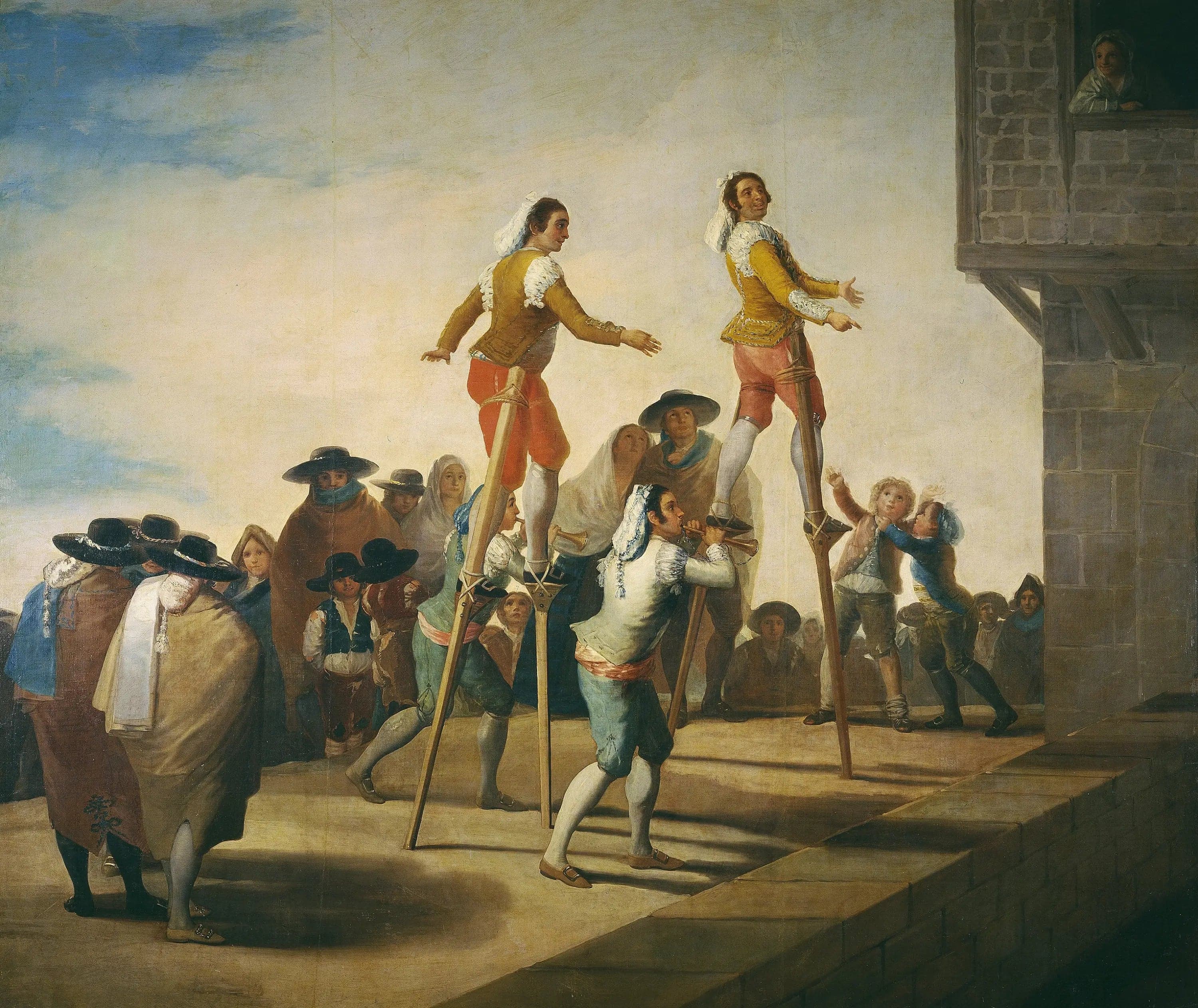
The Storks
- Original dimensions
- 320 x 268 cm
- Museum
- Prado Museum
- Year
- 1791
Scene depicted
The painting “The Storks” finely depicts the aquatic landscape, where the storks move elegantly, embodying lightness and grace. Through this carefully orchestrated scene, Goya immerses us in a natural universe where fauna and flora harmonize, while subtly hinting at universal themes of escape and contemplation, revealing layers of subliminal interpretations.
Historical context
Created in 1791, this canvas emblematic of Francisco de Goya finds its origin in Madrid, a city vibrant with stories and artistic movements. Falling within the romantic movement, The Storks reflects a pivotal period, where art becomes a mirror of social upheavals and psychological reflections. The painting is housed in the famous Prado Museum, where it continues to enchant visitors with its imposing dimensions and emotional depth.
Place in the artist's career
At the heart of Goya's career, “The Storks” represents a period of artistic maturity. This painting stands alongside other iconic paintings of the artist, such as “The Naked Maja” and “The Parasol,” illustrating a refined technical evolution. Each work testifies to a journey where emotion and innovation meet, offering a unique perspective on Goya's stylistic transformation.
Anecdote
“The painting must awaken the soul and speak to its heart.” On a morning in April, as the song of birds resonated through the streets of Madrid, Goya drew inspiration from the scenes of the surrounding nature. It was a bright moment, where the simple beauty of the storks in the marshes became a metaphor for the human struggles present in the composition of this masterpiece .