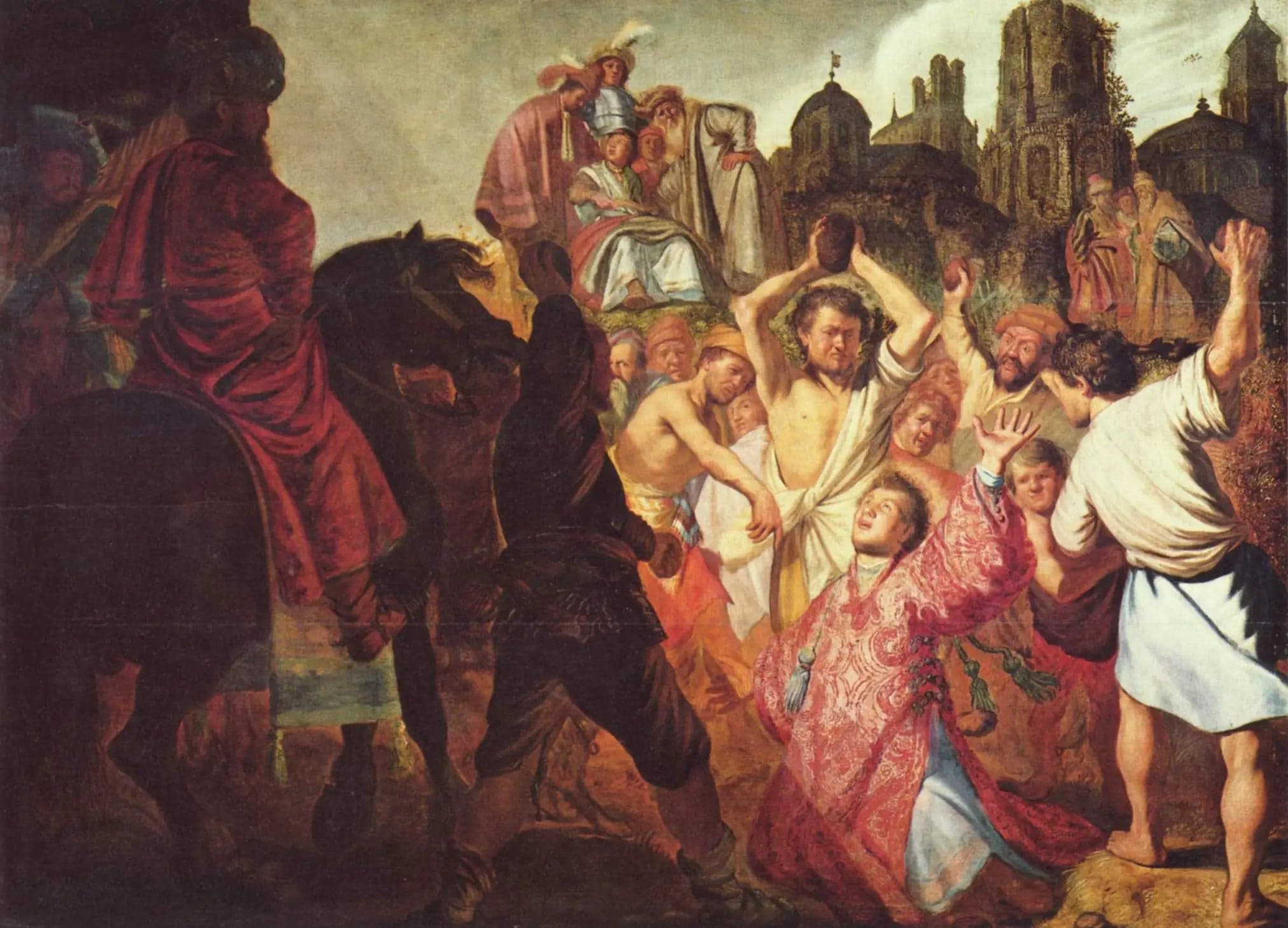
The Stoning of Saint Stephen
- Original dimensions
- 123.6 x 89.5 cm
- Movement
- Dutch Golden Age
- Museum
- Museum of Fine Arts in Lyon
- Year
- 1624
Scene depicted
This painting transports the viewer to a scene from the New Testament where Saint Stephen, the first Christian martyr, faces a furious crowd. The palpable tension and unwavering mercy are evident on the faces of the protagonists, their emotions conveyed through a skillfully orchestrated composition. Rembrandt manages to capture the emotional turmoil of this scene, paying tribute to the bravery of a man facing his tragic fate.
Historical context
Created in 1624, this painting is emblematic of the Dutch Golden Age, a period when art reached peaks of creativity and emotion. Lyon, cradle of cultural wealth, today houses this canvas at the Museum of Fine Arts. Its imposing size of 123.6 by 89.5 cm captivates at first glance, inviting a careful exploration of its details.
Place in the artist's career
The Stoning of Saint Stephen represents a turning point in Rembrandt 's career. Immediately after gaining some notoriety, this work marks the transition to darker and more emotional themes. Alongside “The Night Watch” and “Self-Portrait at 34,” this canvas illustrates the evolution of his style, demonstrating his growing mastery of chiaroscuro and pictorial storytelling.
Anecdote
Rembrandt once declared: “In darkness, one must know how to seek the light.” Imagine one morning, in the heart of Amsterdam, a soft light filtering through the clouds, inspiring the artist to immortalize the sacrifice of Saint Stephen. This thought illuminates the soul of the painting , a poignant reminder of a tragic moment of faith and resilience.