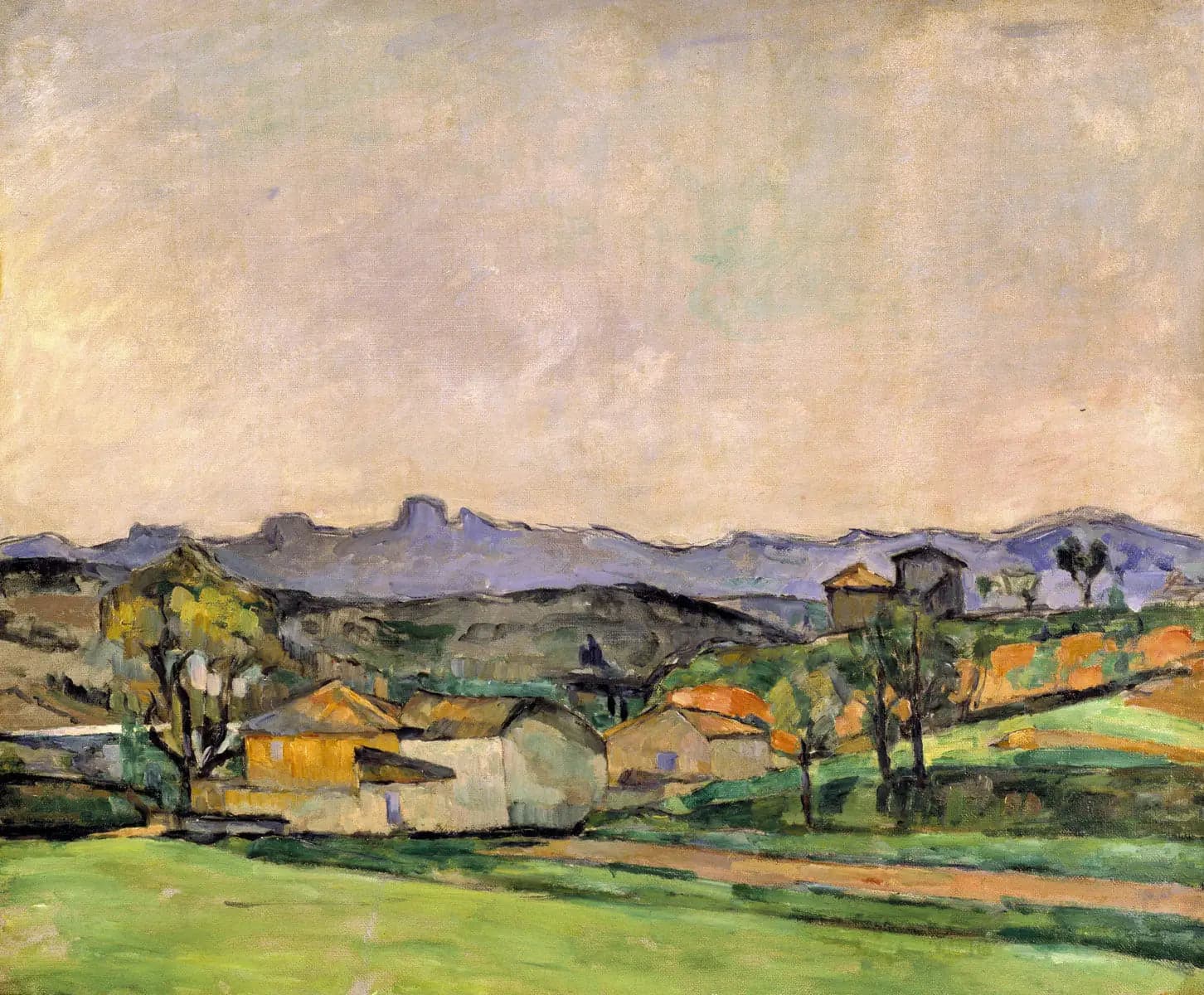
The Star Chain with the King's Pestle
- Original dimensions
- 59 x 49.2 cm
- Museum
- Kelvingrove Art Gallery and Museum
- Year
- 1878
Scene depicted
In this pictorial work , Cézanne immerses us in a landscape of color and texture, where geometric reliefs boldly emerge. The harmony between light and shadow, as well as the repetition of essential forms, embodies an innovative vision of nature, while granting it unparalleled depth and palpable energy.
Historical context
Created in 1878, this remarkable painting is at the heart of the artistic effervescence of Auvers-sur-Oise, where Paul Cézanne immerses himself in the light and colors of the French landscape. Known for its impressionist movement, this canvas marks a major turning point in the artist's career. Currently, the painting is preserved at the Kelvingrove Art Gallery and Museum in Scotland, where its vibrant atmosphere continues to captivate visitors.
Place in the artist's career
This painting represents a decisive turning point in Cézanne's career, marking the beginning of his quest for a more abstract form of art. In parallel with works such as "The Large Bathers" and "Still Life with Apples," one can see how this canvas illustrates his technical evolution, creating a dialogue between impressionism and the dawn of modernism.
Anecdote
“Nature is my only teacher, and I feel only joy in reproducing it.” These words from Cézanne evoke the inspiration behind this masterpiece , born from a morning walk through the sunlit hills. Each brushstroke on this canvas resonates as a vibrant tribute to the ephemeral beauty of the world, an emotional surge captured in the brilliance of colors.