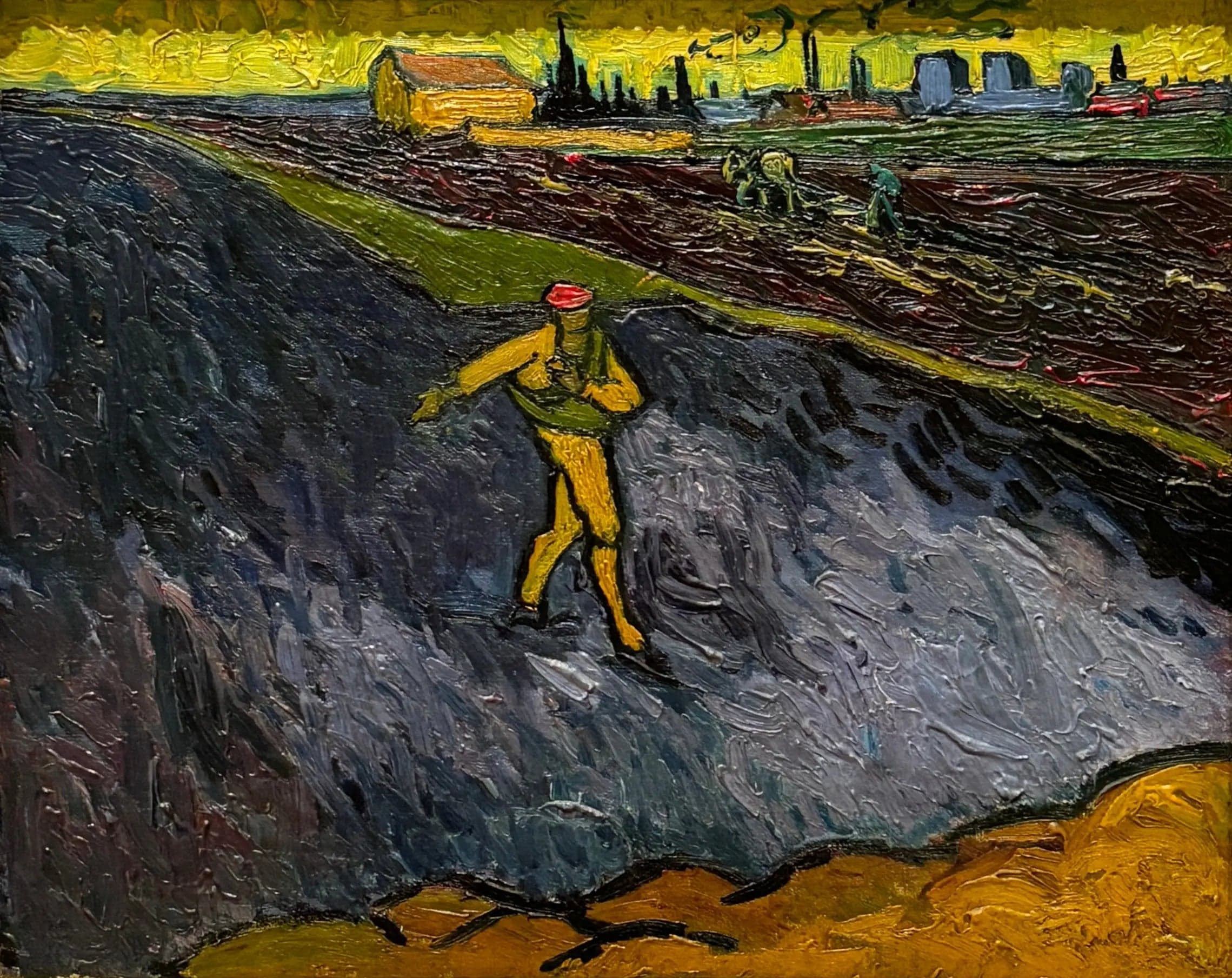
The Sower: the surroundings of Arles in the background
Scene depicted
This painting immerses the viewer in a fertile rural landscape , where a farmer becomes the voice of nature by sowing seeds. In the background, the landscapes of Arles stretch out, bathed in brilliant light. The composition invites contemplation of the work of the land, the cycle of life, and the bond between man and his environment. Each brushstroke is an ode to the simplicity of human effort.
Historical context
Created in 1888 in the beautiful city of Arles , this painting is emblematic of the post-impressionist movement, where Vincent van Gogh captured the essence of light and nature. Currently, this canvas is preserved at the Hammer Museum in Los Angeles, offering visitors a gateway to the vibrant soul of this era. With its dimensions of 40 x 33 cm, this canvas is a true concentrate of emotions.
Place in the artist's career
“The Sower” stands as a significant milestone in Van Gogh's career. It represents a period of artistic maturity, where his style boldly asserts itself. When compared to other famous paintings such as “ The Starry Night ” and “ The Irises ”, a clear evolution in his mastery of color and light is observed, a testament to his creative genius.
Anecdote
Vincent van Gogh once said: “I dream of painting, and then I paint my dreams.” It was while contemplating the golden fields of Arles , one spring morning, that the vision of “The Sower” came to life in his mind. Inspired by the simple beauty and rhythm of nature, he crystallized this emotion in his painting , thus evoking a poetic connection with the earth.