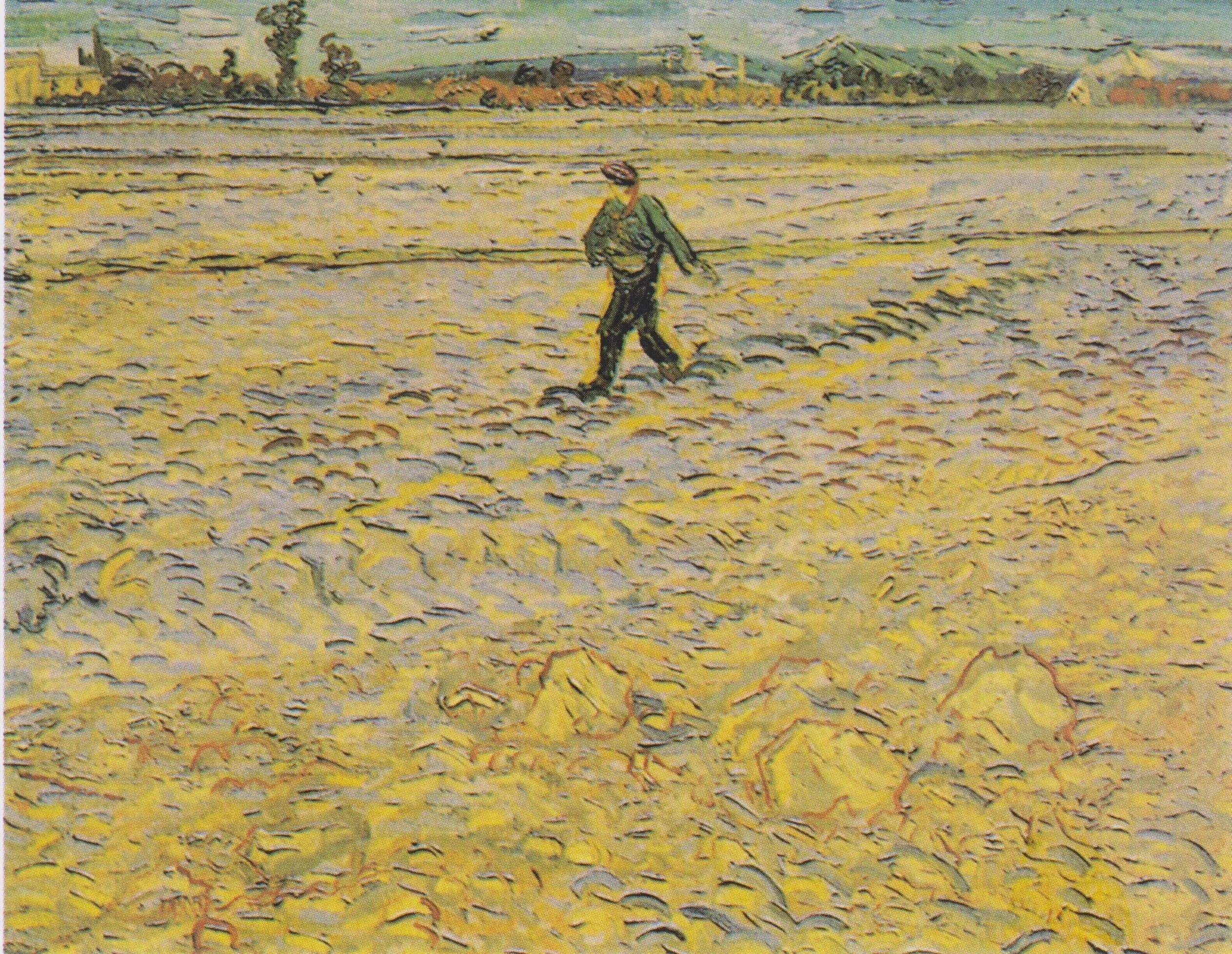
The Sower II
Scene depicted
The painting “The Sower II” immortalizes the symbolic gesture of a sower in the heart of a golden field, where each grain is both a promise of life and a call to hope. This dynamic composition immerses us in the harmony of agricultural work, illuminated by an intense light that seems to dance on the ears of wheat. The scene is both simple and majestic, paying tribute to the beauty of the rural world.
Historical context
Created in 1888, in the charming city of Arles , this painting is part of the post-impressionist movement. It emerges from a time rich in colors and emotions, where Van Gogh, in search of brilliant light, draws inspiration from the Provençal countryside. Currently, the canvas is displayed at the Bern Museum of Fine Arts , measuring 91.5 x 72 cm.
Place in the artist's career
The Sower II is a highlight of Van Gogh's career, situated in his period of experimentation with color and form. Alongside works such as “ The Starry Night ” and “ The Sunflowers ”, this painting illustrates a remarkable evolution towards a bolder and more personal expression of his emotions.
Anecdote
“Nature does not let itself be dominated, it reveals itself.” These words resonate in the heart of every observer, evoking the intensity of a sunny morning among the fields. It is with passion that Van Gogh captured the scene, transforming a simple moment of peasant life into a vibrant artwork . It is in this magnificent setting that the evocative power of The Sower II emerges.