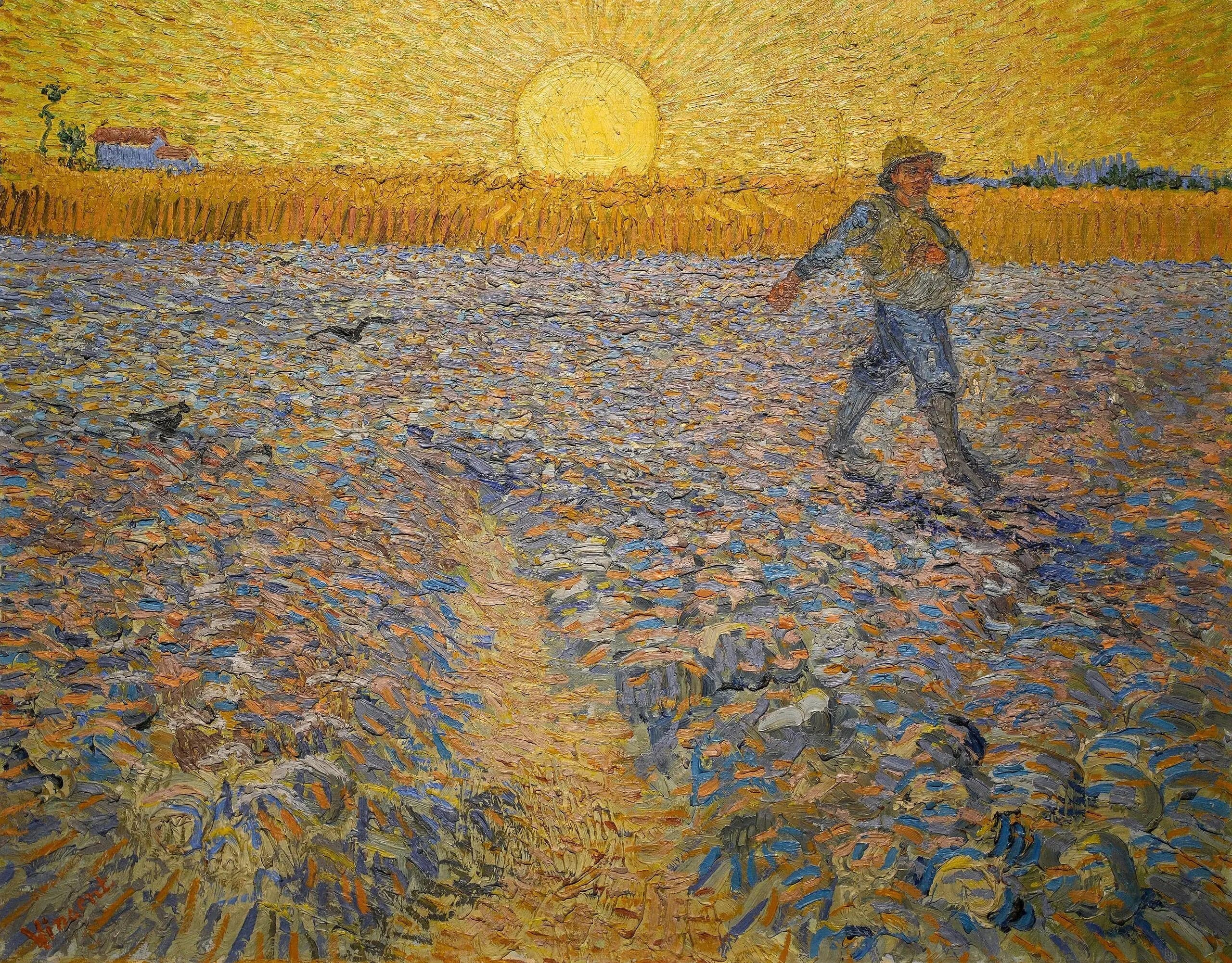
The Sower I
Scene depicted
In this masterpiece, we discover a scene vibrant with life: a man, like a messenger of the earth, sows seeds whose potential for growth is palpable. The canvas evokes the eternal cycle of nature and the promise of a prosperous future, thus highlighting the sacred bond between man and his environment.
Historical context
Created in 1888, this painting is an emblematic reflection of the artistic blossoming of Vincent van Gogh in the beautiful city of Arles , in the heart of Provence. Part of the post-impressionist movement, The Sower I captures the light and rural life of its time. Currently housed at the Kröller-Müller Museum , this canvas measures 80.3 x 64.2 cm, a format that pays tribute to the grandeur of nature and the human soul.
Place in the artist's career
The Sower I is part of an intense period of creativity for Van Gogh, marked by a surge of brightness and energy. Alongside The Sunflowers and The Starry Night , this painting illustrates his bold technical evolution, characterized by vivid colors and dynamic strokes. It reflects an artistic maturity that transforms each canvas into an emotional and vibrant composition.
Anecdote
“I want to touch the hearts of men through my canvases, creating a warm embrace between man and the earth.” This sentiment permeated the genesis of The Sower I , when one gentle and light-filled April morning, Van Gogh observed farmers plowing the land, their silhouettes outlined against an incandescent background. This profound inspiration is embodied in every brushstroke of his painting .