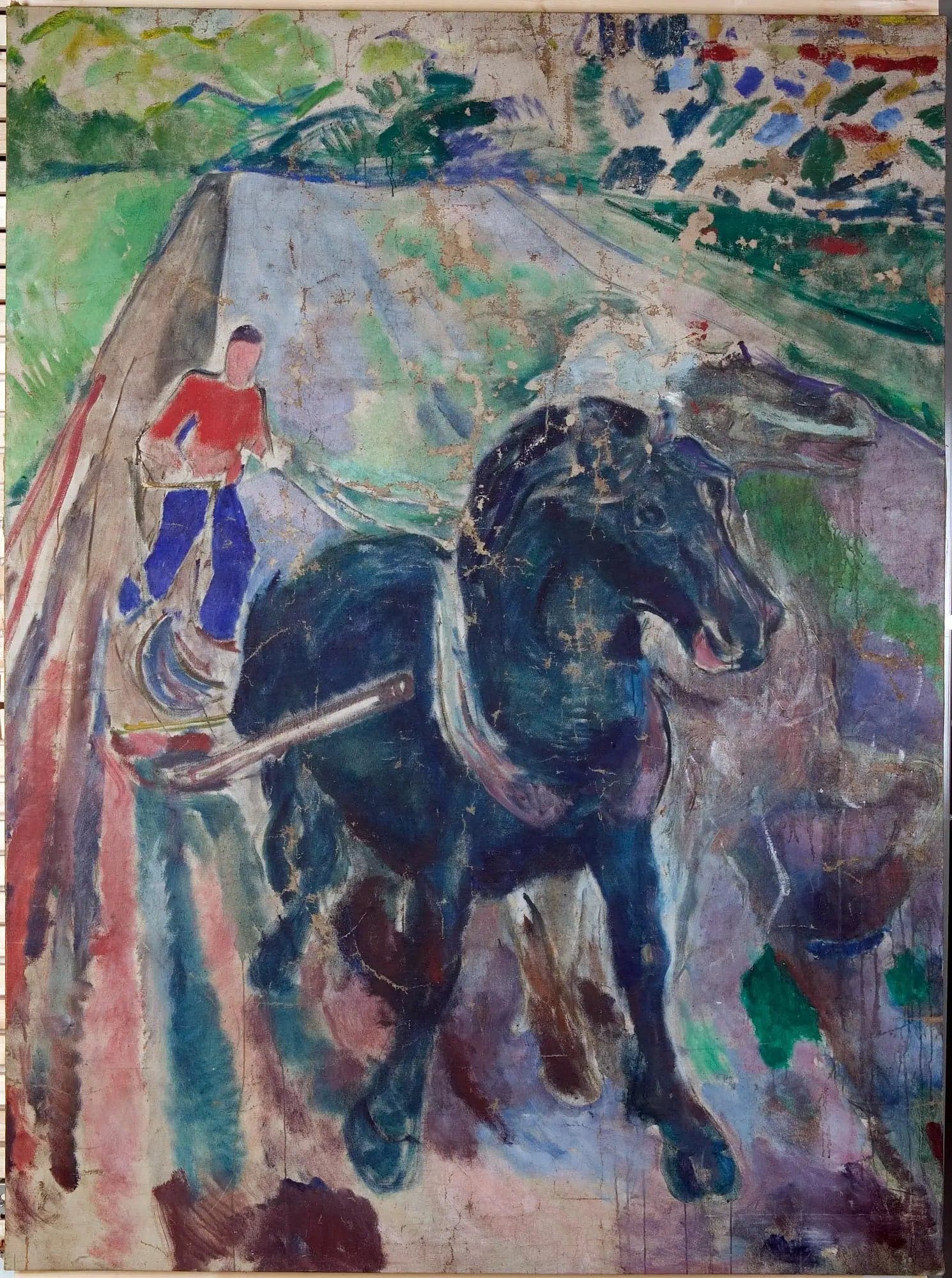
The Sower
- Original dimensions
- 115.5 x 90.8 cm
- Museum
- Not specified
- Year
- 1913
Scene depicted
In The Sower , a solitary figure stands out, embodying struggle and hope. The image evokes a moment of quest, reflecting the bond between man and the earth. This painting, with its vast golden fields, simulates a dance between light and shadow, offering an emotive vision of human labor. Each brushstroke becomes a breath of life; each texture an imprint of the soul.
Historical context
The pictorial work The Sower was created in 1913, during a time when symbolism and expressionism were gaining momentum in Europe. Signed by the Norwegian genius Edvard Munch , this painting echoes his deep artistic commitment, while being rooted in the dynamic cultural context of this period. The hosting museum is not specified, but the painting – with its imposing dimensions – evokes an undeniable presence.
Place in the artist's career
The Sower represents a crucial step in Edvard Munch 's career, marking a transition to a deeper expression. Alongside other works such as The Scream and The Madonna , this painting positions itself as a vibrant emission from the artist's maturity period, where introspection and pure emotion take precedence over technique itself.
Anecdote
“I discover beauty in pain.” These words from Edvard Munch reflect the very essence of his canvas . He recalls a spring morning, walking along a dusty road, when the idea of the masterpiece appeared to him, omnipresent and vibrant. This inspiration, imbued with deep melancholy, finds its strength in The Sower .