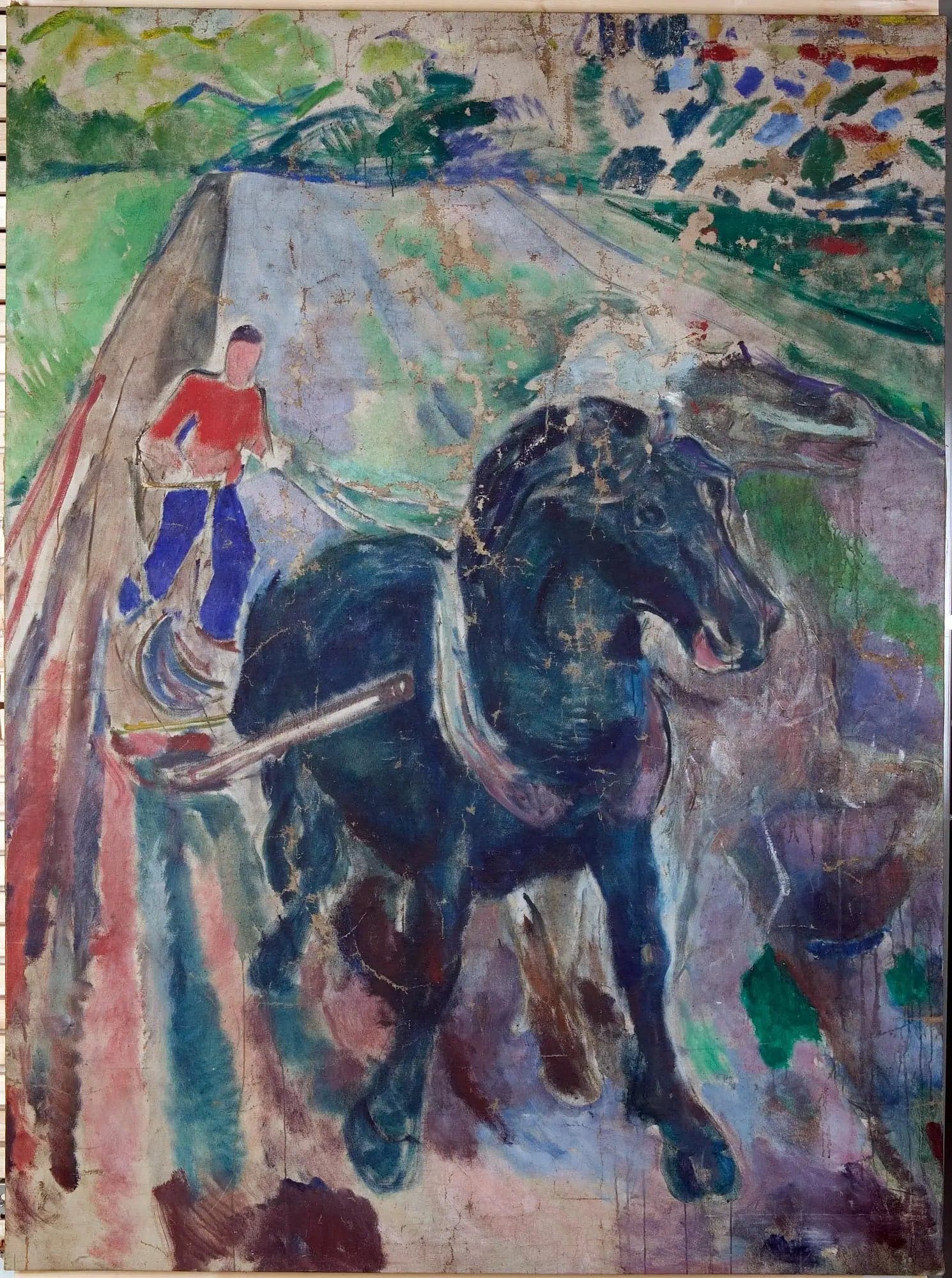
The Sower
- Original dimensions
- 75.5 x 123.5 cm
- Museum
- Munch Museum
- Year
- 1912
Scene depicted
In this painting , a peasant is depicted sowing seeds, an act filled with promise and renewal. The fluid, almost dancing movements of the character blend with the surrounding landscape, illustrating the intimate bond between man and nature. The vibrant colors create a balanced atmosphere, where the earth, sky, and humanity intertwine in a harmonious composition.
Historical context
Created in 1912, in Oslo, this painting is emblematic of the symbolist movement, characteristic of the work of Edvard Munch . It captures the intensity of human emotions, reflecting an era marked by profound transformations, both psychologically and socially. Today, this canvas is located at the Munch Museum, where it attracts art admirers from around the world.
Place in the artist's career
“The Sower” represents a crucial step in Edvard Munch 's career, marking a phase of artistic maturity. Situated between “The Scream” and “The Madonna,” this canvas shows his evolution towards a softer articulation of emotions. His technique in this work contrasts with the sometimes tormented intensity of his other paintings , offering a refreshing balance to his repertoire.
Anecdote
Edvard Munch once stated: “I only painted what I saw and what I felt.” “The Sower” emerges from his intimate reflections on life and existence. This fresh morning when he observed the fields stretching infinitely, illuminated by a soft glow, inspired this masterpiece and revealed the beauty of working the land.