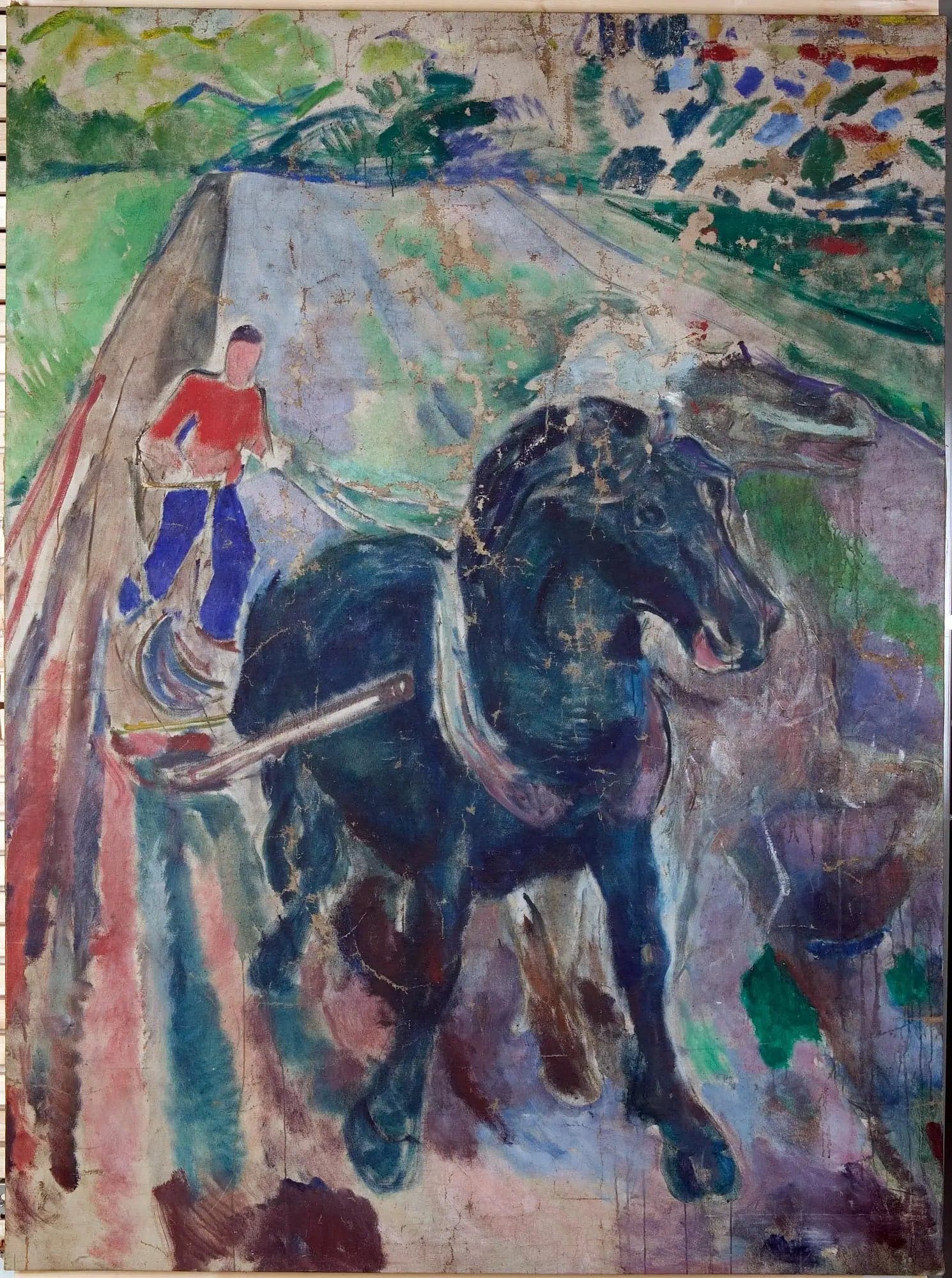
The Sower
- Original dimensions
- 199.5 x 265 cm
- Museum
- Munch Museum
- Year
- 1912
Scene depicted
At the heart of this painting , a peasant walks the fertile soil, sowing seeds with poetic determination. The movement of his arms, languorous and full of promise, evokes the duality between human effort and natural cycles. The scene breathes hope and continuity, a tribute to the strength of life, as the landscape unfolds under a vibrant sky.
Historical context
Created in 1912 in Oslo, this canvas , emblematic of the expressionist movement, encounters the turmoil of a world in full transformation. The painting is present at the Munch Museum, a place of memory where visitors dive into the troubled universe of the artist. In an era marked by artistic upheavals, The Sower emerges as a poignant work, capturing raw and deep emotions.
Place in the artist's career
The Sower is situated in a period where Munch shapes his artistic identity. At this time, with major works such as The Scream and Madonna , he explores the depths of the human soul through the canvas . This painting represents a phase of blossoming, where the artist asserts himself in his ability to translate complex emotions through bold colors and shapes.
Anecdote
"I seek to paint the suffering of the human soul," Munch might have said during one of his morning reflections. Inspired by a walk through the fields of Oslo, he captures the fragile beauty of a dawning dawn, when nature reveals itself in an electrified silence, merging the artist's state of mind with the magic of painting .
Major exhibitions
Edvard Munch . Monumental projects