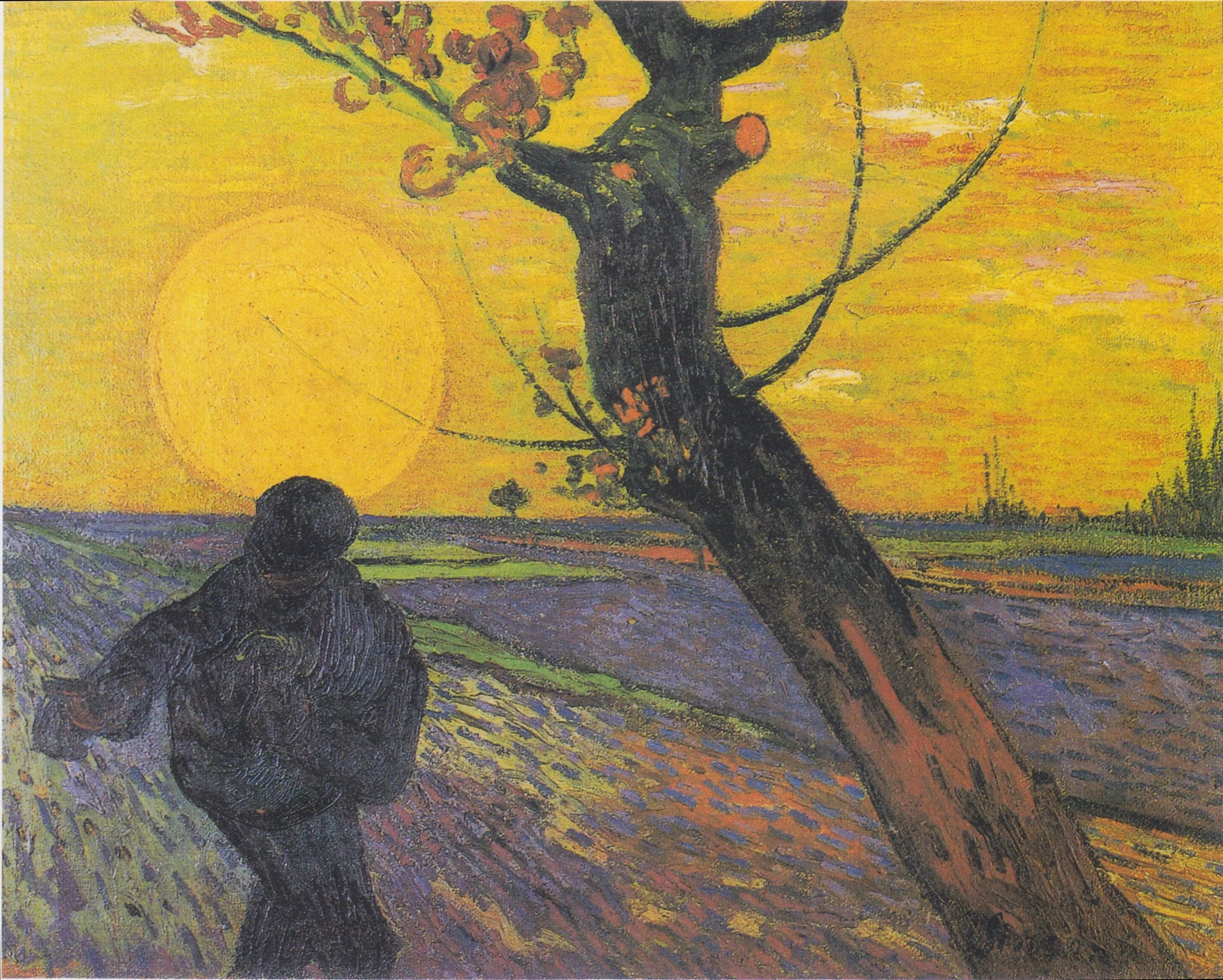
The Sower at Sunset
Scene depicted
In this painting , the sower, animated by a tranquil energy, moves with determination across a fertile field. The contours of his body are illuminated by a golden light, his silhouette standing out against the fiery background of the twilight sky. The vibrant shades of earth and sky blend to create a composition that speaks of hope and connection to the land. It is an ode to nature, a painting that questions the cycle of life and the work of the land.
Historical context
Created in 1888, in the city of Arles , this painting is emblematic of the post-impressionist movement. This period is marked by a bold exploration of colors and forms, reflecting a time when art breaks the chains of tradition. The canvas is currently housed at the Emil G. Bührle Foundation and Collection , an institution that celebrates artistic heritage in Geneva. Its majestic dimensions of 93 x 73.5 cm capture the eye and stimulate the soul.
Place in the artist's career
The Sower at Sunset represents a crucial milestone in Van Gogh's career, a pivotal moment where his style asserts itself brilliantly. In parallel with his other works, such as The Sunflowers and Starry Night , this canvas reveals a technical evolution where color becomes a character in its own right, infusing emotion into every brushstroke, every nuance.
Anecdote
“Let yourself be carried away by the light of twilight, for it caresses the soul like no other moment of the day,” he might have said while contemplating the spectacle of the horizon. This masterpiece was born from a fleeting moment when Van Gogh observed a sower in golden light, a wonder of nature that inspired him to capture this fleeting moment on his canvas .