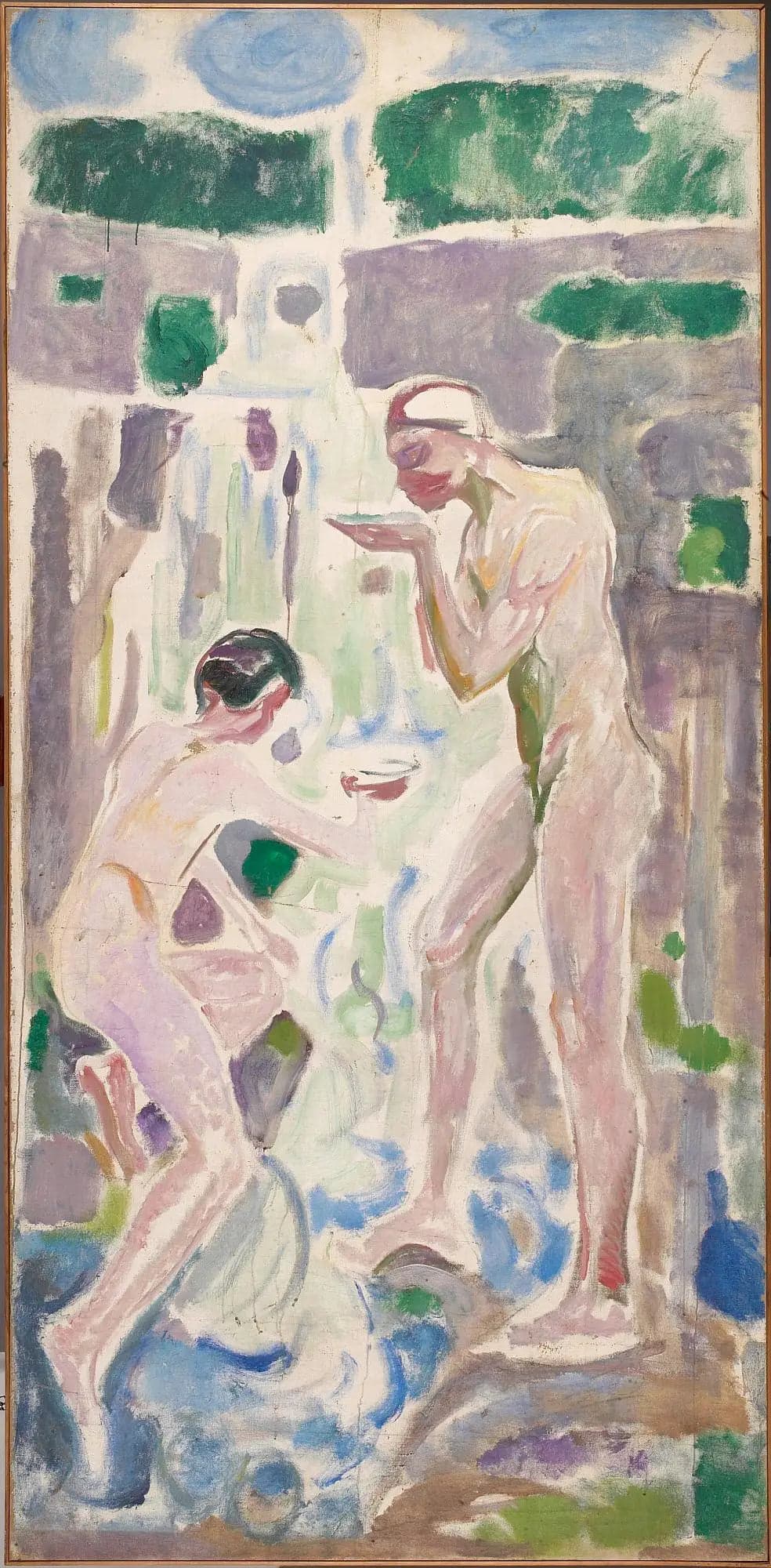
The Source
- Original dimensions
- 197 x 487 cm
- Museum
- Munch Museum
- Year
- 1910
Scene depicted
The Source depicts a fleeting moment, a spiritual encounter between water and earth. The pictorial work revolves around the idea of rebirth and purification, highlighting the importance of water in human life. The surreal forms and dynamic composition reveal feelings of awakening and serenity, allowing the viewer to enter a realm where harmony reigns supreme.
Historical context
Created in 1910, The Source by Edvard Munch is set in the vibrant context of the city of Oslo, Norway. This painting is famous for enriching the expressionist movement, marking a time when human psychology and the passion for emotions took precedence over previous artistic conventions. The canvas, currently displayed at the Munch Museum, is a powerful symbol of this period, measuring 197 by 487 cm.
Place in the artist's career
The Source marks a crucial milestone in Munch's career. Situated at the peak of his creativity, this painting fits perfectly between works like The Scream and The Madonna, illustrating a constant evolution in his pictorial language. By comparing these paintings, one observes a refinement of his techniques and an intensification of his emotions.
Anecdote
Munch often said: “Nature is my greatest teacher, and my emotions, my best colors.” That morning, while walking near a sparkling spring, the artist found inspiration. The dancing light on the water and the rustle of the leaves infused him with the energy needed to create this masterpiece , a canvas that evokes the harmony between man and nature.