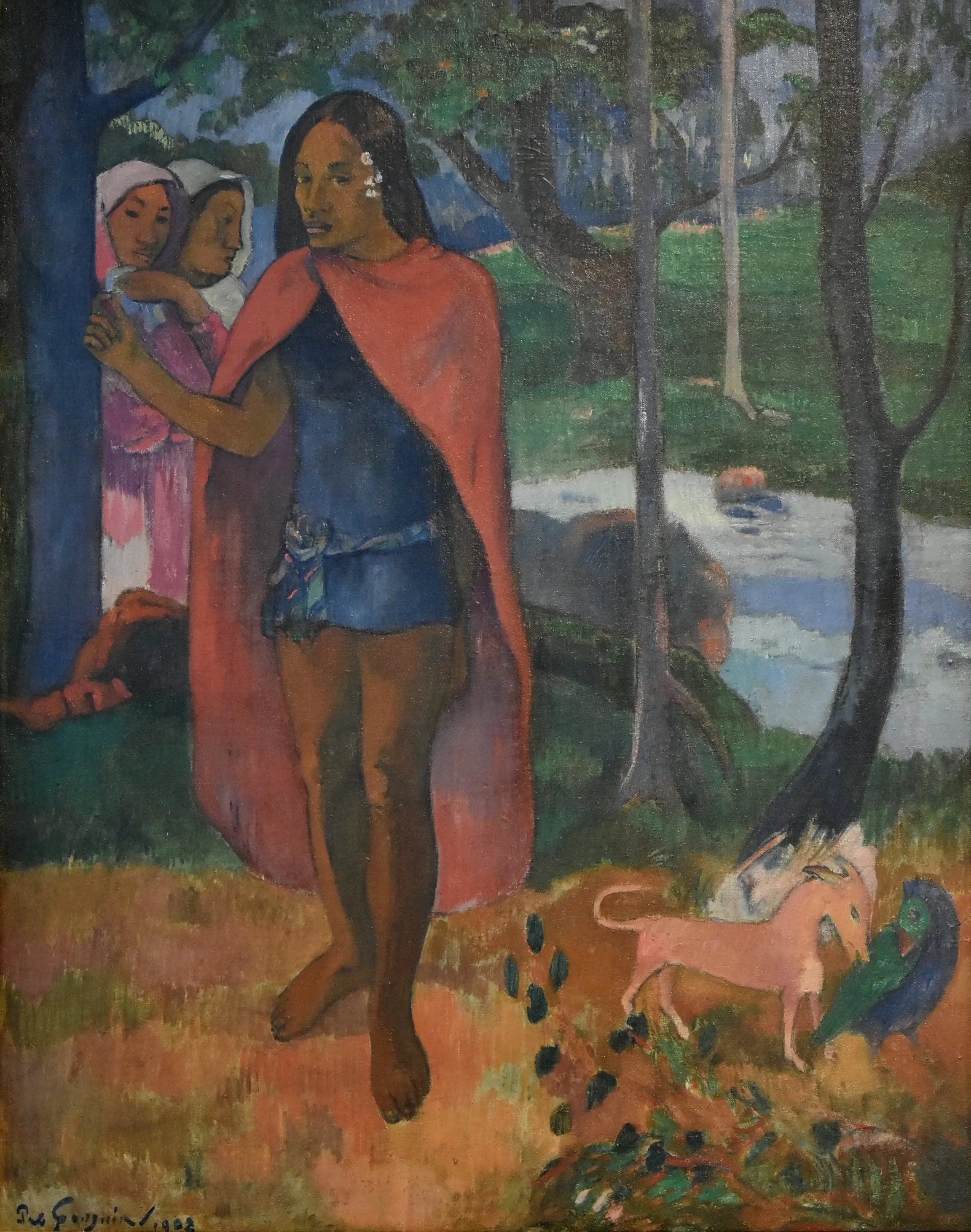
The Sorcerer of Hiva-Oa
- Original dimensions
- 73 x 91 cm
- Museum
- La Boverie
- Year
- 1902
Scene depicted
This painting presents a majestic figure, with marked features imbued with wisdom, a local sorcerer almost divine. The painting animates a scene of sacred initiation, where the intensity of the gaze and traditional symbols blend with a lush backdrop. Each shade used by Gauguin reveals not only a personality but also a vibrant culture, a precious testimony of the traditions of the Marquesas Islands.
Historical context
Painted in 1902, this work emblematic of Paul Gauguin is rooted in the vibrant landscapes of Hiva-Oa, an island in the Marquesas, symbolizing a time when post-impressionism was blossoming in its full essence. His painting, currently housed in the La Boverie museum, vividly evokes the artist's quest for harmony between spirituality and nature, at the heart of a constantly evolving world.
Place in the artist's career
This masterpiece fits into a crucial period of Gauguin's career, marking his liberation from academic conventions. Alongside works such as "Vision after the Sermon" and "Vanity," The Sorcerer of Hiva-Oa shows the evolution of his palette adding symbolic dimensions, merging the figurative and the abstract in a dreamlike universe.
Anecdote
“I wanted to capture the soul of places and people, to paint life beyond appearances.” In this quote, Gauguin shares his fervent desire to discover and immortalize the richness of a singular world, an inspiration he felt one languid morning on the enchanting shores of Polynesia. The Sorcerer of Hiva-Oa embodies this quest, a canvas filled with emotions and mysticism.