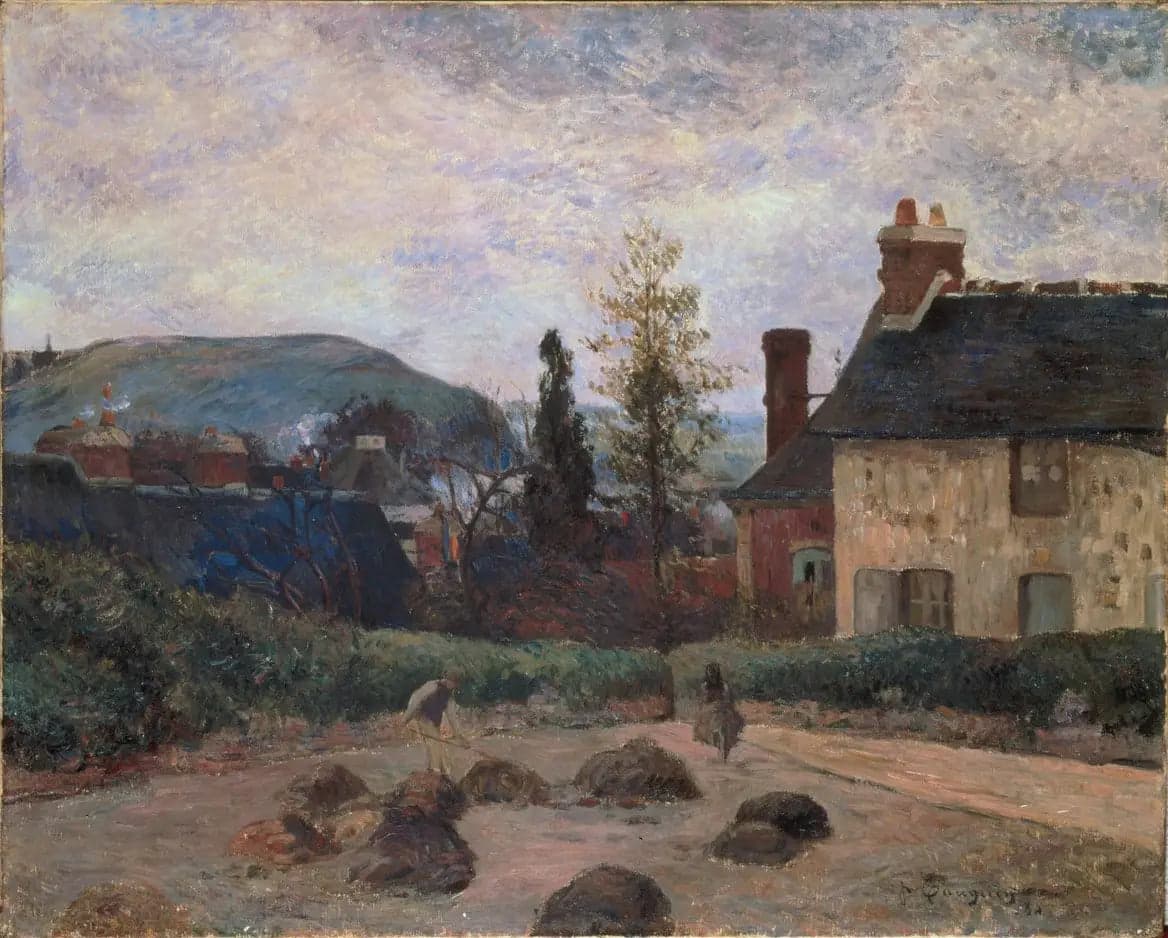
The Smoke of the Lands
- Original dimensions
- 72.4 x 58.4 cm
- Museum
- Wallraf-Richartz Museum
- Year
- 1884
Scene depicted
The composition of The Smoke of the Lands transports us to the heart of a natural scene of poignant simplicity. Human figures blend into a rural landscape, likely inspired by the lands of Brittany. The smoke rising evokes nostalgic memories while the light plays on the faces, creating an atmosphere of reflection and contemplation. Every detail in this painting resonates with the ephemeral beauty of life, capturing the very essence of Gauguin's genius.
Historical context
Created in 1884, in a Paris experiencing artistic effervescence, The Smoke of the Lands by Paul Gauguin is part of the Post-Impressionism movement. This movement, born from a desire to reinvent forms and colors, stands out for its expressive representation of everyday life scenes. Today, this painting is preserved at the Wallraf-Richartz Museum in Cologne, measuring 72.4 by 58.4 cm, a size that allows for an intimate appreciation of this unforgettable pictorial work.
Place in the artist's career
The Smoke of the Lands represents a milestone in Gauguin's promising career, marking the beginning of his exploration of rural themes and representations of peasant life. Alongside works like Vision After the Sermon and The Yellow Christ , this painting shows how the artist begins to experiment with bold colors and unconventional compositions, thus heralding his period of artistic maturity.
Anecdote
“Each painting is a journey through time, a breath of life captured in pigments.” It is with these words that Paul Gauguin evokes his inspiration. Imagine him one spring morning, strolling down a cobblestone alley, feeling the first strips of warmth filtering through the trees. This fleeting moment gave birth to the evocative power of The Smoke of the Lands , a painting where nature and humanity merge in an eternal dialogue.