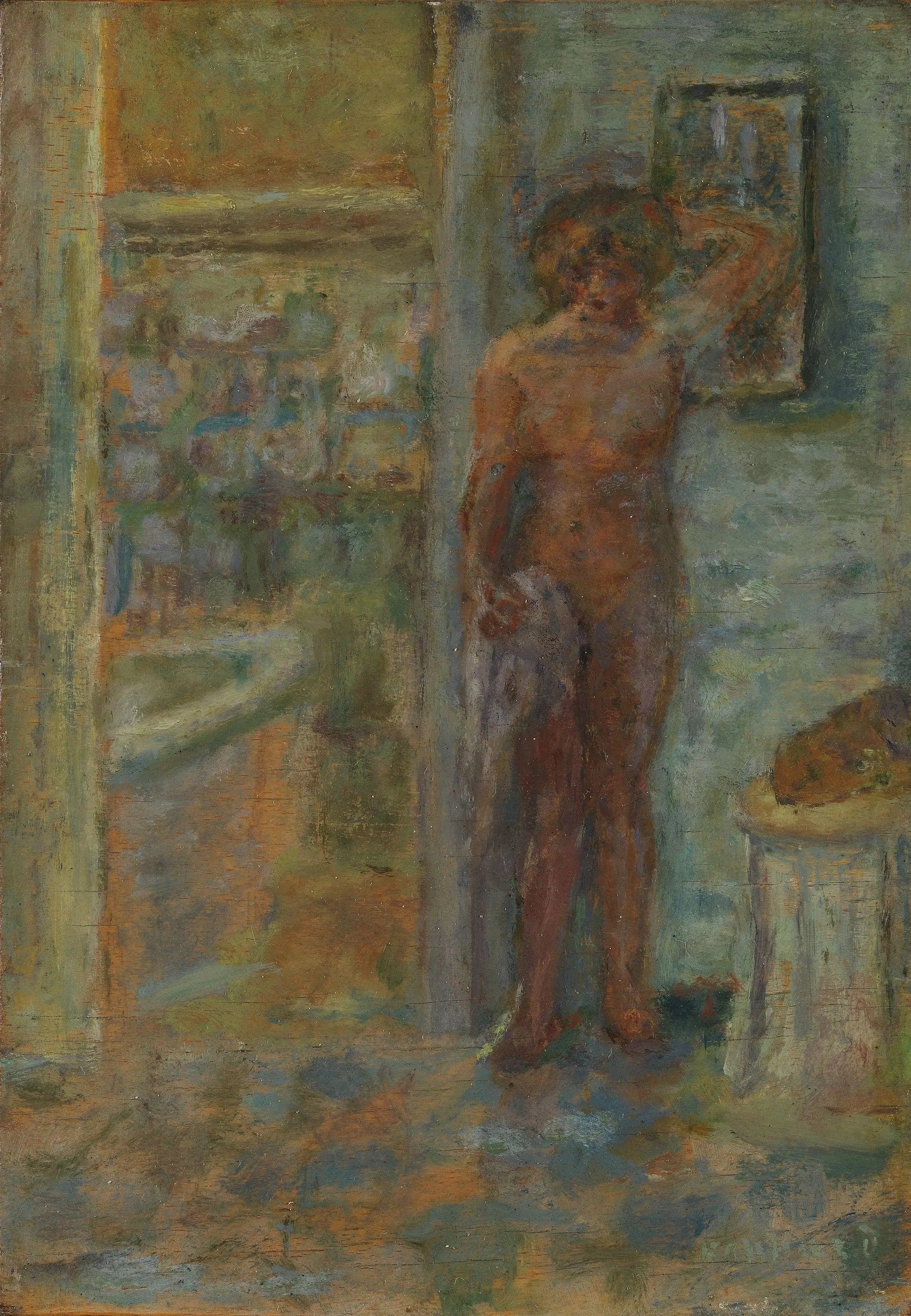
The small nude at the mirror
- Original dimensions
- 14.8 x 21.5 cm
- Museum
- National Museum
- Year
- 1917
Scene depicted
In the painting “The Little Nude at the Mirror,” the artist captures a suspended moment, where the sensuality of the nude body blends with the softness of ambient lights. The composition depicts a woman contemplating her reflection in a mirror, thus revealing an introspection that is both delicate and poignant. The painting evokes a subtle harmony between the real and the dream, an invitation to contemplation.
Historical context
Created in 1917, this iconic masterpiece by Pierre Bonnard is part of the post-impressionism movement, an artistic movement characterized by the sensory expression of emotions and lights. The scene, set in the muted backdrop of post-war France, evokes a moment of introspection and serenity. The canvas is currently housed in the National Museum, a gem in the heart of Paris where it has captivated the gaze of visitors for generations. The delicate dimensions of this painting reveal an intimacy that resonates with the viewer's gaze.
Place in the artist's career
“The Little Nude at the Mirror” is part of a pivotal period in Bonnard's career, marked by a deep exploration of light and forms. This painting, alongside works such as “The Water Lilies” and “The Nap,” testifies to his technical evolution towards a more intimate and emotional style, where each brushstroke immerses us in a vibratory and sensory universe.
Anecdote
“The light dances on the skin, each nuance is a confession” could have been said by Bonnard while contemplating this masterpiece. Inspired by a gentle spring morning, he let himself be carried away by the poetry of filtered light, a face encountered in the effervescence of a moment. This fleeting moment becomes, through The Little Nude at the Mirror , an eternal resonance of beauty and reflection.