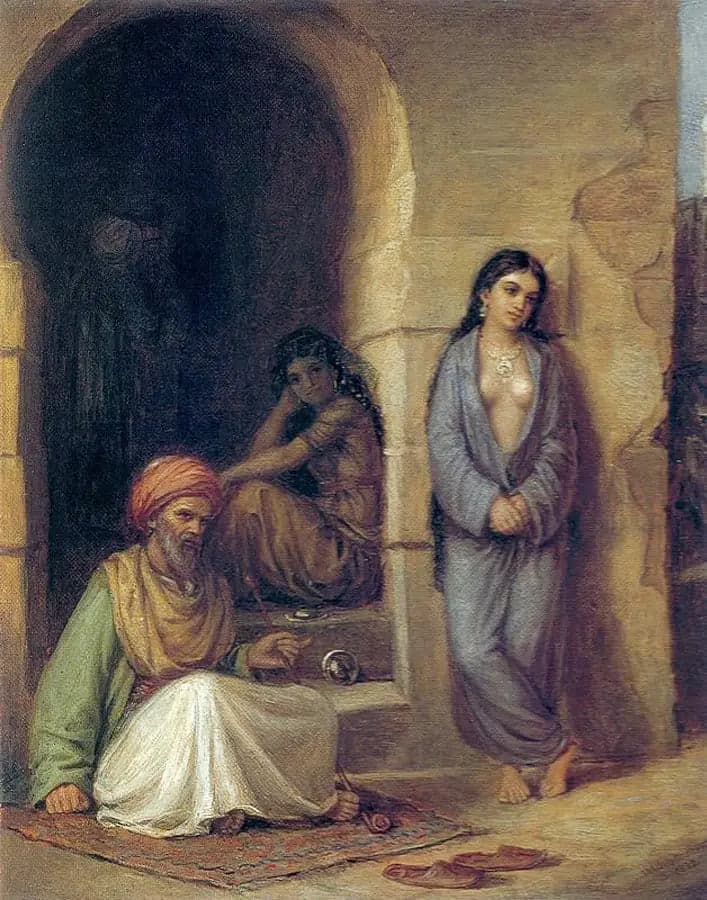
The Slave
Scene depicted
The painting “The Slave” depicts a poignant scene of despair and beauty, where a female figure stands, her eyes lost in an abyssal feeling of captivity. This pictorial work embodies the escape of the spirit despite physical restraints, stirring the sensitivity of those who contemplate this moment of immense delicacy.
Historical context
Created in 1893, this sublime painting finds its roots in London, in the realm of the Pre-Raphaelite movement. A time when art was breaking free from academic conventions, exploring themes of passion and beauty. Currently, this painting is preserved in the famous collection of the Tate Britain , immersing visitors in the charm of a bygone era. With its elegant dimensions of 102 cm x 132 cm, every centimeter of this canvas is a tribute to Waterhouse's virtuosity.
Place in the artist's career
This painting , a poetic representation of a period of artistic maturity for Waterhouse, stands majestically alongside “The Nymph and the Pastoral” and “Ophelia.” Each of these paintings shares a vibrant light, but “The Slave” stands out for its rare emotional treatment, recalling the struggle between aesthetic light and the shadow of inevitable pain.
Anecdote
“Art is the echo of human emotions,” Waterhouse would have shared during a morning walk in spring. It was in the quiet streets of London, where he crossed a captivating gaze that became the soul of this masterpiece . The inspiration, born from this fleeting moment, pulses in every brushstroke of The Slave , transforming the painting into a true visual narrative.