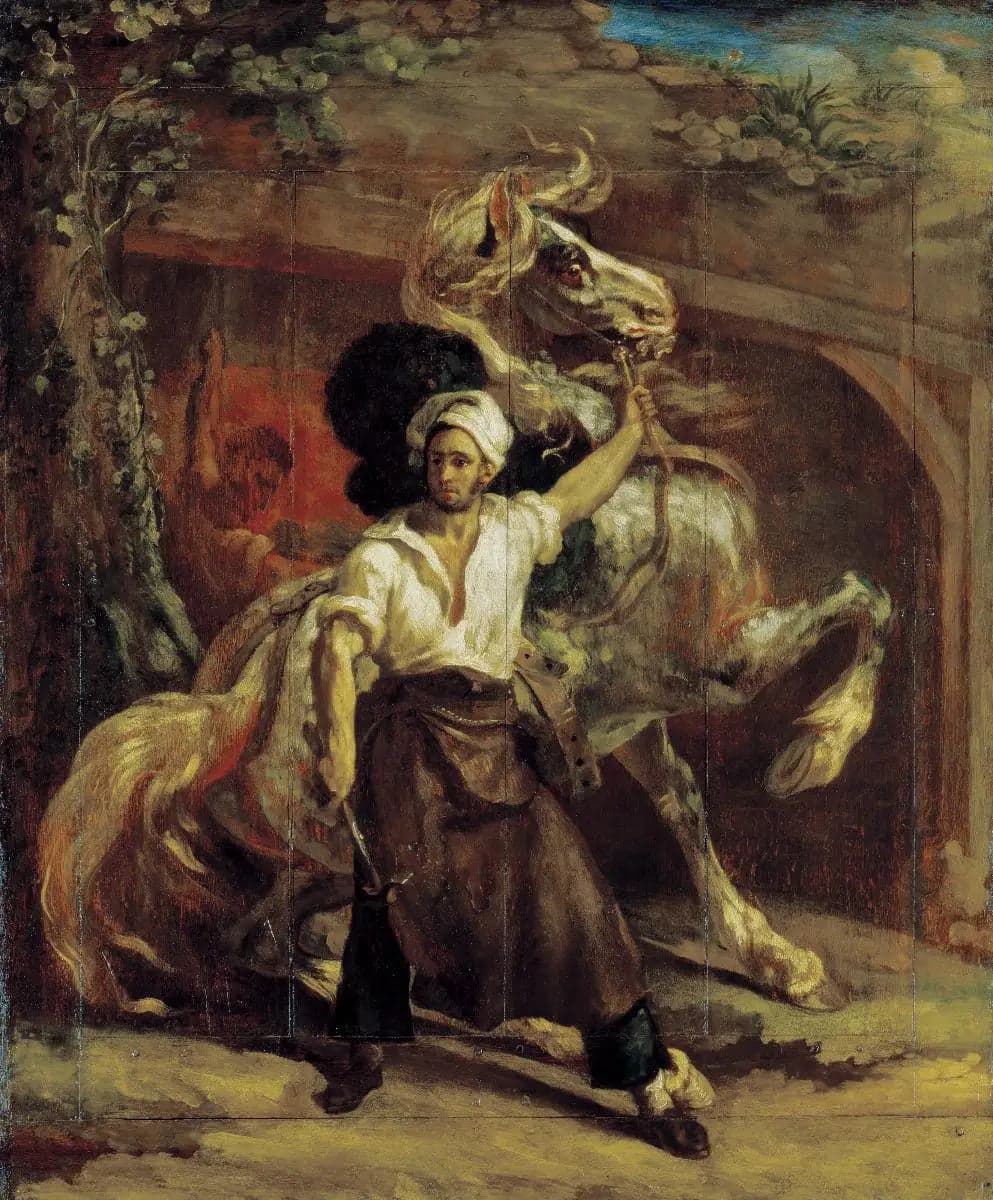
The Sign of a Blacksmith
- Original dimensions
- 102 x 122 cm
- Museum
- Kunsthaus Zurich
- Year
- 1813
Scene depicted
This painting depicts a scene of municipal life, where craftsmanship meets human richness. A delicate shadow is cast over the forge, while the characters come alive in a play of light that resonates with souls. A realization that testifies to the dedication to an honorable profession.
Historical context
Created in 1813, during a period of social and political upheaval marked by Romanticism , The Blacksmith's Sign is part of the artistic history of Paris, radiating at the heart of the romantic movement. This masterpiece is currently housed at the Kunsthaus Zurich , where it continues to fascinate art lovers.
Place in the artist's career
The Blacksmith's Sign represents a crucial step in Géricault's career. Positioned between his powerful works like The Raft of Medusa and lighter compositions such as The Hunter of the Guard , this painting illustrates his taste for social reality and emotionally charged human figures.
Anecdote
“It is not to follow fashion, but the truth,” said Géricault, reminding us of his aspiration to capture the raw reality of his time. Inspired by a morning in the shadow of the market halls, he painted this canvas as a tribute to the artisanal craft, revealing the beauty of the daily gestures of artisans.