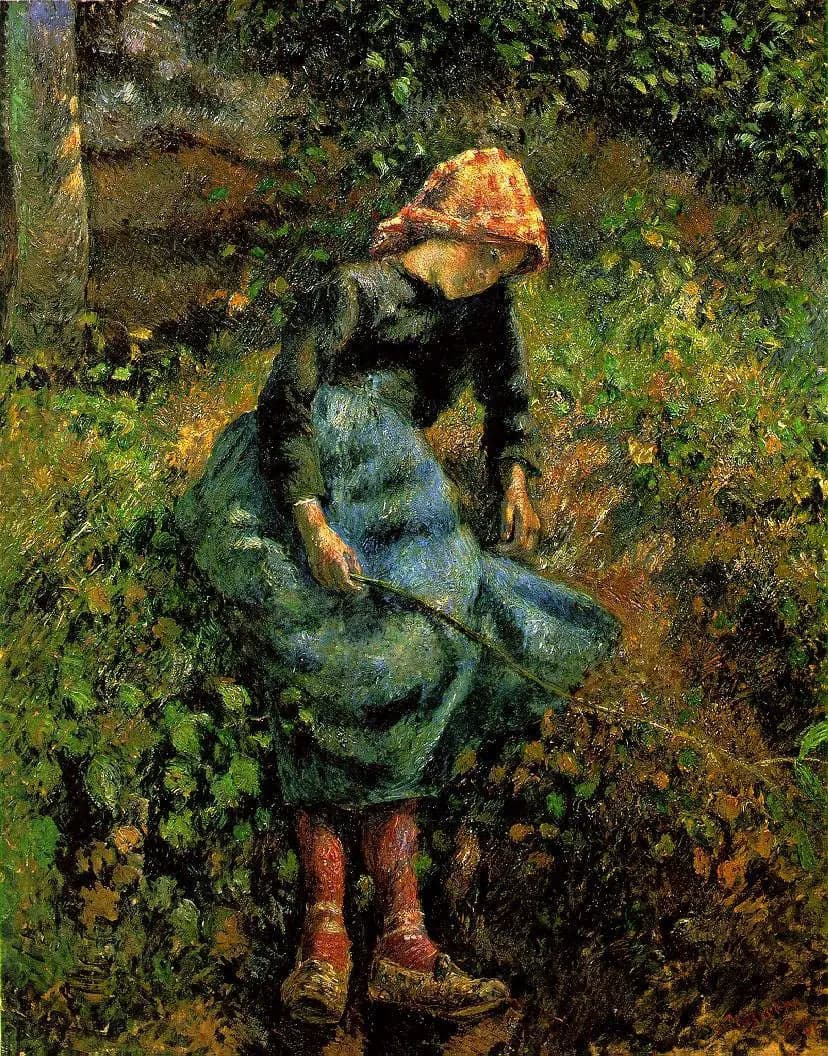
The Shepherdess
- Original dimensions
- 64.7 x 81 cm
- Museum
- Orsay Museum
- Year
- 1881
Scene depicted
The scene of The Shepherdess depicts a young woman, serenely occupied in tending her flock in a bucolic landscape. The composition highlights the simple beauty of rural life, promising serenity and harmony. The calm gaze of the shepherdess and the gentle movement of the blades of grass in the wind invite the viewer to a tranquil contemplation, far from the tumult of city life.
Historical context
Created in 1881, The Shepherdess is an iconic painting of the Impressionist movement, executed by Camille Pissarro . This canvas, currently displayed at the Orsay Museum in Paris, reflects a time when light and open air were of paramount importance in artistic creation. The size of this pictorial work, 64.7 x 81 cm, allows it to stand out while harmoniously integrating into a space.
Place in the artist's career
The Shepherdess represents a decisive turning point in Pissarro's career, who throughout his life sought to capture the essence of peasant life. This painting fits into a phase of artistic maturity, where he combines the study of light, already visible in works like The Dockers (1880) and The Hay Harvest (1882), thus showing the evolution of his Impressionist technique.
Anecdote
Camille Pissarro once stated: "Nature is the only master that should guide the artist." The inspiration for this canvas came to him on a gentle spring morning while he was walking through the lush landscapes of Eragny. The vision of a peaceful shepherdess, enveloped by nature, left an indelible mark on his heart, thus bringing this masterpiece to life.
Major exhibitions
1900 World's Fair