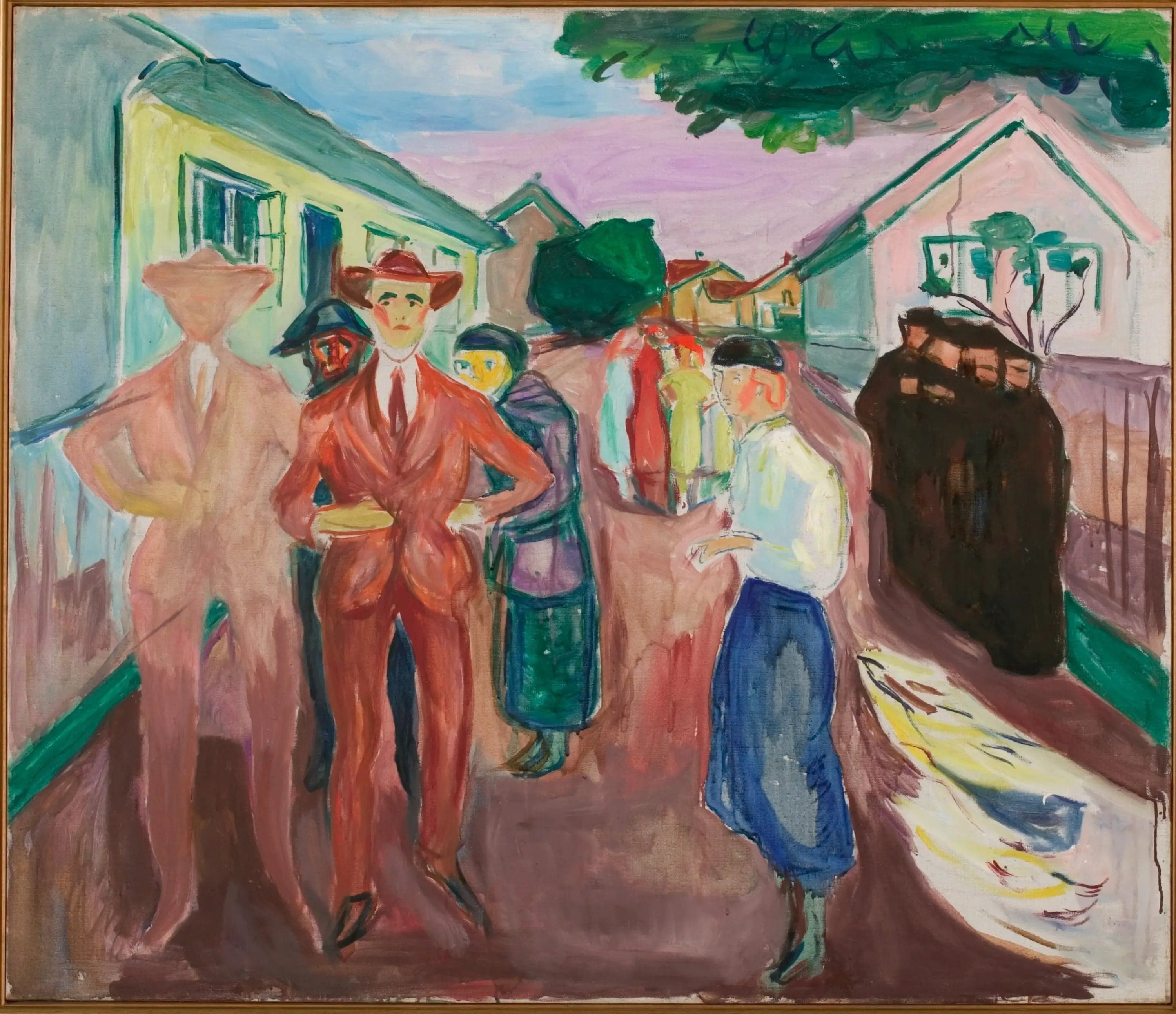
The Sharing of Faust
- Original dimensions
- 117.5 x 100.5 cm
- Museum
- Munch Museum
- Year
- 1932
Scene depicted
The Sharing of Faust is a symbolic scene that illustrates the dilemma between spiritual aspiration and material desires, highlighting the internal struggle of man. Each character, with its expressive features, embodies the tensions that inhabit the human soul. This composition creates a silent dialogue between the protagonists, moving away from classical conventions to dive into the very essence of human emotion.
Historical context
Created in 1932 in Oslo, this painting is emblematic of the expressionist movement, reflecting a tumultuous era where human emotions are highlighted. The canvas , currently exhibited at the Munch Museum, invites you to discover a region rich in contrasts, where the Northern light intertwines with the nuances of the human soul. Its imposing dimensions, 117.5 x 100.5 cm, enhance the evocative power of this already vibrant work .
Place in the artist's career
In Munch's career, The Sharing of Faust is an important milestone, revealing a turn towards darker and more introspective themes. This painting echoes other significant canvases like "The Scream" and "The Madonna," which also explore the meanders of the soul. These works illustrate Munch's stylistic evolution, oscillating between light and shadow.
Anecdote
Edvard Munch once said: "Art is a way of feeling life." This masterpiece was created in the intimacy of his studio, cradled by the whispers of the waves and the intoxicating smell of fresh paint. In this creative atmosphere, the canvas became a mirror of his anxieties and hopes, transforming a fleeting moment into a lasting inspiration.
Major exhibitions
Edvard Munch and his models: 1912-1943