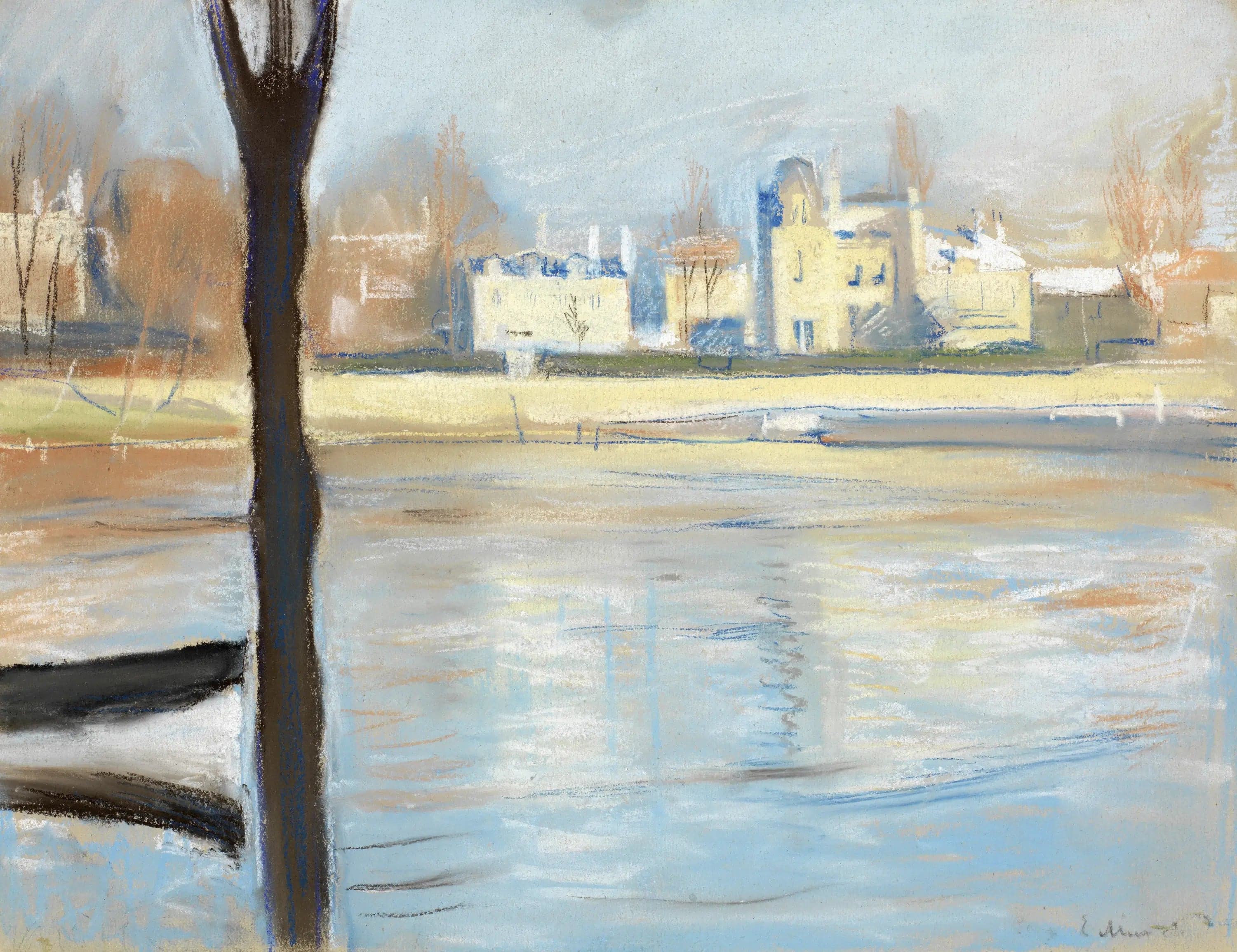
The Seine at Saint-Cloud
- Original dimensions
- 41 x 24 cm
- Museum
- Not specified
- Year
- 1890
Scene depicted
La Seine à Saint-Cloud embodies the tranquil elegance of a summer evening. The vibrant hues of the sky blend with the serenity of the water, surrounded by lush vegetation. Munch manages to create a dialogue between nature and human activity, illustrating a fragile symbiosis, capable of awakening nostalgia in those who contemplate it. This pictorial work is an invitation to a silent walk where the mind can wander freely.
Historical context
Created in 1890, this painting immortalizes a fleeting moment in Saint-Cloud, a charming town in the Hauts-de-Seine, immersed in the impressionist atmosphere that was flourishing in Europe at the time. Edvard Munch , recognized for his role in symbolism , captures here the ephemeral beauty of the Seine and its banks, evoking memories of light and serenity. Although the current location of the painting is not specified, its dimensions testify to a delicate work, immersed in the art of its time.
Place in the artist's career
La Seine à Saint-Cloud is situated at a turning point in Munch's career, where his impressionist style evolves towards introspective compositions. Alongside The Scream (1893) and The Dance of Life (1899-1900), it highlights his shift to a more free and emotional representation of landscapes, consolidating his status among the greats of modernism.
Anecdote
“In every color, I seek the soul of nature,” said Munch, inspired by a sunny morning in Saint-Cloud, the light dancing on the water like a sweet melody. It is in this poetic atmosphere that the painting comes to life, leading the viewer into an introspective contemplation of the harmony between man and his environment, connecting the heart to the canvas.