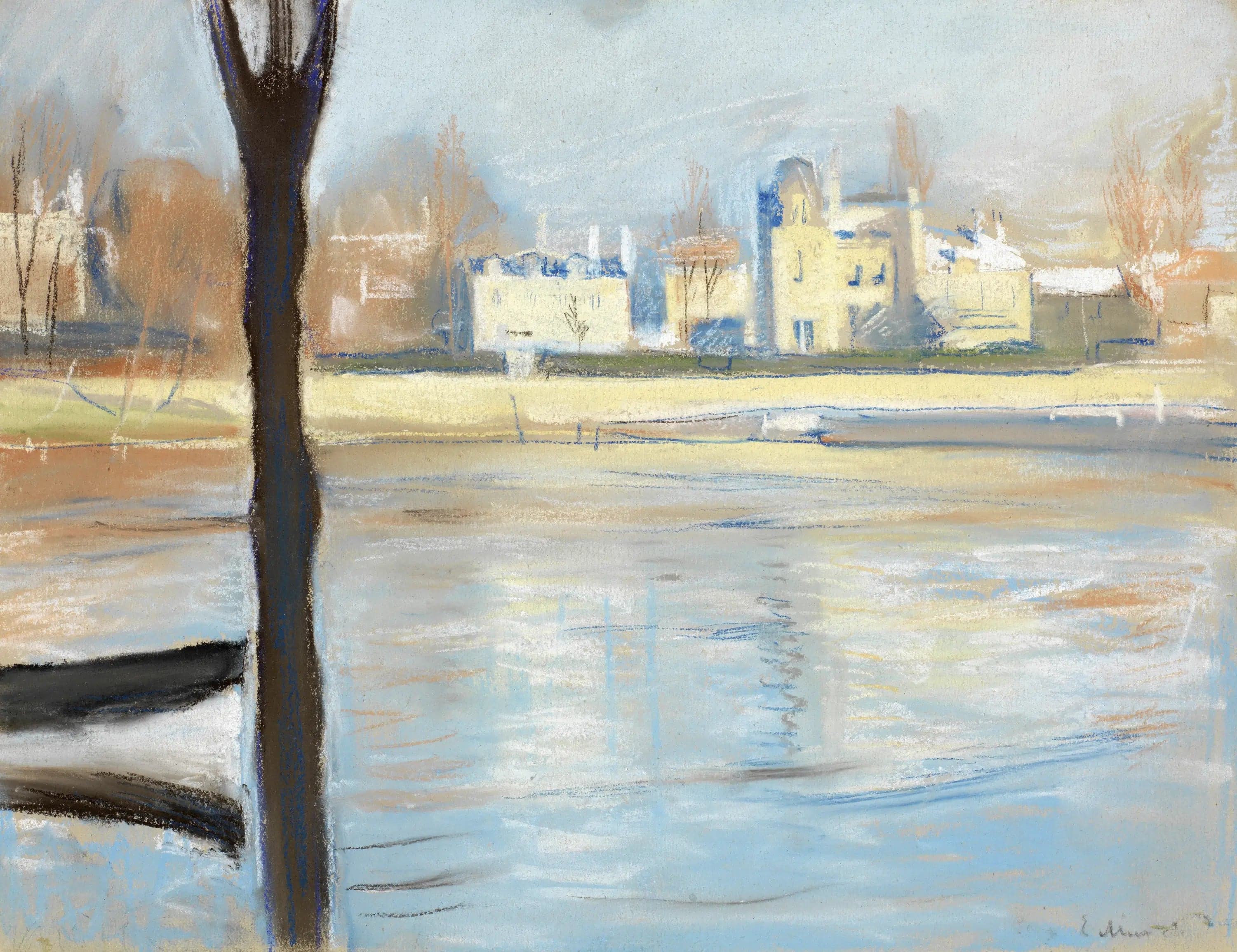
The Seine at Saint-Cloud
- Original dimensions
- 34.7 x 26.8 cm
- Museum
- Not specified
- Year
- 1890
Scene depicted
In La Seine à Saint-Cloud , Munch captures the beauty of a landscape filled with tranquility and poetry. The vision of the winding river stretching under a changing sky evokes the inner reflections of man in the face of nature. Every element, from the sparkling water to the trees dancing in the light breeze, contributes to expressing a duality between calmness and the tumult of the human soul, echoing the quest for meaning so present in Munch's work.
Historical context
Created in 1890, this painting is set in the charming surroundings of Saint-Cloud, France, the epicenter of pictorial impressions from the late 19th century. La Seine à Saint-Cloud is part of the symbolist movement, where emotion and introspection blend with a landscape that is both familiar and imbued with mystery. Today, this canvas remains a vibrant testament to the artistic soul of its creator, Edvard Munch , whose legacy continues to fascinate art lovers.
Place in the artist's career
La Seine à Saint-Cloud illustrates a period of maturation in the career of Edvard Munch . This canvas , which falls between landmark works like The Scream and The Dance of Life , shows his stylistic evolution. One can perceive the shift from an explicit figurative approach to a more nuanced exploration of feelings, thus adding emotional depth to his painting .
Anecdote
“Each canvas is a window into another reality.” This quote from Edvard Munch perfectly evokes the inspiration that brought La Seine à Saint-Cloud to life. Imagine the artist strolling along the Seine, one spring morning, cradled by the gentle murmur of the water and the dancing light on its surface. It is this feeling of serenity mixed with a slight melancholy that this pictorial work depicts so powerfully.