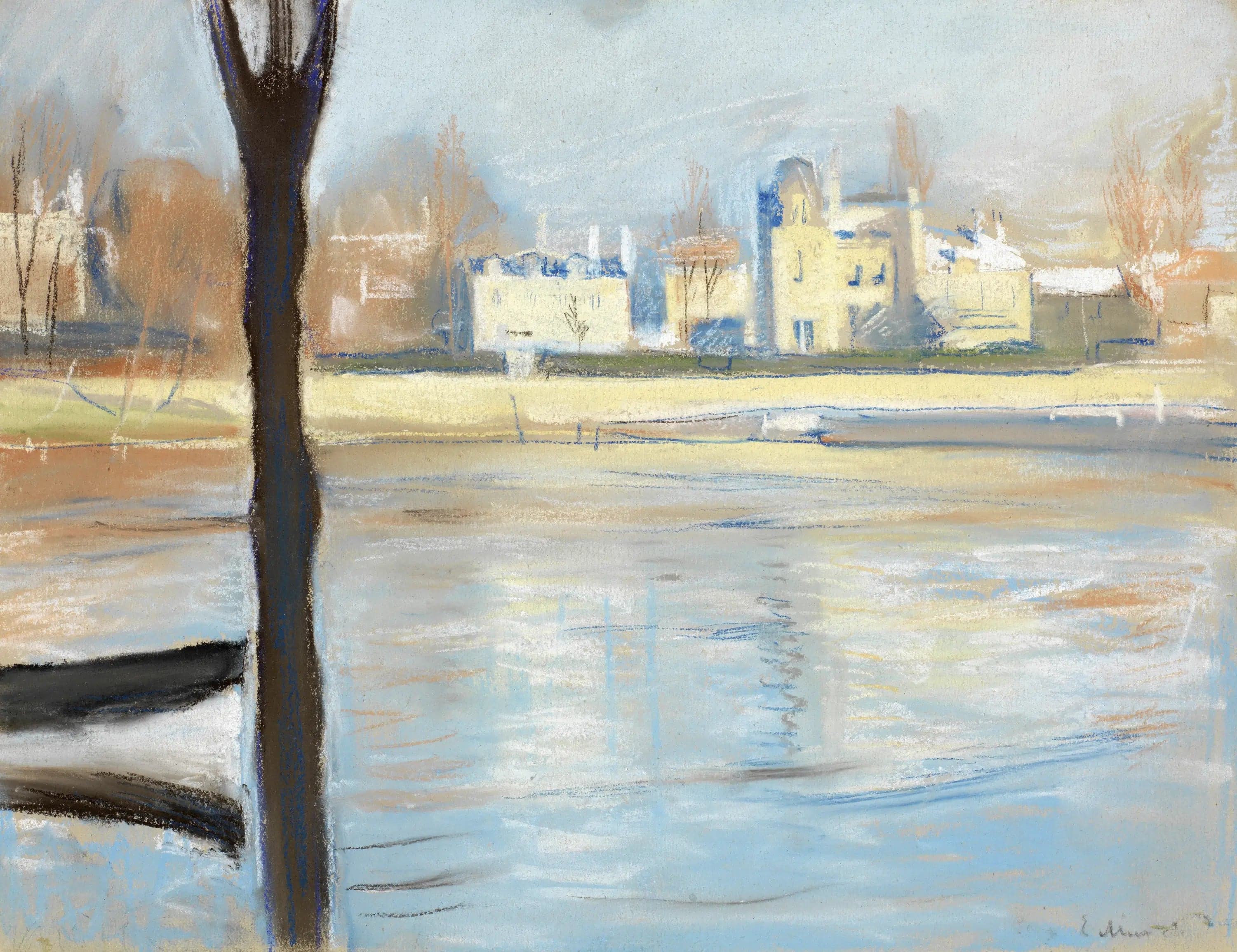
The Seine at Saint-Cloud
- Original dimensions
- 45 x 59 cm
- Museum
- Not specified
- Year
- 1890
Scene depicted
The Seine at Saint-Cloud illustrates an intimate moment of nature, where the sparkling waters meet the reflections of a soft, golden light. This striking canvas evokes calm and serenity, like an open door to a world where the soul can recharge by contemplating the tranquil beauty of French landscapes.
Historical context
Created in 1890, this painting embodies a pivotal moment in the post- impressionist movement. Made in the commune of Saint-Cloud, in Île-de-France, it reflects the romantic era that saw the emergence of many artists. Today, this unique canvas is part of the collective imagination, its current location still a mystery.
Place in the artist's career
Positioned in the career of Edvard Munch , The Seine at Saint-Cloud represents a moment of stylistic maturation. A pivotal period in his work, it stands out from previous canvases like The Night (1889) and Violin (1890), where the expression of emotions becomes more intense, particularly through the bold use of color and movement.
Anecdote
“Colors are the smiles of the world,” said Edvard Munch . The inspiration behind this canvas sprang one spring morning, when the sweet scent of flowers mixed with the song of birds transported him to the banks of the Seine. The ephemeral beauty of this maritime scene resonated in his heart, nurturing the evocative power of The Seine at Saint-Cloud.