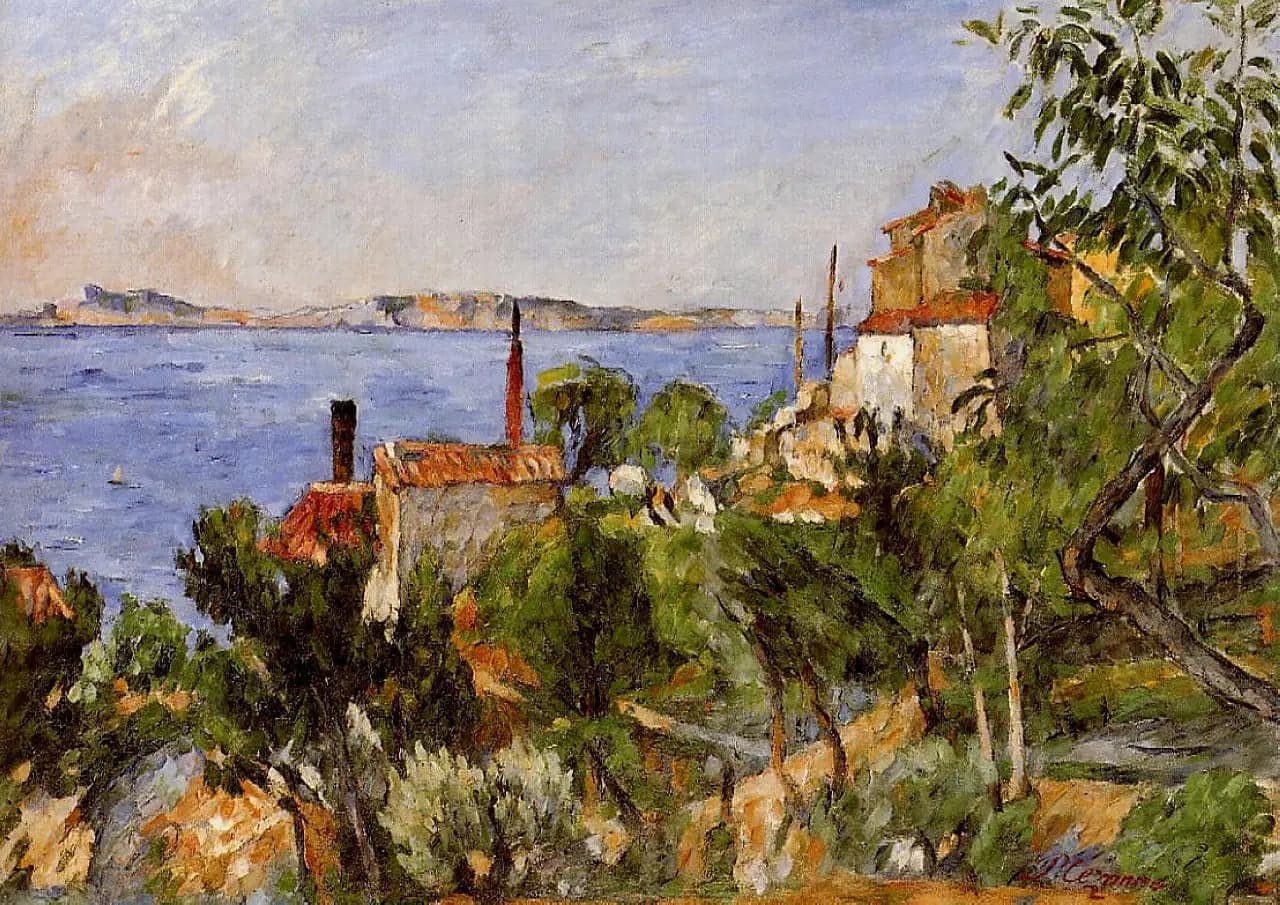
The Sea at L'Estaque
- Original dimensions
- 92 x 73 cm
- Museum
- national Picasso museum - Paris
- Year
- 1878
Scene depicted
“The Sea at l'Estaque” unveils a captivating composition, representing a panoramic view of the Mediterranean Sea, harmonized with the surrounding hills. The canvas illuminates the fascinating dialogue between nature and man. The shades of blues and greens intertwine to tell a story of peace and serenity, evoking the sweetness of sunny days spent on the shore.
Historical context
The painting “The Sea at l'Estaque” was created in 1878, in the beautiful region of l'Estaque, a picturesque village in Provence. This iconic painting is part of the post-impressionist movement, a period when Cézanne was revolutionizing the aesthetic codes of his time. This canvas , revealing Mediterranean light, is currently preserved at the national Picasso museum in Paris, where the public can admire the depth of this masterful work.
Place in the artist's career
This painting marks a crucial step in Cézanne's career, illustrating his journey towards a more free and bold visual expression. Alongside works such as “The House Count” and “The Large Bathers,” “The Sea at l'Estaque” shows the stylistic evolution of the artist as well as his relentless quest for truth in painting .
Anecdote
“Nature is a living painting.” This quote from Cézanne captures the essence of his inspiration. One spring morning, while standing on the rocks overlooking the sparkling sea, he was struck by the vibrant beauty of the coast. The shine of the sun on the water, the scents of pine and garrigue, all these elements shaped the soul of this masterpiece and infused its evocative power into the painting .