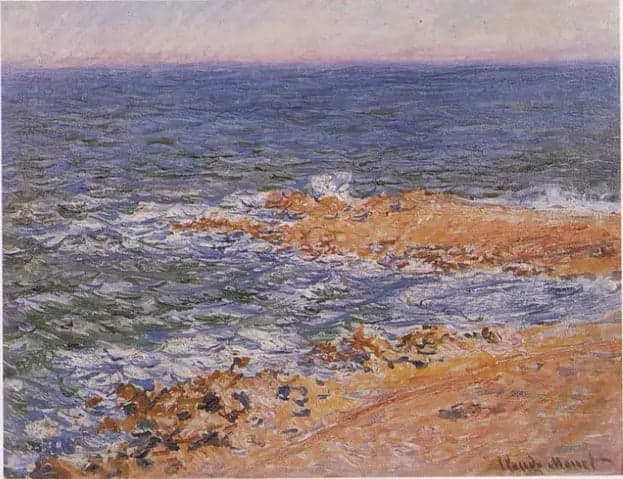
The Sea at Antibes
- Original dimensions
- 82 x 65 cm
- Museum
- Von-der-Heydt Museum
- Year
- 1888
Scene depicted
In “The Sea at Antibes,” Claude Monet depicts the azure sea, swirling under the blazing sun. The shimmering light reflections sparkle, while the white sails of the boats seem to float lightly. This painting is a tribute to the perfect harmony between sky and sea, capturing the fluidity of water and the movement of air, like an ode to nature itself. The composition evokes waves of emotions, inviting the viewer to dive into this maritime dream.
Historical context
Year: 1888 |BRK| Museum: Von-der-Heydt Museum |BRK| Dimensions: 82 x 65 cm
Place in the artist's career
“The Sea at Antibes” stands as an important milestone in Monet's career, reflecting his commitment to plein air painting and the play of light. Alongside the boldness of “ Impression, Sunrise ” and the serenity of “ Monet's Garden in Giverny ,” this canvas asserts his talent and mastery of brush strokes, revealing an artistic awakening towards maturity.
Anecdote
“I want my paintings to be like sighs of emotion,” said Monet. It was on the Côte d'Azur, one morning embraced by the salty scents and golden light, that he found inspiration for this masterpiece . The playful sea, the waves crashing on the rocks, formed a backdrop of such intensity that his brush could not help but dance across the canvas. The sea breeze carried with it a promise of peace, the very one found in this painting .