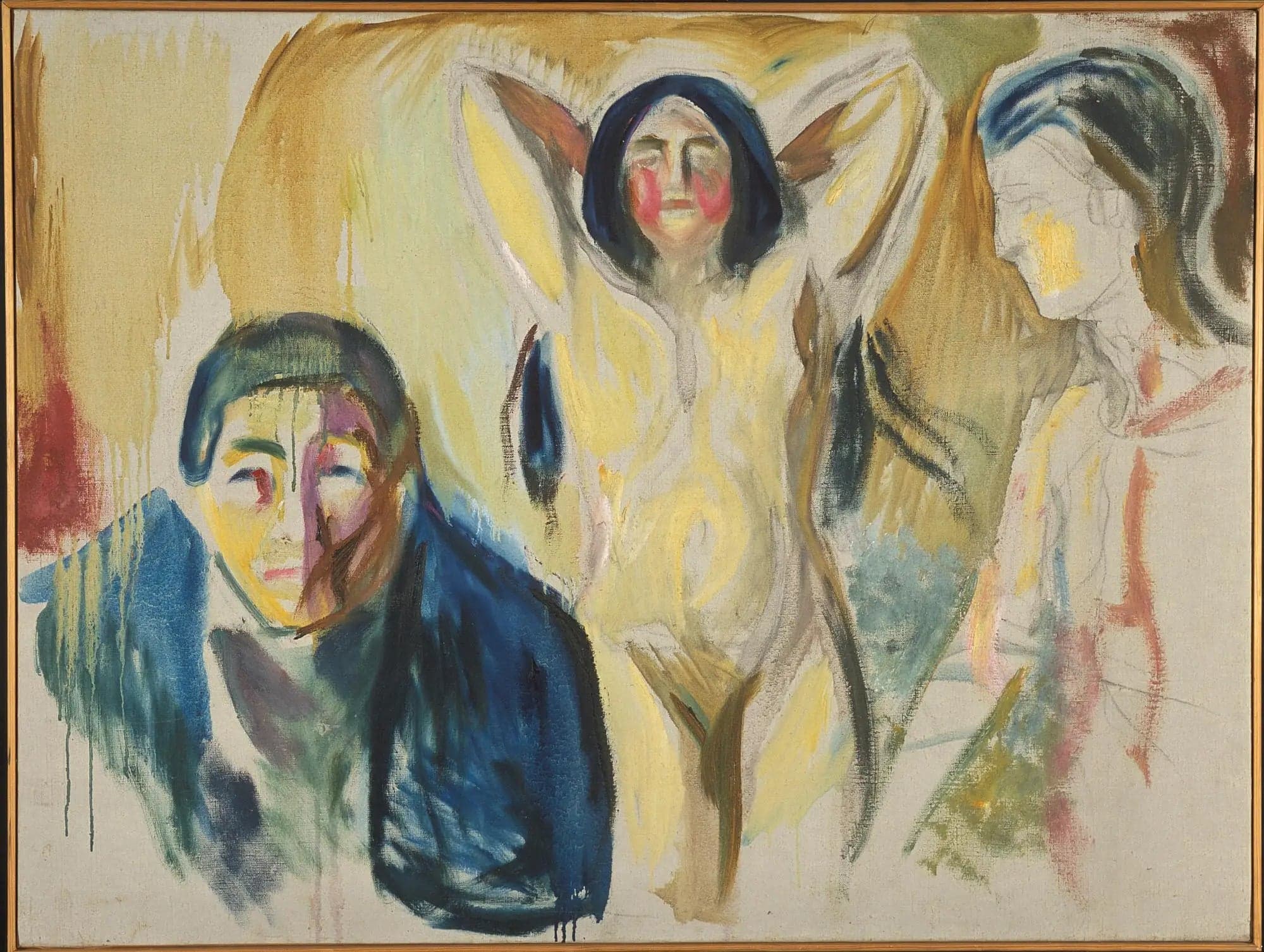
The Scream
- Original dimensions
- 59 x 79 cm
- Museum
- Not specified
- Year
- 1895
Scene depicted
This classic painting depicts a desperate silhouette on a bridge, lost in an environment of turmoil, cradled by a sky vibrant with intense colors. The painting captures the immediacy of an existential crisis, where anxiety and solitude clash, constituting a powerful reflection of human concerns. The background, made up of dynamic lines and vibrant tones, intensifies the inherent tension of this composition .
Historical context
Created in 1895, during a period of emotional turmoil in Norway, The Scream is a mirror of an era marked by artistic and social upheaval. Evolving at the heart of the expressionist movement, this canvas is an exploration of human anxieties. Although the current museum is not specified, this painting remains a globally recognized icon, highlighted by its bold dimensions of 59 x 79 cm.
Place in the artist's career
The Scream stands as a significant milestone in Munch's career, embodying his expressionist genius. Following works such as The Madonna and The Vampire , this painting reveals a stylistic evolution, marked by increasingly intense emotions. Each canvas testifies to Munch's ability to capture conflicting feelings, reinforcing his role as a pioneer in modern art.
Anecdote
“I feel an infinite scream passing through nature.” It is to this phrase that Munch's spirit seems to resonate, as he outlines his masterpiece during a night walk in Oslo, under a disturbing dawn. These fleeting moments transform into deep emotion relegated in the pigment of the painting . The canvas absorbs this scream, making every gaze upon the work vivid and poignant.