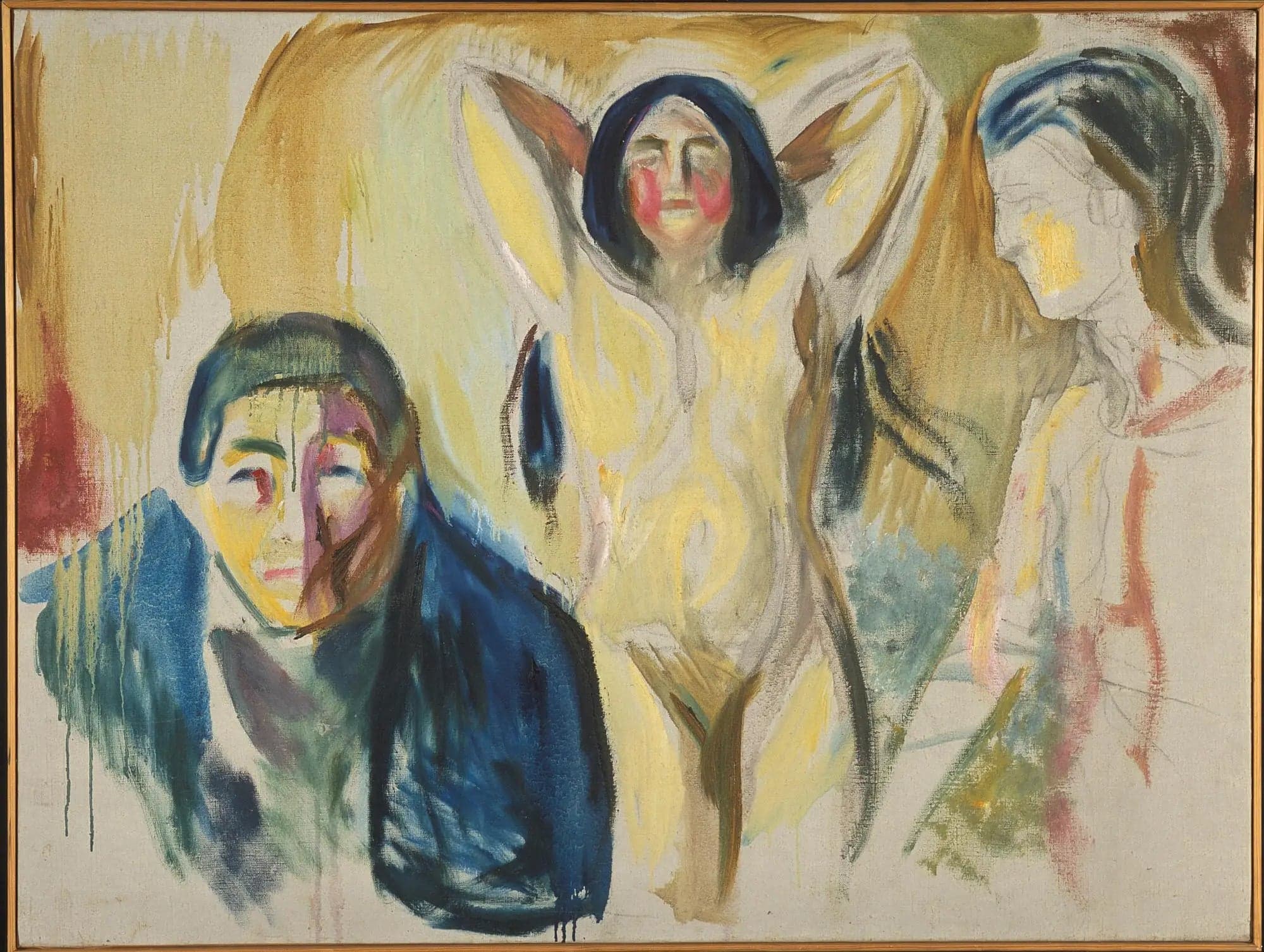
The Scream
- Original dimensions
- 56 x 74 cm
- Museum
- Munch Museum
- Year
- 1893
Scene depicted
In the painting “The Scream,” a human silhouette depicted in palpable anguish stands on the edge of a bridge, under a tormented sky vibrating with intense orange. This canvas does not just tell a scene; it materializes an ancestral fear, a universal solitude in the face of the immeasurable. The stridency of this scream, both internal and external, confronts us with our own existence.
Historical context
Created in Oslo, Norway, in 1893, Munch's iconic painting is part of the expressionist movement. In short, this vibrant era, full of turmoil and reflections on the human condition, gives birth to this canvas that transcends mere art to become a universal emotional expression. Currently, this canvas is displayed at the Munch Museum, a sanctuary of the artist's thoughts and feelings.
Place in the artist's career
“The Scream” represents the pinnacle of Munch's career. Painting through periods of despair and introspection, this painting establishes a dialogue between his earlier works, such as “The Madonna” and “The Vampire,” and those to come, revealing a striking technical and emotional evolution. It embodies the shift towards a more direct expression of deep human anxieties.
Anecdote
“I feel the scream of the universe, like an echo in my soul.” This quote from Munch reveals the depth of emotion behind each brushstroke. Imagine him wandering the streets of Oslo, sublimely inspired by a sunset where colors clash. It is in this breath of life, this fleeting moment that the idea for the masterpiece came to him, delivering a painting pulsating with vitality.