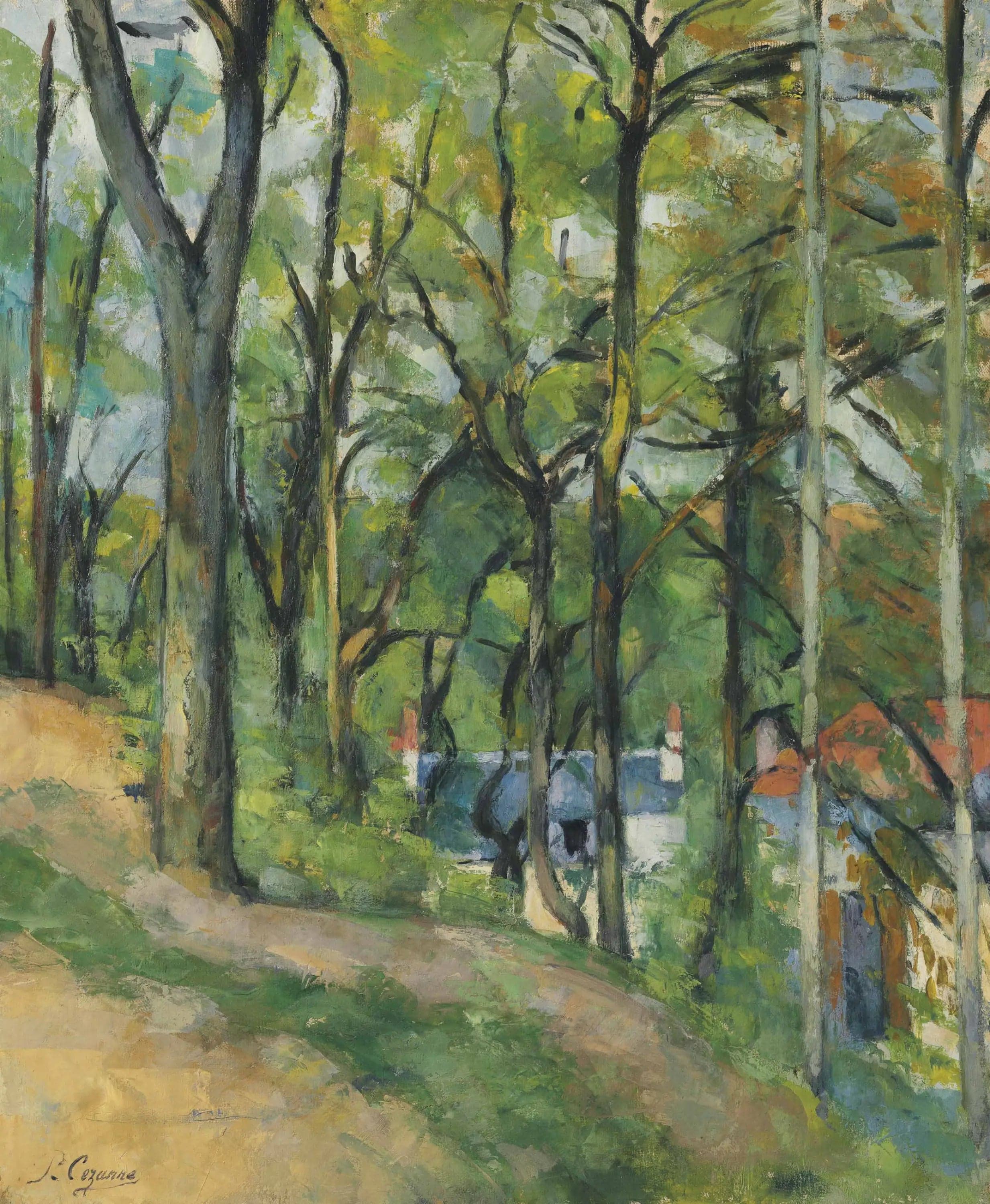
The Saint-Denis Coast at Pontoise
- Original dimensions
- 54.5 x 66 cm
- Museum
- New York
- Year
- 1877
Scene depicted
In this painting, Cézanne brings to life a panorama where lush hills and bright skies intertwine. The composition reveals a bucolic scene that awakens a palpable sense of tranquility, like an invitation to dive into a moment frozen in time. This pictorial work reveals the poetic power and harmony of the surrounding nature, transporting each observer into a world of serenity and contemplation.
Historical context
Created in 1877, this magnificent painting in the impressionist style, emanating from the creative spirit of Paul Cézanne , finds its roots in the charming town of Pontoise, in Île-de-France. This painting illustrates not only a specific moment in artistic history but also remains anchored in the excitement of a time when the impressionist movement was just beginning to make itself known. Currently preserved in the heart of New York, this work by Cézanne fascinates art lovers with its dimensions of 54.5 x 66 cm.
Place in the artist's career
La Côte Saint-Denis in Pontoise marks a turning point in Cézanne's career, representing a period when the artist refines his unique style. Alternating between his first work, La Maison de Pêcheur, and his famous painting Les Grandes Baigneuses, this work shows the maturity of the painter, integrating soft curves and bold color palettes.
Anecdote
“Nature is my only master” Cézanne might have confided while contemplating the view that inspired him that morning in Pontoise. At that precise moment, between the smell of damp earth and the sweet song of birds, the artist captured this ephemeral beauty to create a masterpiece. La Côte Saint-Denis, as immortalized in the canvas, then becomes a setting of vivid emotions, an echo of the melody of nature surrounding it.