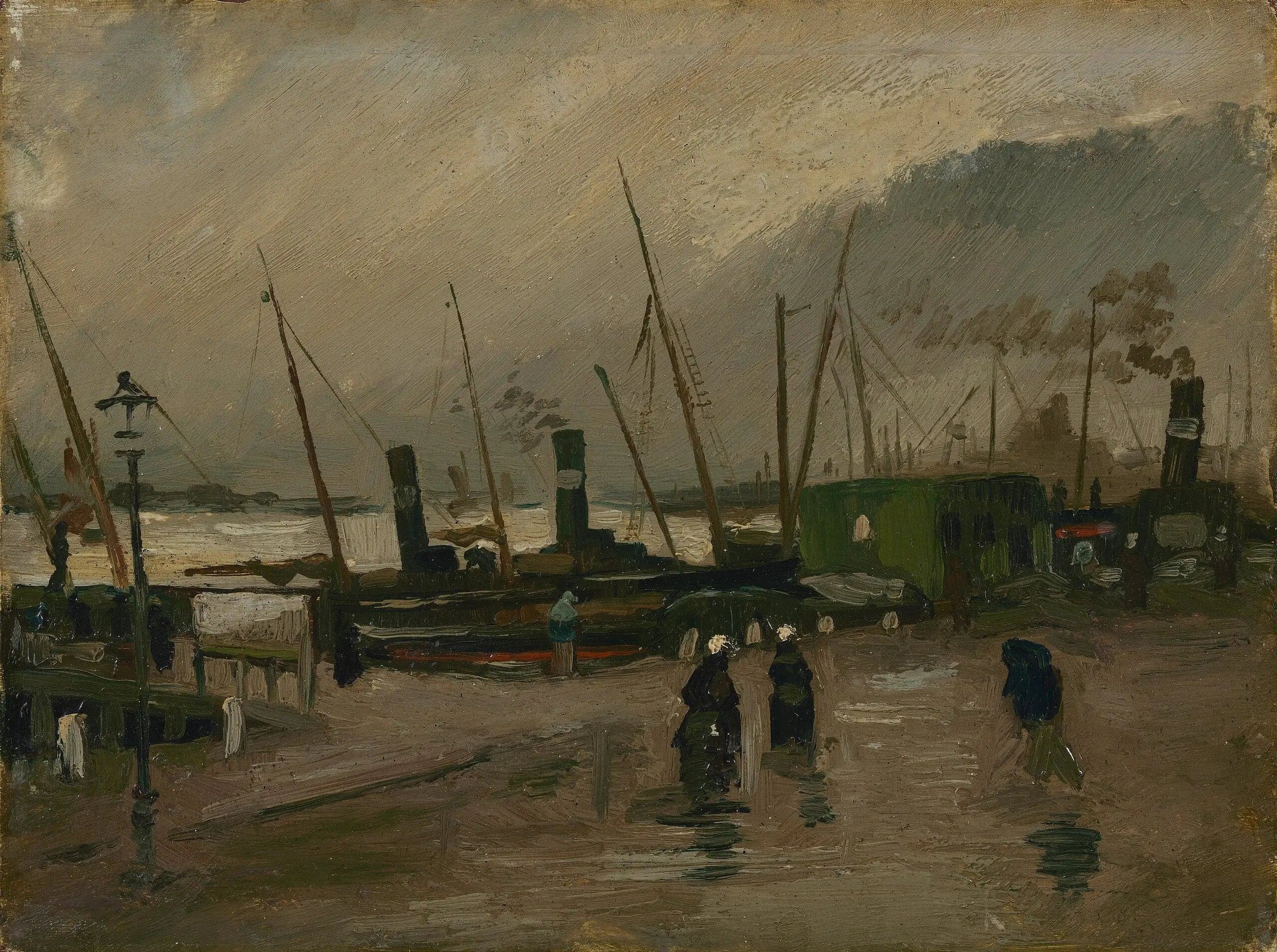
The Ruijterkade in Amsterdam
Scene depicted
In this canvas , Van Gogh immortalizes the docks of Amsterdam, offering a melodious vision of houseboats gently caressing the calm surface of the waters. The delicate shadows and poignant light that fall on the scene make this painting a meeting place between urbanity and nature, highlighting the ephemeral beauty of moments in city life.
Historical context
Created in 1885, the painting La Ruijterkade in Amsterdam is rooted in the artistic effervescence of the late 19th century. This canvas , a true reflection of the soul of Amsterdam, is part of the post-impressionism , an innovative movement where light and color intertwine. The painting is currently housed at the Van Gogh Museum , a sanctuary dedicated to the work of this exceptional artist. With dimensions of 27 x 20.3 cm, this masterpiece invites contemplation of the urban beauty of Amsterdam.
Place in the artist's career
La Ruijterkade in Amsterdam is positioned at the beginning of Van Gogh's promising career. Before this painting , his early works such as The Potato Eaters display a realistic approach, while later, in works like The Starry Night , the composition becomes bolder and more expressive. This painting marks a transition towards a significant stylistic innovation.
Anecdote
“I paint emotions, more than things,” Van Gogh might have said as he gazed at the shores of Amsterdam on a cool morning. This moment of inspiration brought to life a composition vividly illuminated, making the viewer witness an atmosphere that is both peaceful and vibrant. The painting transcends time and resonates with a captivating melody of everyday life.