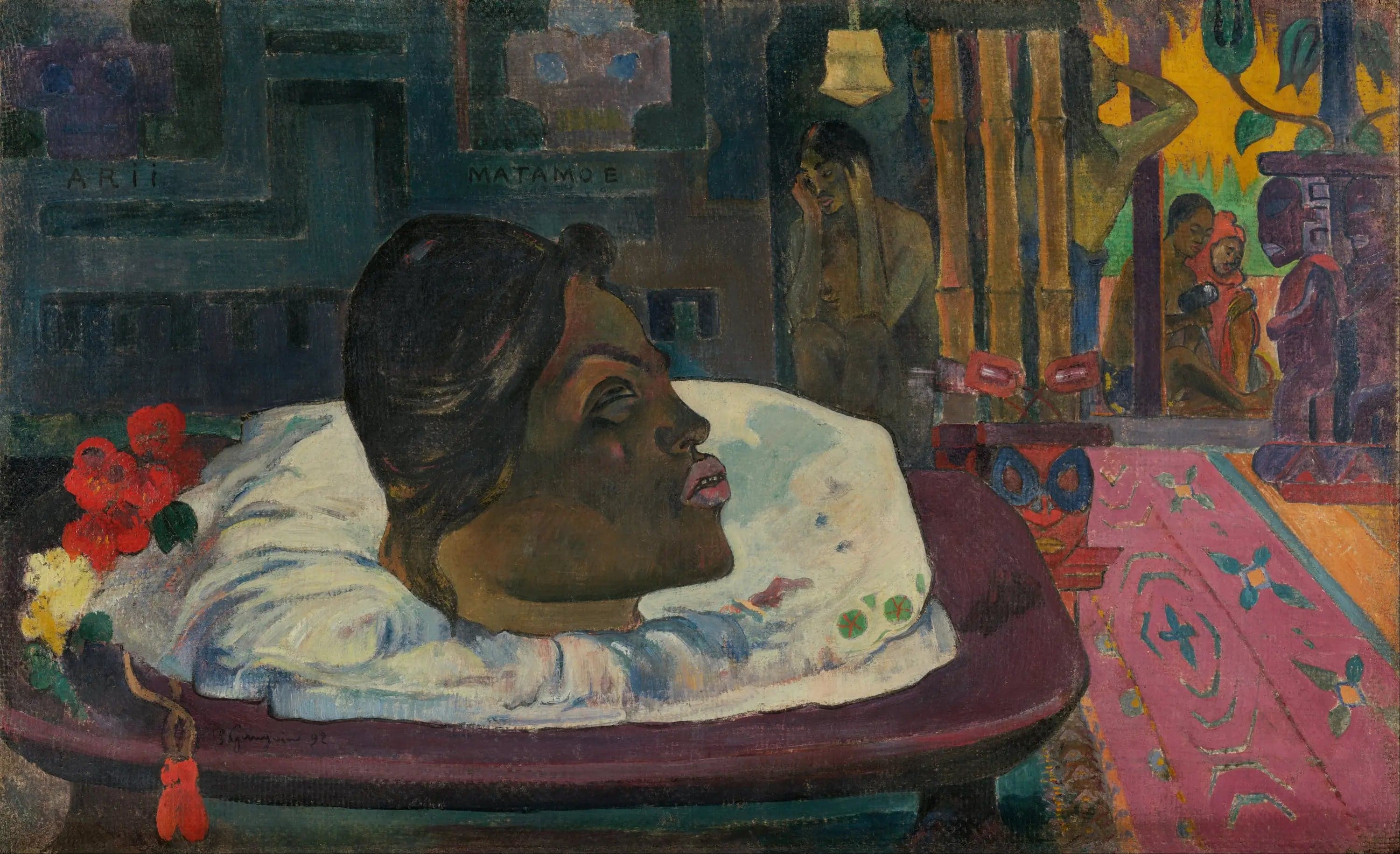
The Royal End
- Original dimensions
- 743 x 451 cm
- Museum
- Getty Center
- Year
- 1892
Scene depicted
The captivating scene of The Royal End depicts a rite of passage of transcendent beauty, where lush nature envelops the protagonists. The characters are frozen in a moment of solemnity, reflecting a deep interconnection between life and death. The work, imbued with spirituality, evokes ancient myths and deeply rooted traditions, representing a vibrant tribute to Tahitian culture.
Historical context
Created in the heart of the flamboyant post-impressionist era, The Royal End is set against the rich and complex backdrop of the late 19th century. This painting , currently exhibited at the museum Getty Center in Los Angeles, is an essential work that reflects the quest for identity and love of nature that characterizes the symbolist movement. Its imposing size of 743 x 451 cm captivates the eye, inviting a journey into Gauguin's flamboyant imagination.
Place in the artist's career
The Royal End fits into a mature phase of Gauguin's career, where he emancipates himself from academic conventions to explore more personal and emotional themes. Compared to his earlier works such as Vision after the Sermon and The Yellow Christ , this masterpiece marks a bolder exploration of color and a commitment to pictorial narrative.
Anecdote
"I paint memories, not landscapes," he might have declared while admiring the wild beauty of Tahiti in search of pure evocation. It is in the enchanting light of a sunny morning that Gauguin was inspired by the magic of the place, thus creating this painting that reveals a world between dream and reality.