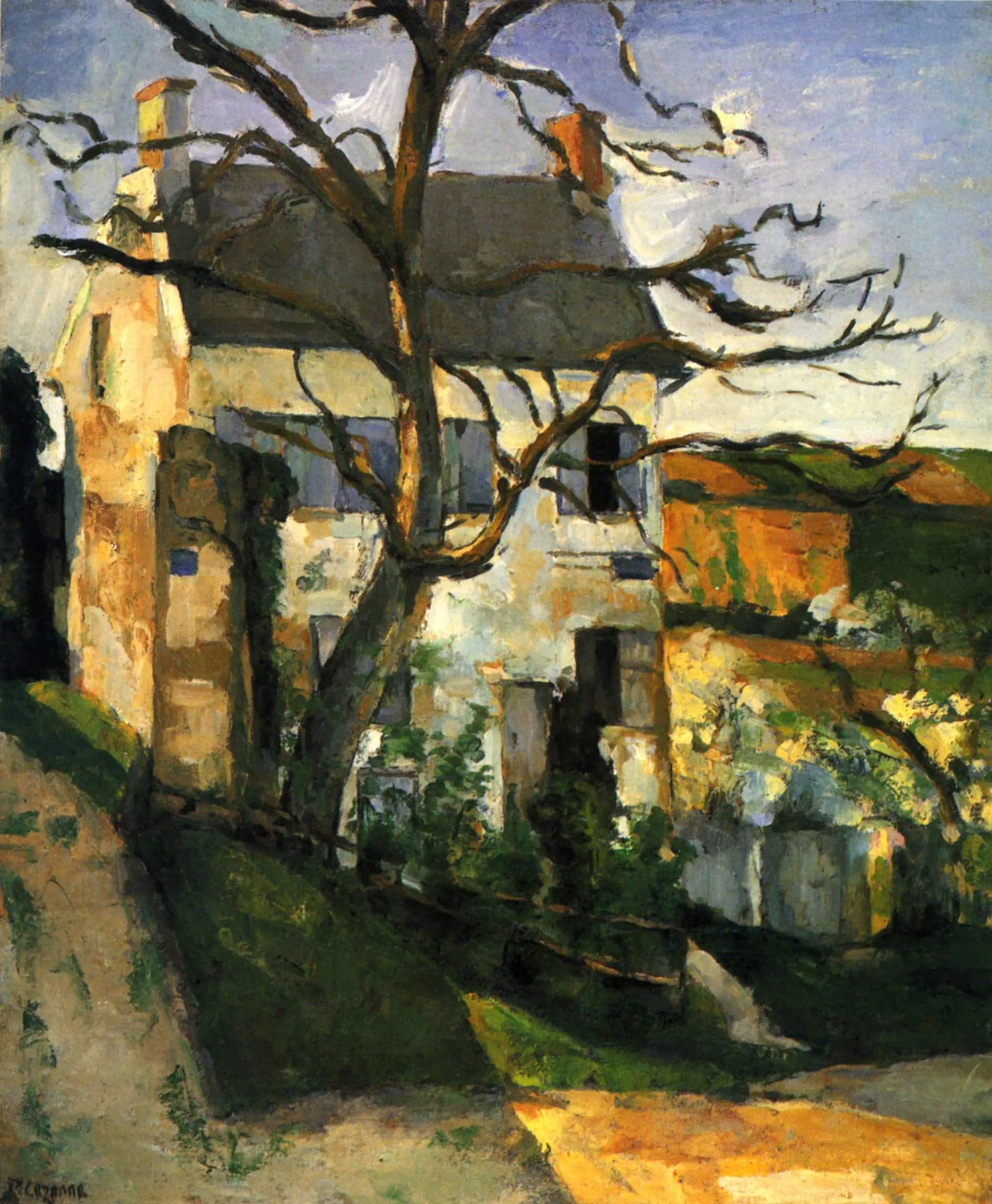
The Rondest House, Hermitage district, Pontoise
- Original dimensions
- 54 x 65 cm
- Museum
- Los Angeles
- Year
- 1874
Scene depicted
This painting is emblematic of a picturesque angle of the Rondest house, bathed in warm and enveloping light. Cézanne's vibrant brushstrokes reveal not only the architectural beauty of this site but also its harmonious integration into the surrounding landscape, exalting the calm and serenity of this corner of Pontoise.
Historical context
Created in 1874, The Rondest House is located in the charming city of Pontoise, a place where light plays an essential role in the painting by Paul Cézanne . This painting is part of the Impressionist movement, a period marked by experimentation and authenticity of visual impressions. Currently preserved in the prestigious museum of Los Angeles, this sublime canvas , measuring 54 x 65 cm, testifies to an era where nature and daily life intertwine delicately.
Place in the artist's career
The Rondest House is a milestone in Cézanne's artistic evolution, representing both a stylistic turning point and an affirmation of his artistic maturity. At this time, these visual innovations paved the way for other essential paintings , notably The Card Players and The Montagne Sainte-Victoire, where the artist further explores depth and perspectives.
Anecdote
“Nature is my true muse,” said Cézanne, referring to his deep connection with his environment. While contemplating the landscape one spring morning, the scents of flowers and the gentle whisper of the wind led him to capture the essence of this composition . The Rondest House thus emerges as a tangible manifestation of this inspiration, conveyed through the artist's brush.