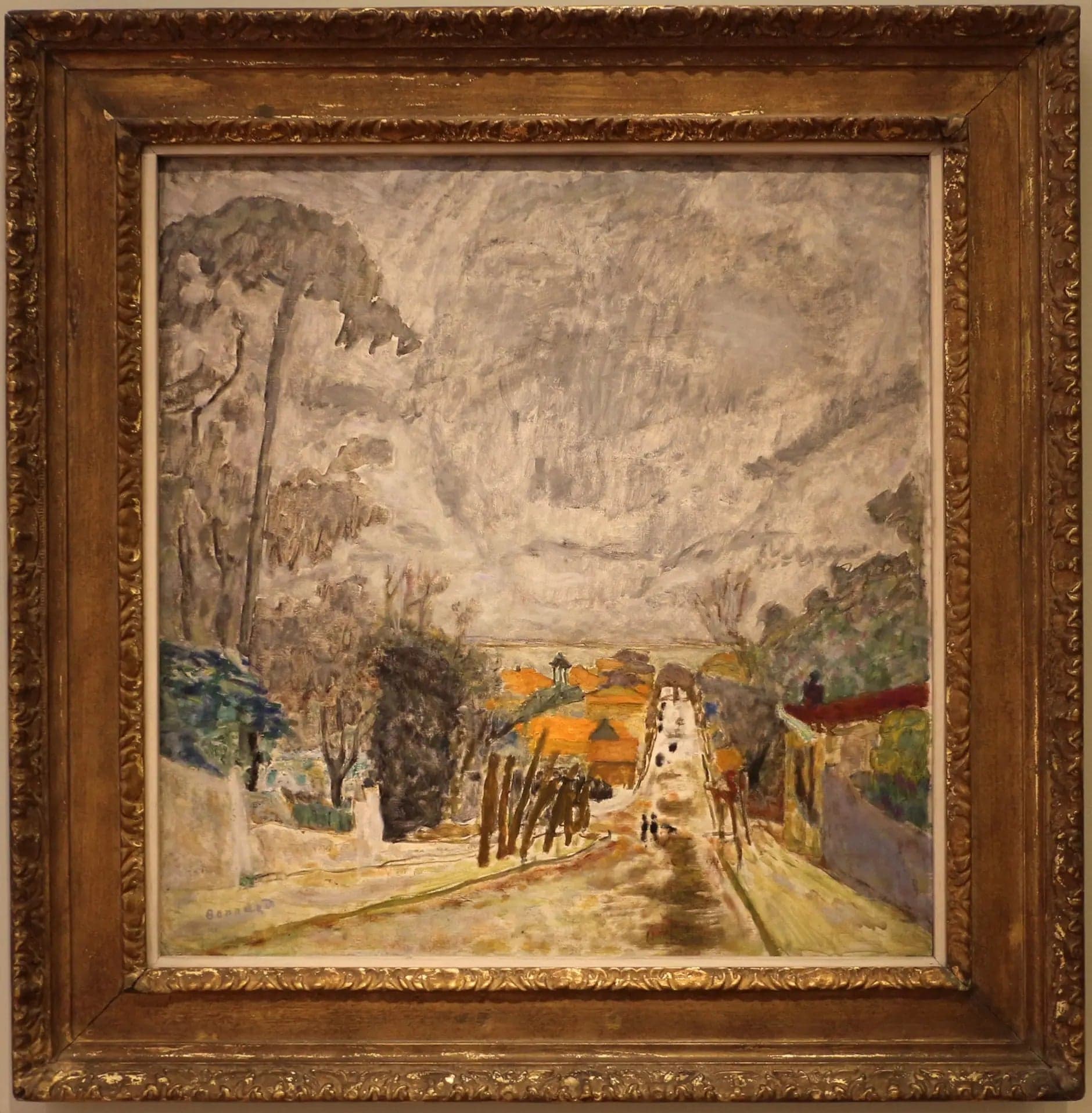
The Road to Nantes
- Original dimensions
- 66.2 x 69.2 cm
- Museum
- Cleveland Museum of Art
- Year
- 1929
Scene depicted
This canvas evokes a peaceful stroll along a rural road, surrounded by a frame of greenery. The vibrant colors respond to each other in a subtle dance, capturing the fleeting instability of natural light. The shapes are simple, almost abstract, but they describe the contours of the landscape with poetic depth, making each glance an invitation to immerse oneself in this serene and romantic universe.
Historical context
Created in 1929, this painting emanates from the vibrant heart of France, encapsulating the essence of the Nabi movement, known for its quest for color and light. The canvas , currently housed at the Cleveland Museum of Art , bears witness to a time when the artist sought to transcend mere visual rendering. Its dimensions, 66.2 x 69.2 cm, are perfect for capturing the intensity of landscapes and the delicacy of daylight.
Place in the artist's career
The Road to Nantes is situated at a crucial moment in Bonnard's career, as he evolves into a period of maturity within the Nabi movement. Alongside other creations like The Water Lilies and The Effects of Snow , this canvas denotes an increased mastery of light and color. Each of his works testifies to an unceasing quest for beauty and human emotions.
Anecdote
“The light of a spring morning is an endless source of inspiration,” Bonnard reportedly confided to his contemporaries. It was in a quiet street in Nantes that the artist crossed paths with golden hues, dancing shadows, and exhilarating floral scents, which underpin the emotion of this masterpiece . The strength of this painting evokes not only the beauty of the landscape but also the sensations of a fleeting moment.