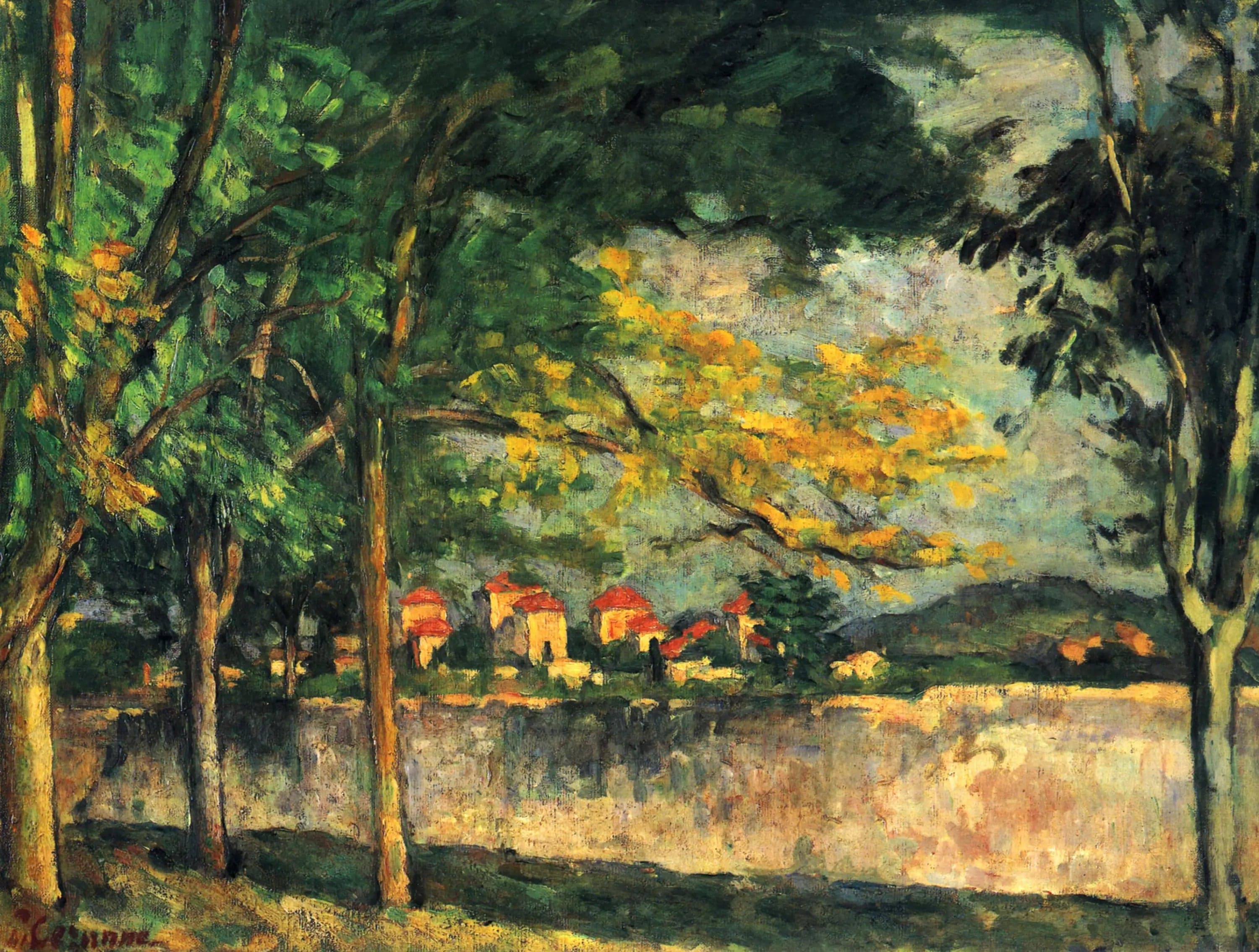
The Road; The Enclosing Wall
- Original dimensions
- 65 x 50 cm
- Museum
- Not specified
- Year
- 1875
Scene depicted
This painting depicts a winding path flanked by enclosure walls, a symbol of the barriers between man and nature. The composition highlights the harmony between the geometric shapes of the structure and the flexibility of the surrounding nature. The tranquility emanating from this scene offers a space for contemplation, a haven where the eye can wander and get lost in timeless beauty. Cézanne thus manages to capture the essence of a fleeting moment at the heart of Provence.
Historical context
In 1875, in the picturesque town of Aix-en-Provence, Paul Cézanne created this iconic painting , a witness to the post-impressionist movement. This flourishing period, which saw the birth of masterpieces, was marked by a desire for abstraction and a bold exploration of color. Unfortunately, the current location of the painting remains unknown, but its dimensions of 65 x 50 cm give it an imposing presence at the heart of the works of its time.
Place in the artist's career
This painting is situated at the beginning of Cézanne's career, marking a turning point towards bolder compositions. Like his other paintings , such as "The Card Players" and "Mont Sainte-Victoire", this work illustrates a technical evolution towards a simplification of forms and an exploration of the effects of light.
Anecdote
“Art is a means of expressing what nature has whispered to me” could have said Cézanne, inspired by the landscapes of his youth. The genesis of the masterpiece was awakened by a quiet morning, when the bathing and golden light illuminated the winding road visible from his studio, offering a mysterious and enchanting scene, synonymous with memories forever etched in the artist's soul.