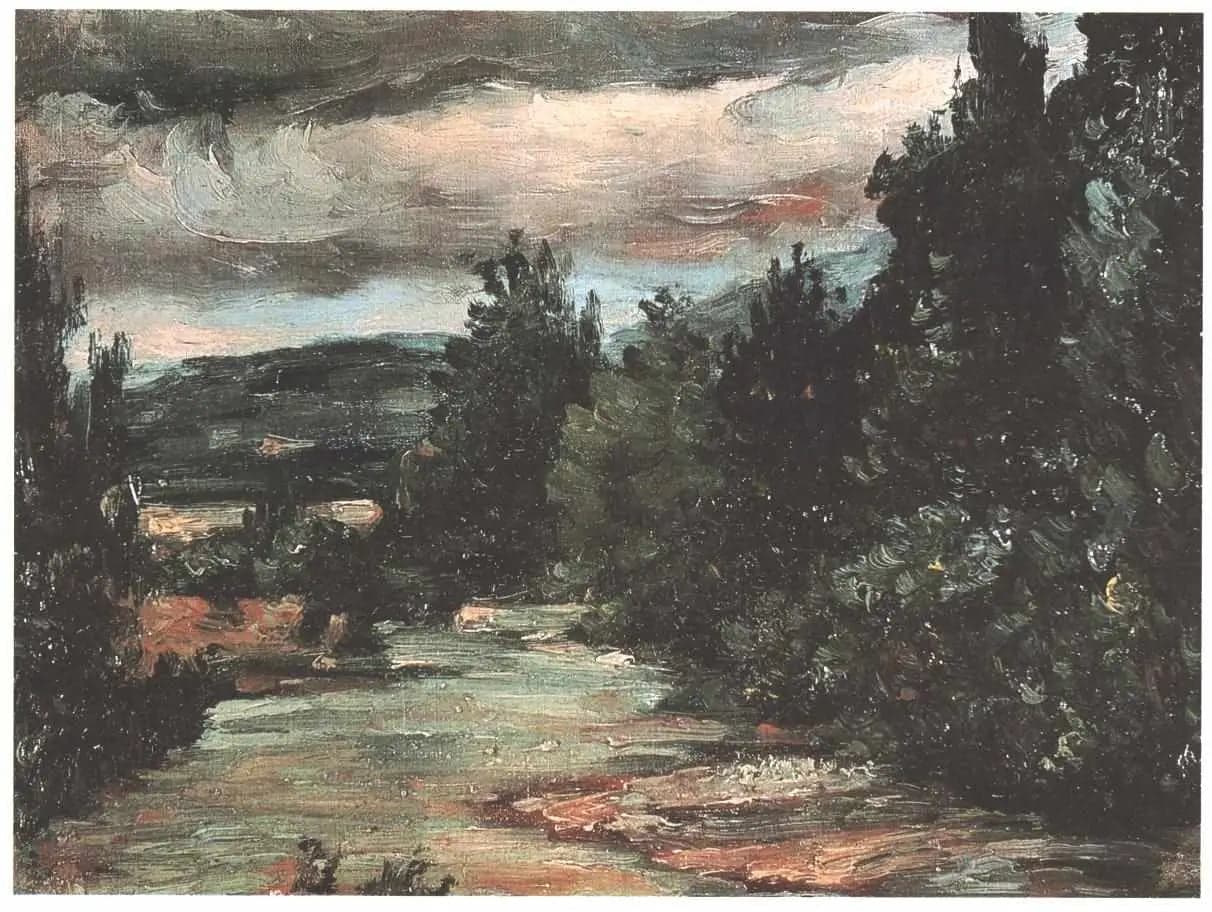
The River in the Plain
- Original dimensions
- 34.3 x 27 cm
- Museum
- Not specified
- Year
- 1865
Scene depicted
This canvas illustrates a peaceful river winding through a green plain. The shades of blue in the sky blend with the bright reflections in the water, while the furtive shadows of trees invite themselves onto the surface. The composition evokes a suspended moment, an invitation to contemplate the beauty of nature and to feel its breath. Cézanne, through his unique technique, manages to immortalize this landscape, creating a symbiosis between man and earth.
Historical context
Created in 1865, during a tumultuous period in France, this painting is a true reflection of the beginnings of the Impressionist movement, a major artistic turning point. Set in the heart of Provence, The River in the Plain captures the very essence of the surrounding nature, marked by landscapes of wild and timeless beauty. To this day, the canvas remains in the obscurity of unspecified collections, but its small dimensions, 34.3 x 27 cm, testify to an intimate and vibrant work.
Place in the artist's career
The River in the Plain represents a pivotal moment in Cézanne's artistic journey. This masterpiece foreshadows his later works, including The Large Bathers and Mont Sainte-Victoire . At this time, the artist turns towards modernity, seeking to achieve sensory truth through color and form. This painting reveals his transition to bolder abstraction, securing his place among the great masters of art.
Anecdote
Paul Cézanne , often considered the father of modernity, once said: “Nature is my muse; its simple beauty inspires every brushstroke.” Imagine him, standing by a sparkling river, one spring morning, as the first rays of sunlight dance on the water and floral fragrances fill the fresh air. It is in this precious moment that the painting comes to life, sublimating the innocence and serenity of nature.