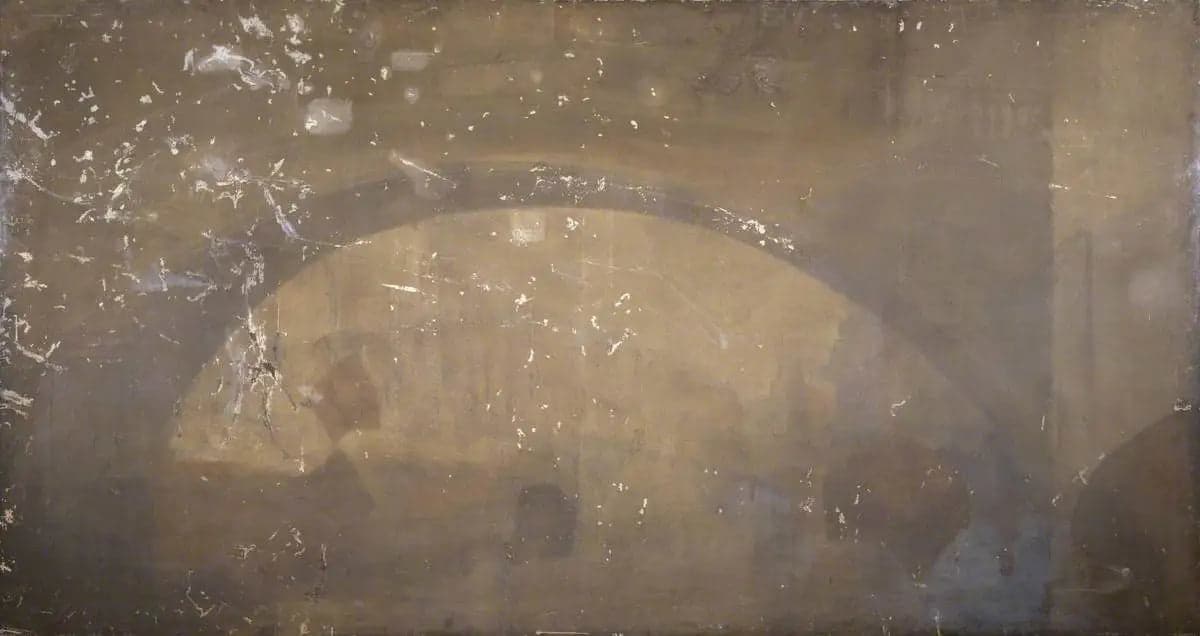
The Rialto, Venice
- Original dimensions
- 177.5 x 335.3 cm
- Museum
- Tate
- Year
- 1820
Scene depicted
In this canvas , Turner immortalizes a moment of animation and beauty. The famous Rialto bridge is depicted, a meeting point for merchants and locals, bathed in golden light. Boats glide gently on the calm waters, the distant cries of merchants, all recalling the life that pulses at the heart of Venice. This painting is a vibrant tribute to the cultural richness of the city and its architectural splendor.
Historical context
Created in 1820, The Rialto, Venice is rooted in the very essence of Italy, in the city of canals, Venice. This masterpiece belongs to the romantic movement, a reflection of an artistic movement captivated by the sublimity of nature and light. Currently displayed at the Tate museum, this monumental painting, measuring 177.5 x 335.3 cm, embodies the precious thread that connects the past to our contemporary gaze.
Place in the artist's career
The Rialto, Venice is situated at a decisive turning point in Turner’s career. After several significant works, he reaches here a stylistic maturity, merging realism and impressionism . At the crossroads of other famous paintings like The Storm and The Fighting Temeraire , this painting marks his bold exploration of Venetian lights and atmospheres.
Anecdote
“I paint the light, not the thing itself,” said Turner, evoking the very essence of his inspiration during his creation in Venice. Imagine him, one spring morning, wandering through the silent alleys of the city, capturing the magic and delicacy of reflections on the water. This emotion of wonder is intensely found in the painting and resonates in The Rialto, Venice .