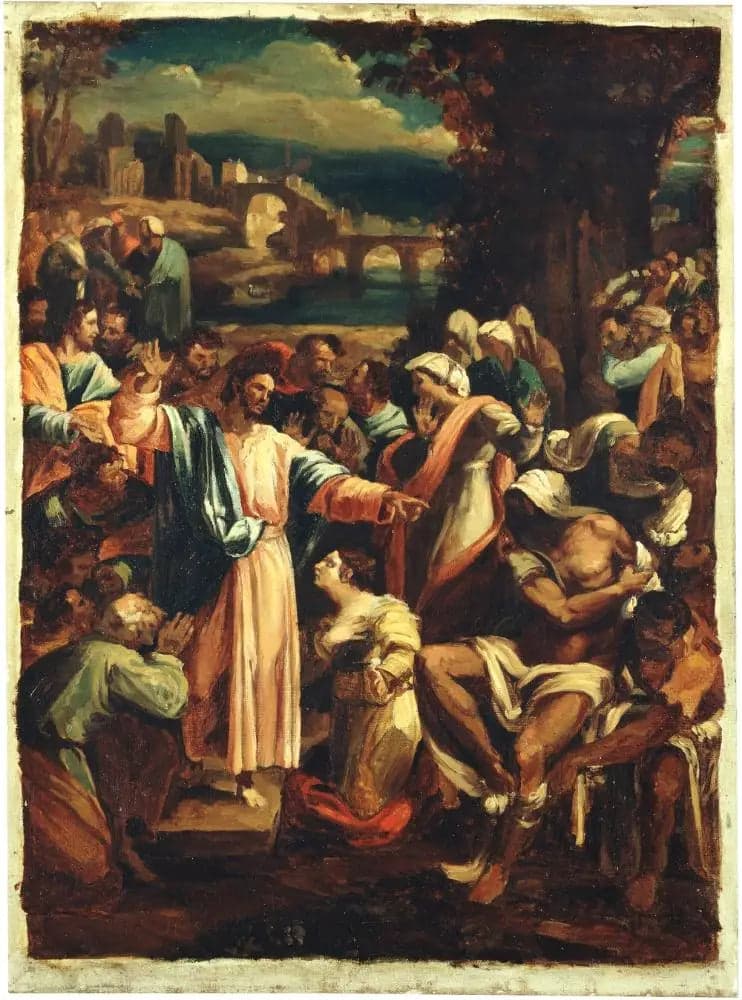
The Resurrection of Lazarus
- Original dimensions
- 53 x 72 cm
- Museum
- Staatsgalerie Stuttgart
- Year
- 1820
Scene depicted
This monumental painting captures the crucial moment of Lazarus's resurrection, a biblical narrative overflowing with passion and rebirth. In this composition, Géricault emphasizes the emotional shock of a divine event, blending faith and despair through a dramatic staging. The soft light highlights the tormented faces and desperate gestures of the individuals present, illustrating a moment suspended between life and death.
Historical context
Created in 1820, this canvas emblematic of Théodore Géricault is part of the romantic movement, which was in full swing in Stuttgart, Germany. Through this painting , the artist seeks to convey vibrant emotions, set against a historical backdrop where notions of death and resurrection intertwine in the collective imagination. Currently on display at the Staatsgalerie Stuttgart, this pictorial work measures 53 x 72 cm and showcases the technical prowess of its creator.
Place in the artist's career
The Resurrection of Lazarus represents one of Géricault's stylistic peaks, demonstrating a perfect balance between technique and emotion. This painting follows other masterpieces such as The Raft of the Medusa and Raft of the Medusa, and precedes other significant works from his mature period, such as his portrait of the blind man. Géricault here shows the evolution of his style, tinged with an unprecedented emotional depth.
Anecdote
“In every brushstroke, I seek life beyond death.” This quote encapsulates Géricault's spiritual and artistic quest. Inspired on a misty morning in Paris, the artist saw in the gaze of a dying man a glimmer of redemption, a deeply human emotion that fueled the evocative power of his painting The Resurrection of Lazarus.