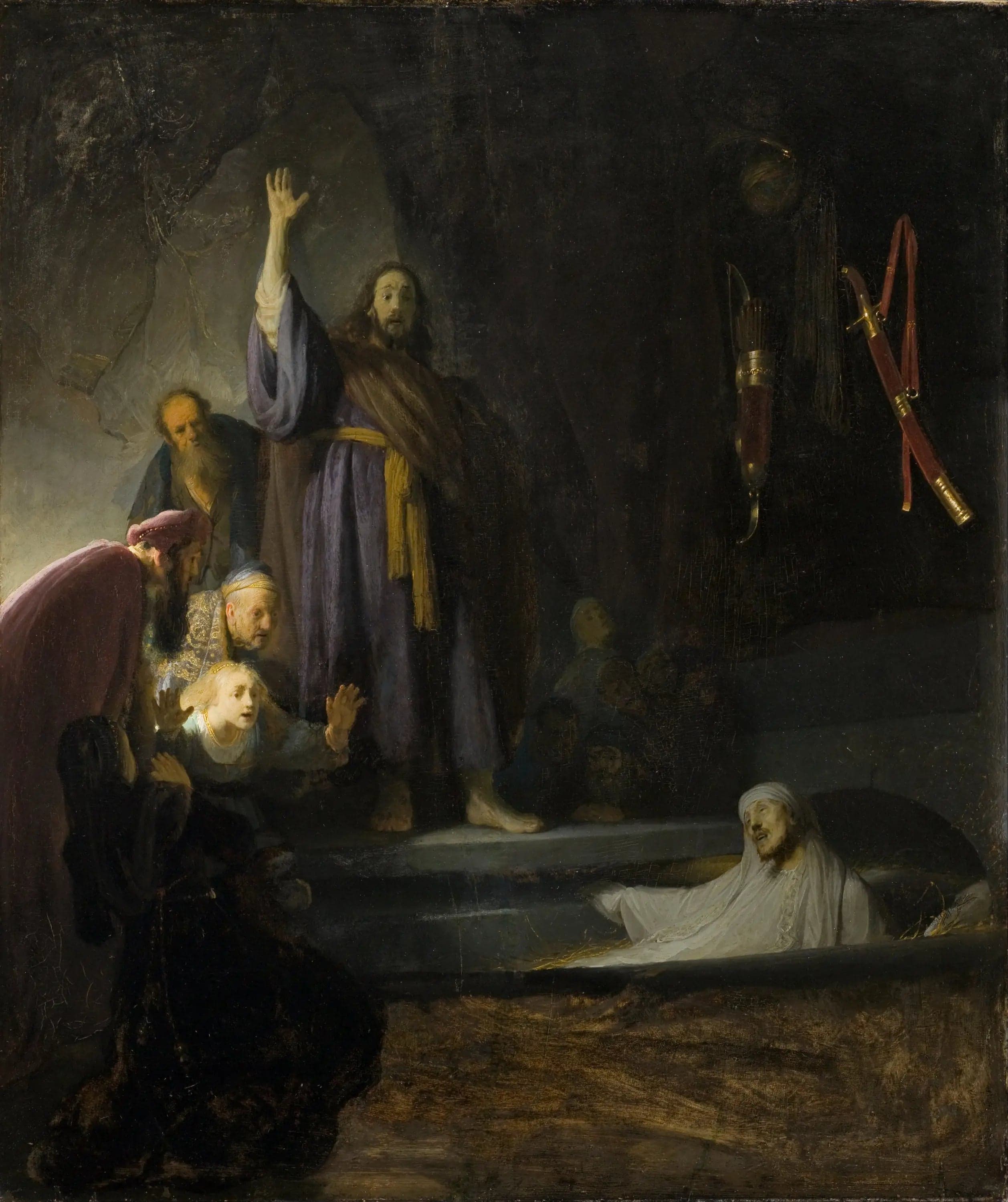
The Resurrection of Lazarus
- Original dimensions
- 81.3 x 96.4 cm
- Movement
- Dutch Golden Age of painting
- Museum
- Ahmanson Building
- Year
- 1630
Scene depicted
The Resurrection of Lazarus is an iconic painting where the dramatic scene of resurrection comes to life under the brush of Rembrandt . The face of Lazarus, marked by suffering and wonder, stands at the center, while the spectators around him oscillate between fear and astonishment. This painting weaves a spiritual direction, a promise of renewal that speaks to the soul of each person. Rembrandt succeeds in capturing not only the moment but also the intense emotion associated with it.
Historical context
Created in 1630, The Resurrection of Lazarus was born in the vibrant city of Amsterdam, at the heart of an artistic movement that embodies the Dutch Golden Age of painting. This canvas , now preserved in the Ahmanson Building museum, testifies to a time when light and texture are sublimated by the brush of Rembrandt . With an impressive size of 81.3 x 96.4 cm, this work can only captivate the eye.
Place in the artist's career
This painting , both bold and delicate, fits into the artistic maturity of Rembrandt . Far from being a mere attempt of young talent, The Resurrection of Lazarus juxtaposes with other masterpieces such as The Night Watch and The Anatomy Lesson of Dr. Tulp, marking a stylistic and emotional turning point in his career. It is at this time that Rembrandt begins to master light in a captivating way, thus forging his identity in the art world.
Anecdote
“Light is the key to awaken souls,” said Rembrandt while contemplating the scene of his painting . Inspired by a peaceful morning in Amsterdam, he imagined himself facing the vibrant story of Lazarus. This intimate encounter with light and shadow imbued The Resurrection of Lazarus with an evocative power, a testament to his quest to capture human emotion.