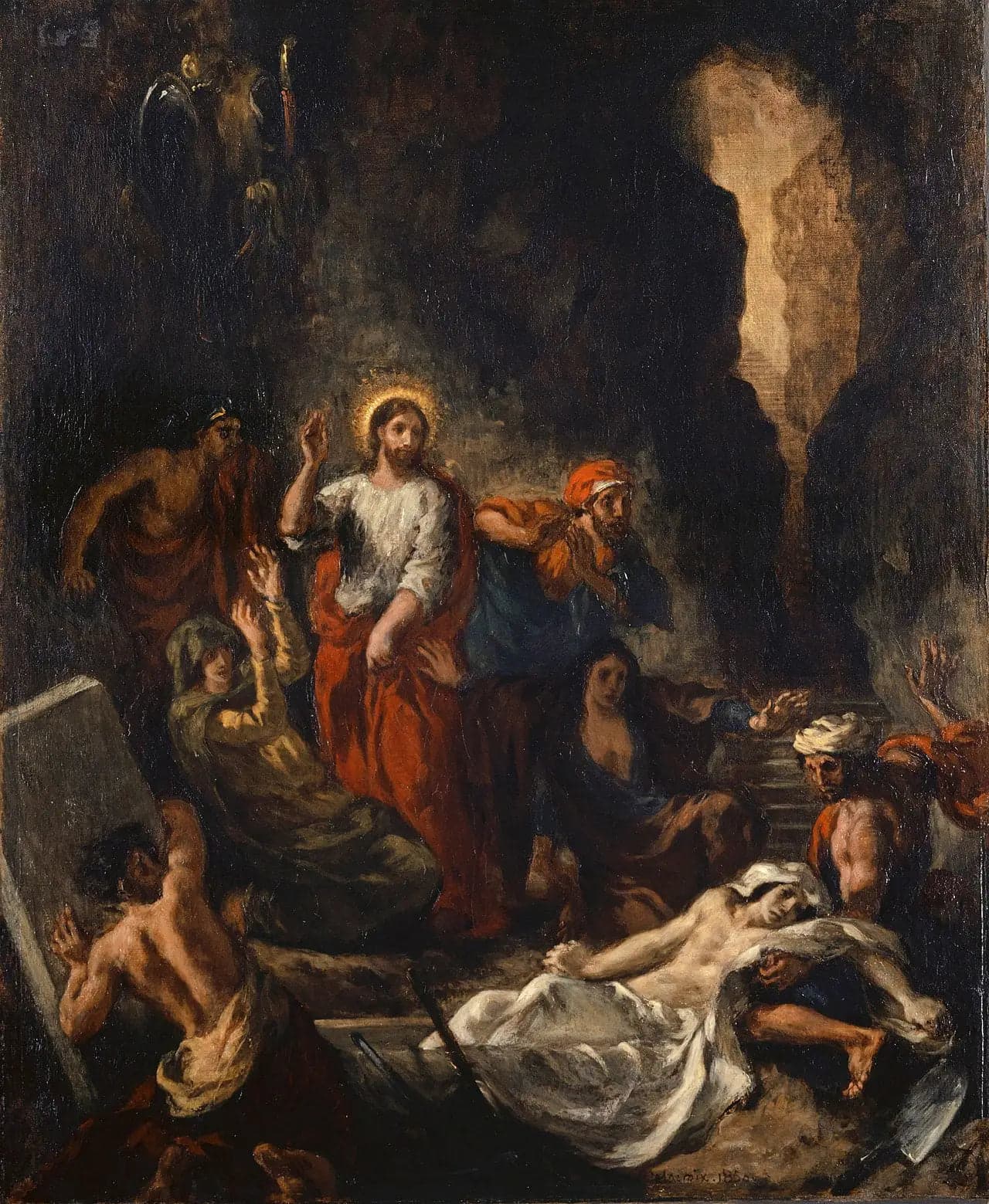
The Resurrection of Lazarus
- Original dimensions
- 50 x 62 cm
- Museum
- Kunstmuseum Basel
- Year
- 1850
Scene depicted
This painting illustrates a decisive moment from the New Testament, when Jesus Christ calls Lazarus back to life, four days after his death. The dramatic scene is marked by an intense play of light and shadow, the tormented faces of the witnesses, as well as the astonishment and an unreal sweetness that follows. The composition testifies not only to the power of the divine but also to human fragility in the face of death.
Historical context
Artwork: The Resurrection of Lazarus |BRK| Artist: Eugène Delacroix |BRK| Year: 1850 |BRK| Museum: Kunstmuseum Basel |BRK| Dimensions: 50 x 62 cm |BRK|
Place in the artist's career
The Resurrection of Lazarus stands as a pillar in Delacroix's career. This painting marks an important milestone, consolidating his status as an innovator. Alongside Liberty Leading the People and the painting The Death of Sardanapalus , this work reveals a bold stylistic evolution, both technically and emotionally.
Anecdote
Eugène Delacroix once said: “Color is my way of offering my soul to the world.” Imagine him, one spring morning, inspired by this vibrant scene. He drew from the depths of human passion, infusing life into his masterpiece. This palpable emotion still resonates in the power of The Resurrection of Lazarus.