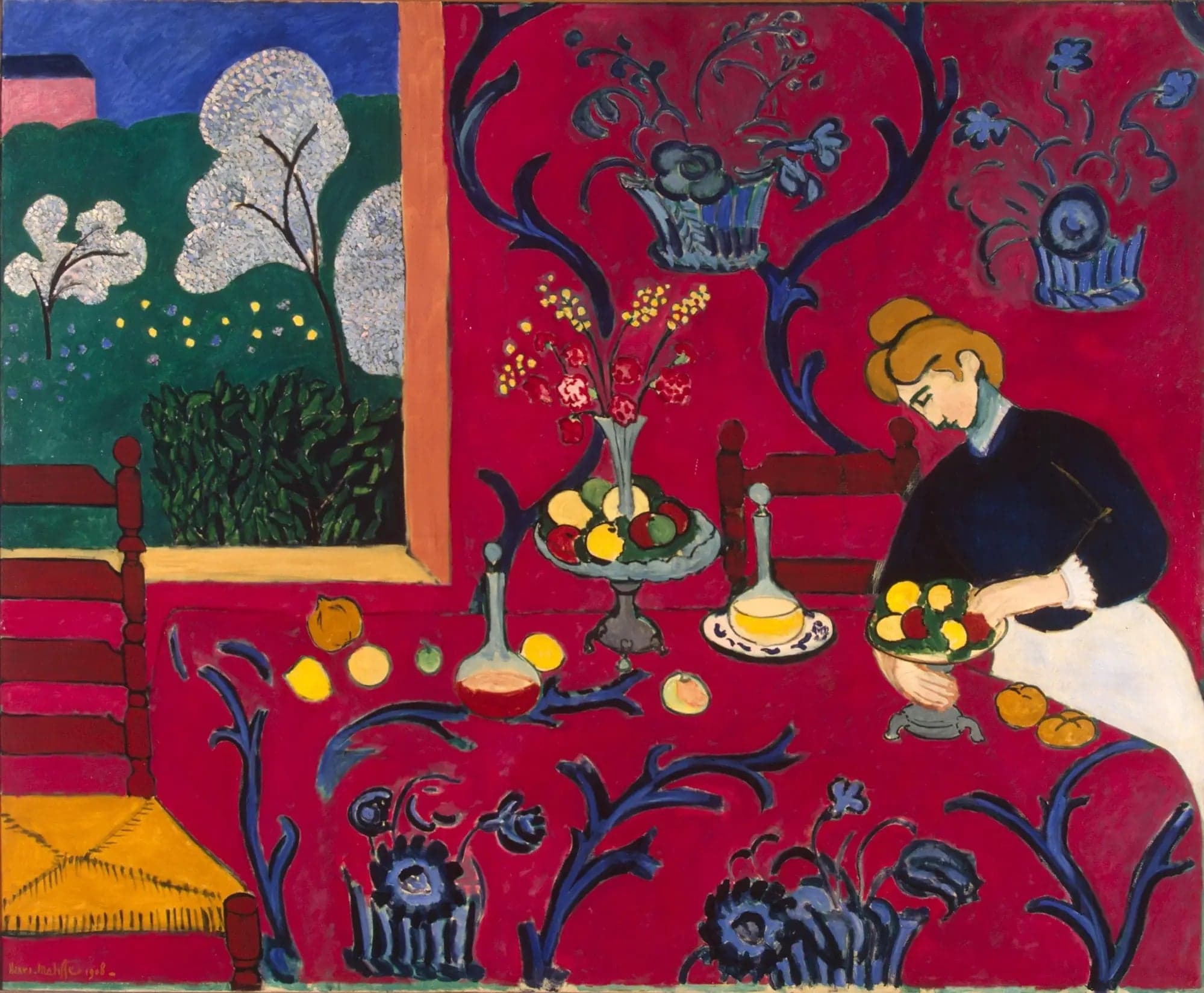
The Red Side Table
- Original dimensions
- 221 x 180.5 cm
- Movement
- Fauvism
- Museum
- Hermitage Museum
- Year
- 1907
Scene depicted
The Red Table is much more than a simple composition; it illustrates a daily scene, that of a set table, adorned with delicacies and elegance. Each element of this canvas invites one to enter a warm intimacy, where light dances on the objects and where vibrant colors evoke the pleasure of the senses. It is a hymn to conviviality, a painting that celebrates the art of living.
Historical context
Created in 1907, this painting is an iconic piece of Fauvism , emerging in the vibrant and innovative context of early 20th century France, where color and emotion broke free from academic constraints. The canvas is currently displayed at the Hermitage Museum , and its large canvas measures 221 x 180.5 cm. At the heart of this artistic heritage lies a bold exploration of forms and hues, reflecting a changing world.
Place in the artist's career
The Red Table represents a pivotal moment in Matisse's career, propelling his style towards a radiant maturity. An interesting parallel can be drawn with The Joy of Life (1905-1906) and The Dance (1910), two other canvases that reflect his growing creative boldness and his exploration of forms and colors.
Anecdote
Henri Matisse once said: "Color is a power that directly influences the soul." This inspiration came to him one bright morning, where the reflections of a set table in a welcoming room led him to capture the very essence of domestic happiness. It is in this fleeting moment that The Red Table comes to life, a pictorial work bathed in joy, calling for serenity and wonder.