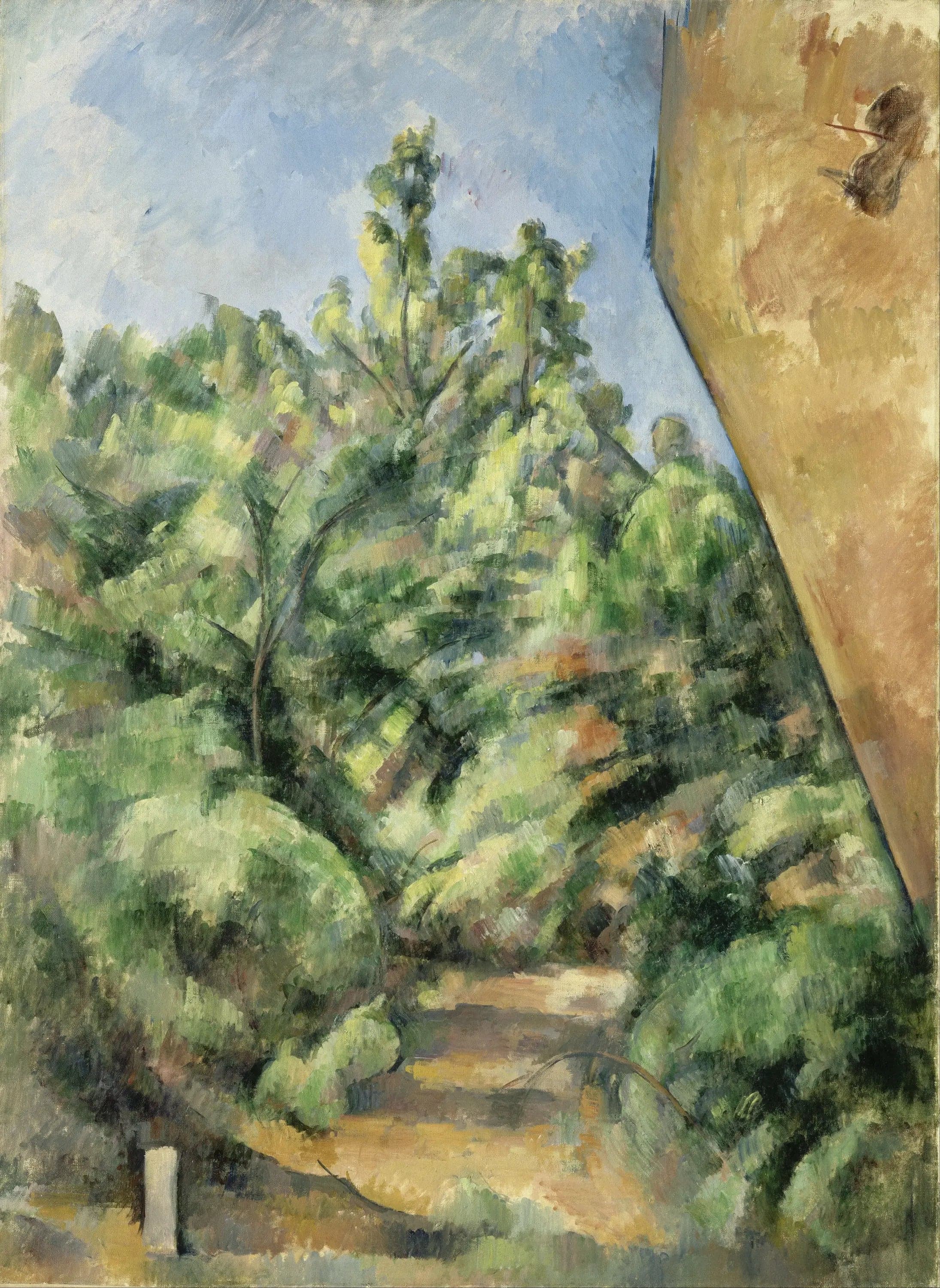
The Red Rock
- Original dimensions
- 66 x 91 cm
- Museum
- Orangerie Museum
- Year
- 1895
Scene depicted
The Red Rock depicts a majestic rock surrounded by lush vegetation, where nature asserts itself with strength and delicacy. Cézanne, through this pictorial work, manages to evoke a dialogue between the earth and the sky, thus creating a space where harmony and ruggedness coexist. Every nuance and every brushstroke tells a story of contemplation and wonder in the face of the magnificence of the world.
Historical context
Created in 1895, this painting is emblematic of one of the masters of Post-Impressionism , Paul Cézanne , revealing his genius in the picturesque setting of the Aix-en-Provence region. Through this canvas , the artist captures the very essence of light and the surrounding landscapes. This painting is today preserved at the Orangerie Museum in Paris, an art haven where every visitor can admire this timeless work measuring 66 x 91 cm.
Place in the artist's career
This painting is a cornerstone of Cézanne's career, illustrating his period of artistic maturity. It brilliantly engages in dialogue with other works such as "The Sainte-Victoire Mountain" and "The Card Players," thus demonstrating a technical evolution where the treatment of light and color becomes increasingly bold and innovative.
Anecdote
Cézanne once said: "I want to see things as they are, beyond appearances." It was on a spring morning that he allowed himself to be inspired by the sound of the wind in the trees and the caress of the first rays of sunlight on the rocks. This felt emotion is intensely reflected in the masterpiece , where the shapes and colors seem to vibrate with a palpable power.