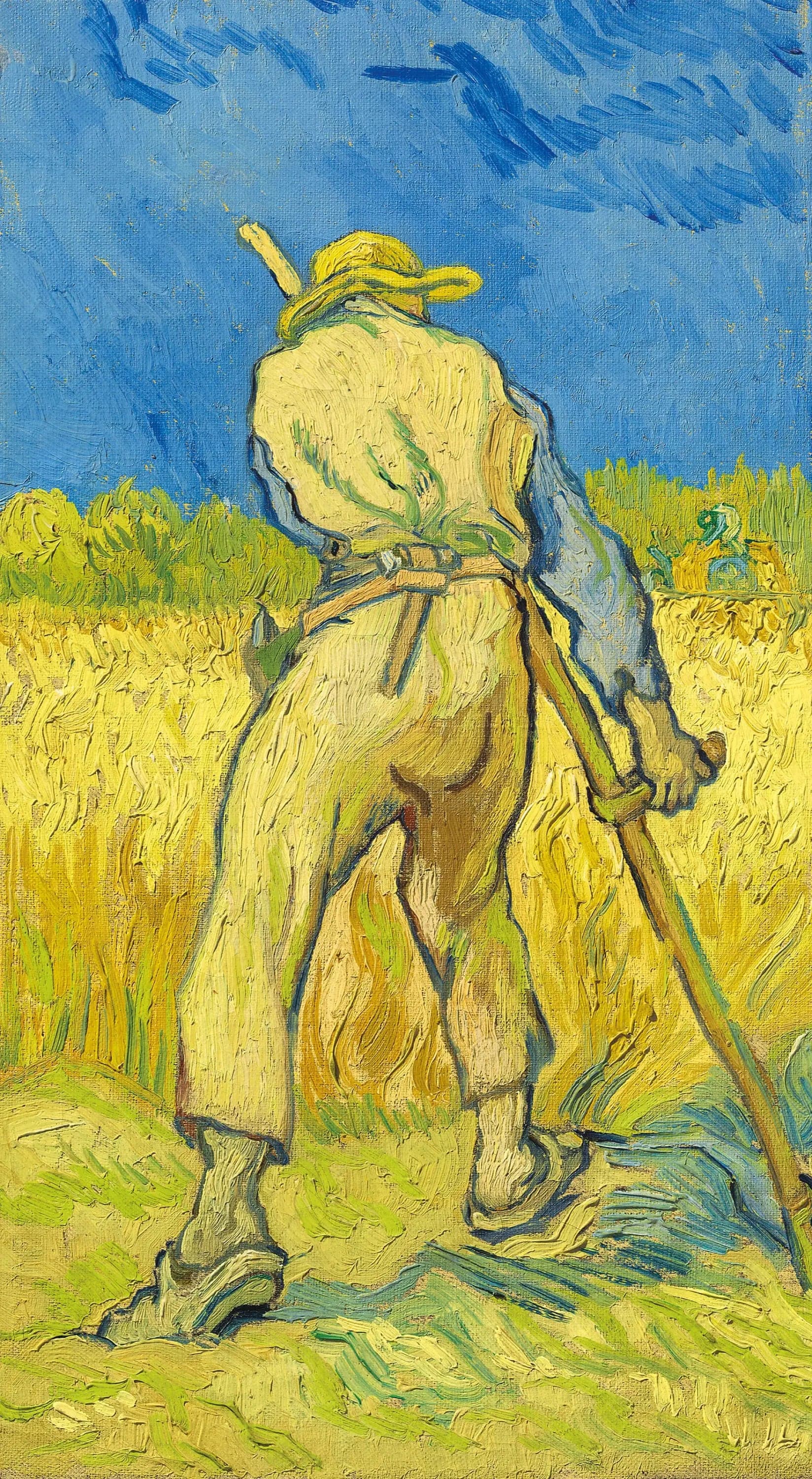
The Reaper
- Original dimensions
- 25 x 43.5 cm
- Museum
- Not specified
- Year
- 1889
Scene depicted
This canvas depicts a reaper, his muscular arms raised to cut the wheat under a blazing sun. The canvas reveals not only hard work but also the beauty of the natural cycle, enveloping this moment in a golden light, as a respect for the nourishing earth.
Historical context
Created in 1889 in the charming setting of Saint-Rémy-de-Provence , this painting is among the iconic achievements of the famous Post-Impressionist movement. As modern art began to emerge, Vincent van Gogh , through his canvas , synthesizes his love for nature and rural life, while targeting the raw emotions that still captivate contemporary viewers.
Place in the artist's career
Representative of a period of maturity in Van Gogh's creation, The Reaper stands out for its bold technique. In parallel with works such as The Potato Eaters and Starry Night , a marked evolution towards more intense and emotionally resonant compositions can be observed.
Anecdote
“I feel the joy of life in every blade of wheat,” Van Gogh might have said, inspired by a bright morning in the heart of Provence. In this fleeting moment, the artist captures the soul of the reapers, their labor sweating with life, which is found in the vibrant strength of the masterpiece that is The Reaper .