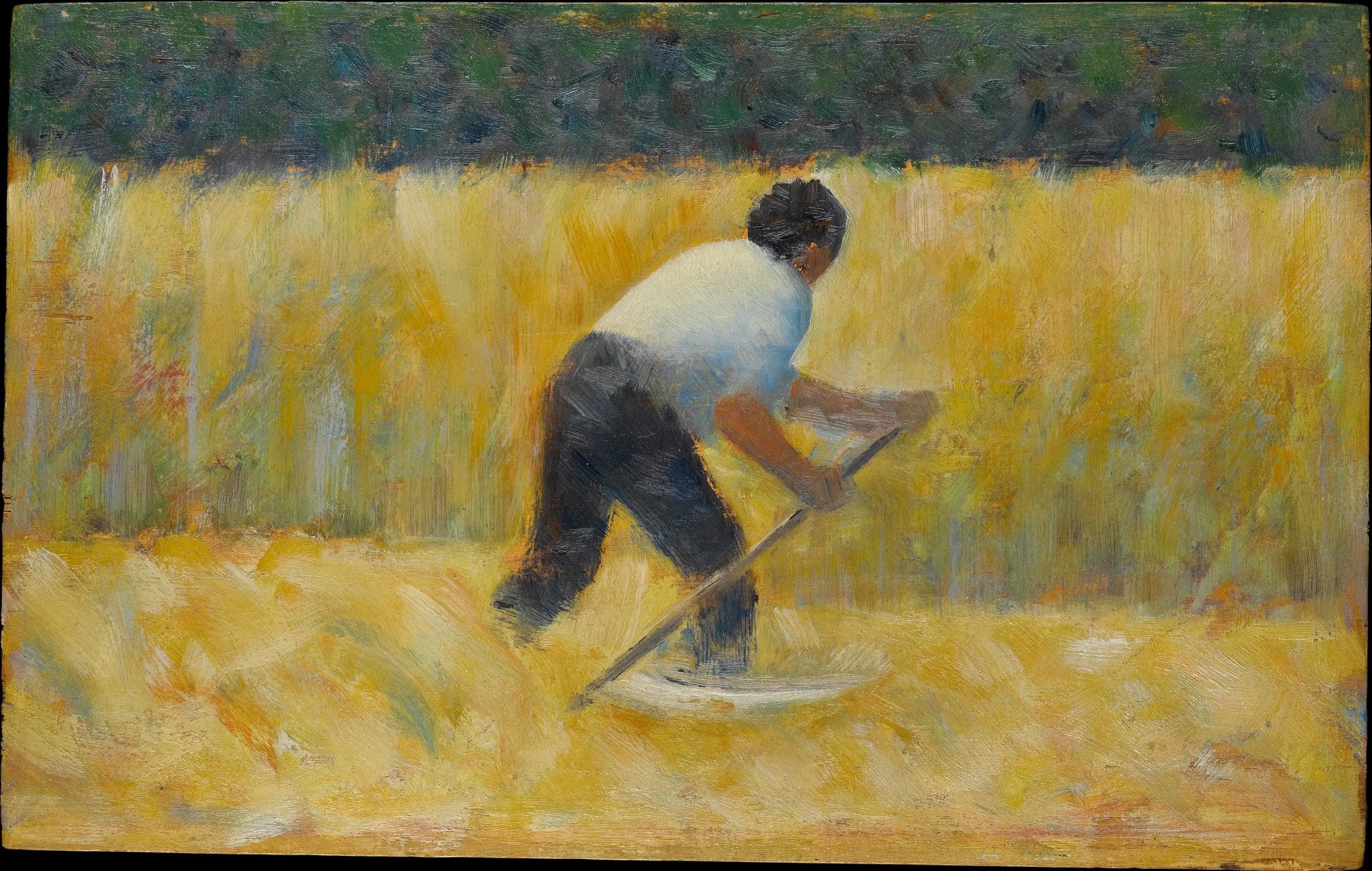
The Reaper
- Original dimensions
- 16.5 x 25.5 cm
- Museum
- Metropolitan Museum of Art
- Year
- 1883
Scene depicted
This canvas illustrates a worker at work in a field, capturing the movement and light of a suspended moment. The reaper is placed at the center of the composition, representing the struggle between man and nature, and symbolizes the simplicity of rural work in a painting rich in emotions and details.
Historical context
Created in 19th century Paris, The Reaper is part of the pointillist movement, signature of Georges Seurat . In the midst of the Impressionist period, this painting transcends its time through the originality of its techniques. Currently exhibited at the Metropolitan Museum of Art in New York, this work is an emblematic representation of the artistic evolution of this century.
Place in the artist's career
The Reaper represents a turning point in Seurat's career, revealing his innovative approach. Coming after A Sunday Afternoon on the Island of La Grande Jatte and before The Grande Jatte , these three paintings show the evolution of his style, evolving towards increasingly bold compositions highlighting light and color.
Anecdote
“The beauty of the world reveals itself in the simplicity of daily gestures,” could have said Georges Seurat while contemplating a peaceful May morning when the inspiration for this masterpiece came to him. It is in this moment of delicate and attentive observation that the evocative power of The Reaper took shape.